Boiler Repair: When to Fix, Not Replace It
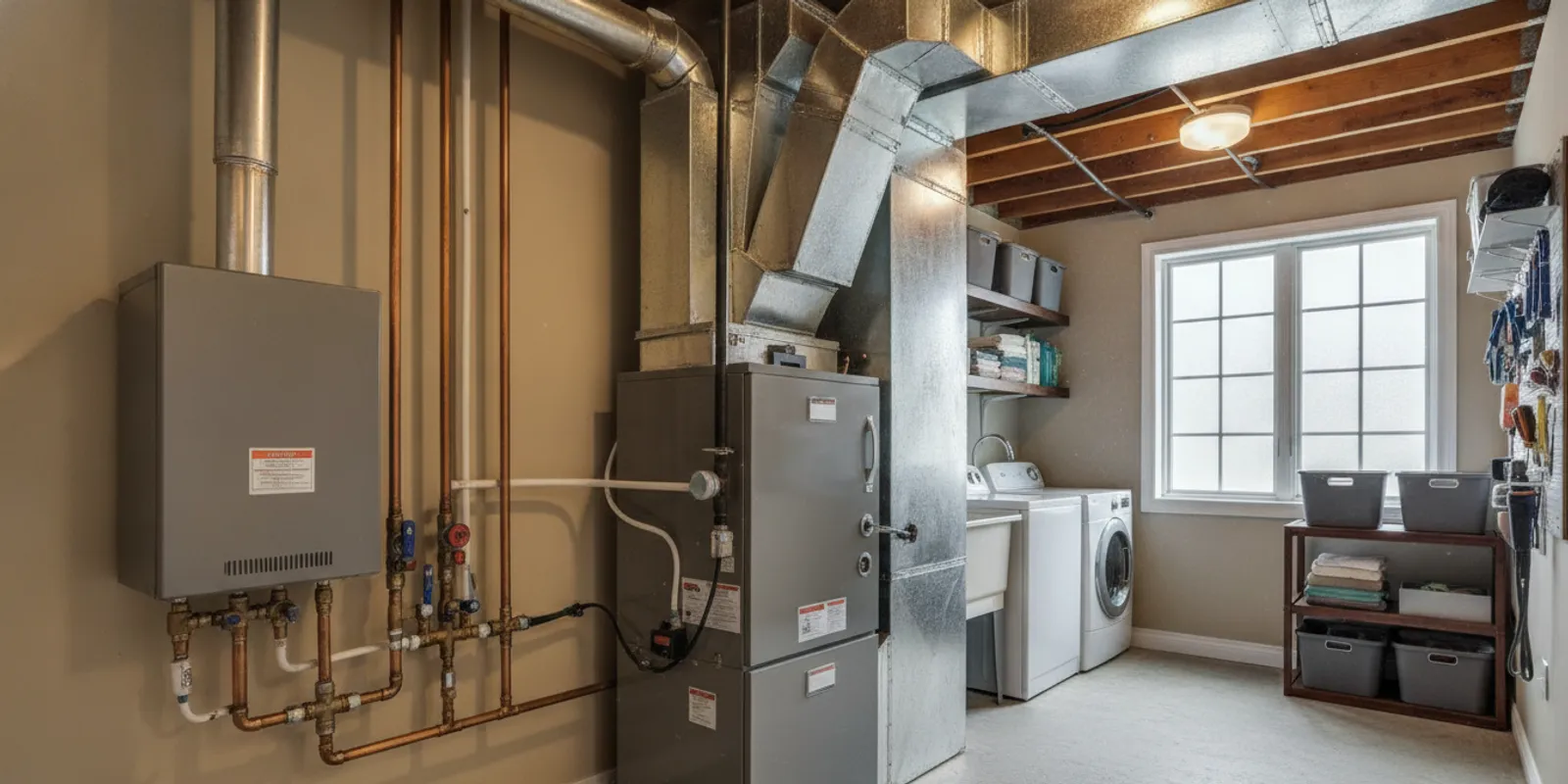
A cold room does not tell you whether the right next step is boiler repair, furnace service, or a larger heating change. In many Illinois homes the boiler and the radiators are still doing their job, and the problem is a control, a circulator, a pressure issue, or air in the lines. In others the equipment is old, parts are hard to source, or the distribution system no longer matches how the house is used. Those are different decisions, and they should not be mixed into one blanket replacement pitch.
This guide covers boiler repair as a decision, not as a parts list. It explains how a boiler visit differs from furnace service, which clues point toward repair, and which questions belong in a boiler-versus-furnace conversation. Brilliant Home Services provides heating services in Barrington and nearby Chicagoland communities, including furnace diagnostics, boiler service, and help choosing a practical next step. A technician still has to inspect the equipment before anyone can say what your home needs.
What does boiler repair actually cover?
Boiler repair is service on the boiler and the parts that let it heat water and send that heat out. It is not a promise that every heating complaint has a cheap fix, and it is not the same visit as a furnace tune-up. A useful repair conversation starts with the symptom, the age of the equipment, and whether the rest of the system can still deliver heat after the boiler itself is working.
Homeowners usually call because of one of these patterns:
- No heat, or heat that fades after the boiler starts.
- Uneven rooms, with some radiators hot and others lukewarm.
- Strange noises, short run times, or a boiler that locks out.
- Visible leaks, low pressure, or a relief valve that has been dripping.
- A recurring fault after a recent repair or a seasonal start-up.
None of those clues is a diagnosis. Low pressure can be a simple fill issue, or it can point to a leak that needs a closer look. A noise can be air in the lines, a circulator, or something inside the boiler. The point of the first visit is to separate a repairable fault from a system that is asking for a bigger conversation.
The U.S. Department of Energy's Energy Saver overview of home heating lists furnaces and boilers as two different heating technologies, alongside heat pumps and other options. The same page says insulation, air sealing, and efficient windows and doors help keep a home comfortable. That is a useful frame for boiler repair. A clean, safe boiler still wastes comfort if radiators are blocked, air is trapped, or the building leaks heat.
How is boiler repair different from furnace service?
A boiler and a furnace both make heat. They do not fail the same way, and a technician does not inspect them with the same checklist. Treating "no heat" as one job is how people end up comparing the wrong quotes.
A furnace heats air and pushes that air through ducts. Service often centers on airflow, the filter, ignition, safety switches, and the blower. If your furnace is out and you need the first-hour checklist, use the separate guide to furnace repair in Barrington. This article does not repeat that triage.
A boiler heats water, or turns water to steam, and sends it to radiators, baseboard, or an in-floor loop. Boiler repair more often involves pressure, the circulator, zone valves, air in the lines, the expansion tank, controls, and the condition of the heat emitter. A hot boiler with cold radiators is a distribution clue. A boiler that never fires is an equipment clue. Those are not the same repair.
| Question | Boiler repair visit | Furnace service visit |
|---|---|---|
| What moves the heat? | Hot water or steam through pipes. | Warm air through ducts. |
| Typical complaint. | Cold radiators, pressure issues, leaks, or lockouts. | No warm air, short cycling, or weak airflow. |
| What the tech checks first. | Pressure, circulator, zones, air, controls, and emitters. | Filter, ignition, safety switches, blower, and ducts. |
| Repair may be enough when. | The boiler fires and the loop can still deliver heat. | The furnace fires and the duct system can move air. |
| A bigger talk starts when. | The boiler, parts, or piping no longer fit the house. | The furnace, heat exchanger, or ducts no longer fit the house. |
If someone quotes a furnace change for a radiator house, or a boiler repair for a ducted house, stop and ask which equipment is actually installed. The name on the thermostat does not settle it. The equipment in the utility room does.
When is boiler repair the reasonable next step?
Boiler repair is the reasonable next step when the boiler still matches the house and a specific fault explains the complaint. Age alone is not a replacement order. A 15-year-old boiler with a failed circulator can be a repair. A newer boiler with a repeating leak, unavailable parts, or unsafe venting can be a replacement conversation. The visit has to sort those cases.
Repair is more likely to be the practical path when:
- The boiler is a known age, has been maintained, and parts are still available.
- The symptom is local: one zone, one radiator, a pressure reading, or a recent lockout.
- The rest of the loop can heat the rooms once that fault is corrected.
- There is no active leak at the heat exchanger, no scorching, and no venting concern.
- You want the current system through this heating season while you plan a later project.
Ask for the finding in plain language before you approve work. A clear boiler repair finding names the failed part, why it caused the symptom, and whether the rest of the system can still do its job. A vague "it is old, replace it" finding is not enough when the boiler is still firing and the rooms can be heated.
Safety items are different. Do not keep resetting a boiler that locks out, and do not ignore the smell of gas, a leaking relief discharge, or a vent pipe that has come apart. Those are stop-and-call situations, not weekend experiments. Brilliant Home Services can help Barrington homeowners sort urgent heating problems from issues that can wait for a scheduled visit.
Which clues mean you should talk about more than boiler repair?
Some homes need more than a part. The signal is not one cold room. The signal is a pattern: the same fault returns, the boiler cannot keep pressure, sections of pipe are failing, or the way the house is used no longer matches the system that was installed.
Bring these observations to the visit. They help a technician tell a repair from a project:
- Write down the boiler brand, model, and any age tag you can see without moving panels.
- Note which rooms lag, and whether those rooms share a zone or a radiator loop.
- Say how often you add water, and whether the pressure drops after the system cools.
- List prior repairs from the last few seasons, including parts that were replaced twice.
- Mention renovations, finished basements, or closed-off rooms that changed the heat load.
A single failed zone valve is still boiler repair territory. A boiler that needs water every week, plus rusty water and a history of section leaks, is a different conversation. So is a house that added living space while the original boiler and piping stayed the same. In that case, fixing today's noise does not answer whether the system can heat the house you live in now.
Cost belongs in that conversation, but this article does not invent prices. A repair quote and a replacement quote are only comparable when both name the same scope. Ask what is included, what is left in place, and what would still be a problem after the work. If the quote is really about retiring a furnace and the duct system, that is the neighboring decision covered in the Barrington furnace replacement guide, not a boiler repair.
Should an Illinois home keep the boiler or consider a furnace?
The boiler-or-furnace question is a design question. It is not the first answer to a no-heat call. If the installed boiler can be repaired and the radiators still heat the rooms, changing systems is a project with piping, venting, and distribution work. If the boiler is at the end of its service life, the same project may be worth pricing beside a like-for-like boiler replacement.
Keep the boiler in view when:
- Radiators or baseboard already heat the rooms you use.
- You like the steadier heat and you do not need ductwork for cooling.
- The piping is sound and zones still match how you live.
- A repair or a matching boiler replacement avoids opening finished walls.
Look at a furnace, or another ducted approach, when:
- You are already planning ductwork for cooling or filtration.
- Large radiator runs are failing, inaccessible, or out of scale with the rooms.
- The house has been remodeled so the old emitters no longer cover the space.
- You want one air system and you accept the construction that comes with it.
Do not assume a furnace can "just hook up" to radiators. It cannot. A furnace needs a path for air. A boiler needs a path for water or steam. Switching types means new distribution, not a swap of the box in the utility room. That is why two proposals can both be honest and still look nothing alike.
Illinois winters reward a system that can recover after a setback and still heat closed-off rooms, additions, and spaces over a garage. They also reward a house that holds heat. Equipment choice does not fix missing insulation or a room that was never connected to the loop. Say so in the visit, or the best boiler repair in the world will still leave that room cold.
How should you compare two heating proposals?
Ask each proposal to answer the same five questions. If one quote skips them, you cannot compare it with the other.
- Equipment: Which boiler or furnace stays, and which is new?
- Distribution: Do radiators, baseboard, or ducts stay as they are?
- Scope: What piping, venting, electrical, and control work is included?
- What is left: Which comfort complaints will still be there after the job?
- Why now: Is this a repair of a known fault, or a choice to change systems?
A boiler repair proposal should be easy to read. It names the part or the fault, the labor, and any safety item that has to be corrected for the boiler to run. A system-change proposal should be easy to tell apart from that. It names the new equipment, what happens to the old piping or ducts, and how the rooms will get heat on the far side of the project.
When a replacement is actually on the table, ask for energy fact sheets and look for the ENERGY STAR label on the proposed equipment. Bleeding air from a hot-water radiator is ordinary maintenance when you are comfortable doing it. Opening a boiler cabinet, altering gas piping, or bypassing a safety control is not.
If a proposal mentions a limit switch, short cycling, or a furnace that will not stay on, those topics belong to the furnace, not to a boiler loop. The live note on furnace limit switch symptoms is the right place for that part. Keep it out of the boiler repair decision unless you also have a furnace.
What should you prepare before a boiler service visit?
A short prep list saves time and keeps the visit on the right system. You do not need to diagnose the boiler. You do need to make the equipment reachable and describe what changed.
- Clear a path to the boiler, and move stored items off the relief-valve discharge area.
- Photograph the rating plate, recent error codes, and any leak stains.
- Write the last date you added water or reset the boiler, if you did either.
- List rooms that stay cold, and whether their radiators heat at all.
- Have prior invoices ready so repeat parts are visible.
- Keep people and pets away from the work area during the inspection.
If the boiler is off and the house is getting cold, say that when you book. If only one room lags and the rest of the home is comfortable, say that too. Those are different scheduling needs. For a furnace that is already out of heat, start with the furnace repair guide instead of waiting on a boiler comparison.
Brilliant Home Services can inspect the installed heating equipment and explain whether the next step is boiler repair, maintenance, or a planned replacement. The office is at 200 Applebee St Suite 207, Barrington, IL 60010, and the phone number is (847) 588-2533. Use the contact page to schedule. Do not treat a blog post as a remote diagnosis.
What questions should you ask before approving boiler repair?
Use these questions in the visit. The answers should be specific to your boiler, not a script about all heating equipment.
- What failed, and how does that failure match the symptom I described?
- Can the rest of the loop heat the house after this repair?
- Are parts available, and is this the same part that failed before?
- Is there a leak, venting issue, or safety control that changes the plan?
- If we repair now, what would still push a replacement conversation later?
- If we change systems, what happens to the radiators, piping, and zones?
You should leave the conversation knowing which of three paths you are on: repair this fault, plan a like-for-like boiler replacement, or price a different type of heating system. Mixing those paths into one quote makes the price impossible to judge. Splitting them makes the choice clear.
Maintenance still matters after the repair. Keep emitters clear, note pressure changes, and schedule service before the first hard cold snap if the boiler had a rough start last season. The Department of Energy's home heating overview is general homeowner advice, not a Brilliant Home Services price or a promise about your utility bill. Local results depend on the boiler, the building, and how the system is used.
Frequently Asked Questions
Is boiler repair worth it on an older Illinois boiler?
Often yes, when the fault is specific and parts are available. Age is context, not a verdict. Ask whether the repaired boiler can still heat the rooms you use, and whether the same part has already failed. A repeating leak, a cracked section, or parts you cannot get are better reasons to talk about replacement than age by itself.
Does boiler repair mean I should replace the whole heating system?
No. Boiler repair means correcting a fault on the boiler or its immediate controls and circulation parts. System replacement is a separate decision about equipment type and how heat gets to the rooms. Approve the repair on its own findings. Price a system change only if those findings say the current boiler or piping cannot keep doing the job.
Can a furnace heat a home that already has radiators?
Not by itself. A furnace needs ducts or another air path. Radiators need a boiler and piping. Connecting a furnace to an existing radiator loop is not a standard repair. If you want forced air, the proposal has to include the air distribution, not only a new furnace in the utility room.
What should I have ready before I request boiler repair?
Have the boiler brand and model if you can see them, a short list of cold rooms, any recent resets or added water, and prior repair notes. Clear access to the boiler. Mention gas smells, active leaks, or a boiler that will not stay on so the visit can be treated with the right urgency.
Who should I call for boiler repair in Barrington?
Call a heating contractor who will identify the installed equipment before recommending work. Brilliant Home Services provides heating service for Barrington-area homes, including boiler and furnace support. Schedule through the contact page or call (847) 588-2533, and expect an on-site inspection before any repair or replacement decision.
If you are deciding between boiler repair and a larger heating change, start with an inspection of the equipment you already have. Bring the symptom, the boiler details, and the rooms that lag. A clear finding will tell you whether to fix the boiler, plan a matching replacement, or price a different system.
Ready to Get Started?
Contact Brilliant Home Services for professional, reliable service in Chicagoland. We are available 24/7 for emergencies.