Furnace Limit Switch Symptoms in Barrington

A furnace that starts, blows for a minute, and then goes quiet is not always out of fuel. On many gas furnaces, furnace limit switch symptoms show up when a safety control senses too much heat and shuts the burners off. That control is doing a job. Bypassing it, wedging it closed, or resetting it over and over can hide an airflow problem and leave the heat exchanger unprotected.
Furnace limit switch symptoms usually include short cycling or a blower that will not stop. Heat may never arrive, or the furnace may stop mid-cycle. The switch is a temperature safety control. Restricted airflow is a common reason it trips. Replace a dirty filter, open blocked vents, and call a technician if the pattern returns. Do not bypass the switch.
This guide is for Barrington homeowners who want to tell a tripped limit switch from a broader heating failure. It covers what the switch does, which signs point to it, what you can check safely, and when the problem belongs with a licensed heating technician. For the wider question of what to do when the heat is simply out, use the furnace repair guide for Barrington. If the furnace is old and you are weighing a new system, the furnace replacement cost guide is the better next read.
What does a furnace limit switch do?
A furnace limit switch, often called the high-limit switch, watches temperature in the supply plenum or at the heat exchanger. According to Trane's furnace limit switch guide, the control waits until the heat exchanger is warm enough. It then allows heated air to move through the ducts. If temperature climbs too high, it shuts off gas to the burners. The blower keeps running so the cabinet can cool. The burners stay off until temperature falls back into a safe range.
Carrier describes the same safety role. The switch uses a temperature-sensitive element. At a normal warm-up temperature it can close the blower circuit so the fan starts. If heat keeps rising past the upper limit, it opens the circuit to the gas valve and the flame goes out. That is a shutdown, not a broken thermostat.
Two ideas get mixed up in homeowner forums:
- A trip means the furnace got too hot and the switch opened on purpose. The usual causes are a clogged filter, closed registers, a blocked return, or a blower that is not moving enough air.
- A failed switch means the control itself is stuck, overly sensitive, or no longer reading temperature correctly. The furnace may refuse to light, or the blower may run long after the burners are off.
You cannot tell those two apart by listening from the hallway. A technician measures temperature rise, checks the blower, and tests the switch. Guessing, and then jumpering the control, removes the protection the part exists to provide.
Which furnace limit switch symptoms should you notice first?
Trane lists four patterns that point homeowners toward the limit circuit. The furnace stops mid-cycle, will not shut off, blows no hot air, or short-cycles. Carrier adds a blower that runs constantly and a furnace that will not ignite because the switch is stuck open and the control board locks out the burners.
In a Barrington winter, the useful question is what you can observe without opening the cabinet.
| What you notice | What it may mean | Safe next step |
|---|---|---|
| Burners stop after a few minutes. The blower keeps going. | High-limit trip from low airflow or real overheating | Check the filter and blocked openings. If it repeats, stop resetting and schedule service. |
| The blower never seems to stop after the house is warm | Switch stuck closed, or fan left on On instead of Auto | Set the fan to Auto. If the blower still runs for hours, call for service. |
| The thermostat calls for heat and nothing ignites | Switch stuck open, lockout, or a different ignition, power, or fuel fault | Do not open the burner compartment. Use the broader no-heat checks, then call if power and the thermostat are already confirmed. |
| The furnace starts and stops in short bursts and never catches up | Repeated high-limit trips, a failing switch, or another short-cycling cause | One filter and vent check is reasonable. Repeated short cycling needs a technician, not another reset. |
| Burning smell, soot, a yellow flame, or a carbon monoxide alarm | Possible heat-exchanger or combustion trouble, not only a switch | Turn the system off. Leave if an alarm sounds, and get emergency help. |
Short cycling has more than one cause. A thermostat placed in a draft, an oversized furnace, a failing flame sensor, or a condensate problem can also start and stop the burners. Treat the limit switch as one likely explanation when the blower keeps running after the flame drops out, not as the only explanation.
Why do furnace limit switches trip in Barrington homes?
Carrier's troubleshooting notes say a limit switch typically trips when airflow across the heat exchanger is badly restricted. Internal temperature then spikes. The usual culprits are a dirty filter, blocked returns, or closed supply registers. A weak blower that cannot move the design airflow does the same thing. Trane names the same trio: wear, restricted airflow, and overheating. Age matters, but a brand-new switch will still trip if the furnace cannot breathe.
Local houses add a few ordinary reasons:
- Filters left in all season. A one-inch filter in a busy household can load up in a month. A high-MERV filter the furnace was not sized for can restrict airflow even when it looks clean.
- Closed rooms in a cold snap. Shutting supply registers in unused bedrooms raises static pressure. The heat exchanger still makes the same heat, with fewer paths out.
- Returns blocked by furniture or storage. Finished basements in older Barrington homes sometimes hide the main return. A sofa, a shelf, or stored bins can block it.
- A blower that is dirty or failing. Dust on the blower wheel, a weak capacitor, or a slow motor moves less air. The burners do not know that. The limit switch does.
- Duct changes after a remodel. Adding rooms or closing a supply during a renovation can unbalance the ducts. The furnace then pushes against ductwork it was not set up for.
A limit trip is the furnace protecting itself. Repeating trips are the problem to solve. Each repeated trip stresses the heat exchanger. Cracks there are a carbon monoxide concern. That is why the symptom needs a real diagnosis, not a bypass clip from a hardware drawer.
What can you check before calling about furnace limit switch symptoms?
Stay outside the burner compartment. None of these steps touch the gas valve, the limit switch, the control board, or the blower wheel.
- Read the thermostat. Set the fan to Auto, not On. Set the mode to Heat. Put the setpoint a few degrees above the room temperature. A fan left on On looks exactly like a blower that will not shut off.
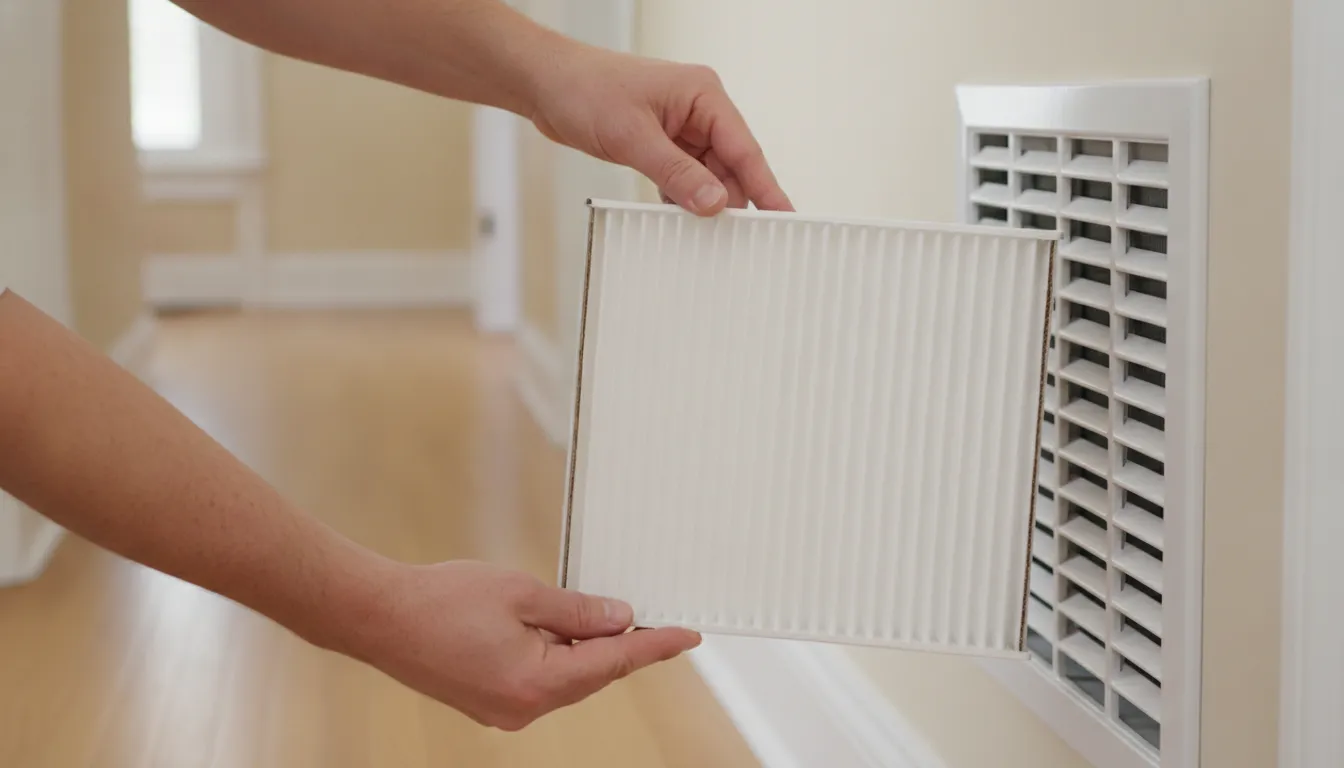
- Look at the filter. If you cannot see light through it, replace it with the size printed on the old filter frame. Point the airflow arrow toward the furnace. If you do not know the last change date, change it.
- Walk the supplies and the returns. Open registers that were closed for the season. Move furniture, rugs, and storage off return grilles. One open supply in a large house is not enough.
- Check the obvious power items once. Confirm the furnace switch beside the cabinet is on. Check that the breaker has not tripped. Do not keep resetting a breaker that trips again.
- Stop if safety signs show up. A carbon monoxide alarm, gas odor, soot, or an unstable flame is not a filter problem. Leave and call for emergency help.
If a new filter restores a normal cycle, watch the furnace through the next cold day. If it short-cycles again, the filter was not the cause. Write down how long the burners stay on and whether the blower keeps running afterward. That note saves diagnostic time.
Do not press a rollout or limit reset button more than once, and do not jumper any control. A rollout switch is a different safety device near the burners. It trips when flame rolls out of the heat exchanger. Resetting it without finding the cause can send combustion gases back into the house.
Heating service in Barrington is the right path once the safe checks are done and the pattern remains. If the same equipment also cools the house and the blower acts up in summer, the air conditioning service page covers that side of the system. Many limit and blower faults show up in both seasons because they share the air handler.
When should a technician take over?
Call for service the same day if any of these are true:
- The furnace short-cycles again after a new filter and open vents.
- The blower runs for hours with the fan set to Auto.
- The burners will not light after you have confirmed power and the thermostat call.
- You see error lights you cannot identify, or you already reset a safety switch once.
- Anyone has a headache, nausea, or dizziness while the furnace runs, or a carbon monoxide alarm sounds.
The U.S. Consumer Product Safety Commission says heating equipment is a top contributor to carbon monoxide deaths tied to consumer products. It asks owners to schedule a yearly inspection of fuel-burning furnaces, vents, and flues. A limit switch that keeps opening is one reason not to wait for that annual visit.
On a service call, a technician can measure temperature rise against the furnace rating plate and test the blower. The visit should also inspect the filter rack and coil for hidden blockage, then confirm the switch opens and closes at the right temperatures. Sometimes the switch is the failed part. Often it is the only part doing its job. The repair is then airflow: a collapsed filter slot, a dirty blower, closed ducts, or a coil packed with debris.
A limit-switch replacement is usually a small parts job, but the visit is not priced by the part alone. The model, the diagnostic time, and whether the call is an emergency all change the bill. If testing shows a damaged heat exchanger, or the furnace is near the end of its service life, compare replacement with another season of repeat trips. Replacement can cost less over the next several winters. That decision belongs in the replacement conversation, not in a parts swap done blind.
Brilliant Home Services does not publish a flat limit-switch price. The visit has to identify why the furnace overheated. Ask what was measured, what was cleaned or replaced, and whether the switch was the cause or only the messenger.
How do you keep the limit switch from becoming a midwinter outage?
Trane's maintenance advice is practical. Change the filter every one to three months. Match that interval to the filter and the household. Keep furniture and curtains off registers and return grilles. Schedule a furnace tune-up in the fall, before the first hard cold. The technician can then clean parts that only show trouble under load.
A few Barrington-specific habits help:
- Write the filter date on the frame. Reminders in October and January cover most one-inch filters.
- During a cold week, leave bedroom doors open when those rooms have no return of their own. Closing every door can act like a blocked return.
- After a kitchen or basement remodel, ask whether new ducts changed airflow. New runs that were never balanced often make a quiet furnace start tripping.
- Replace carbon monoxide alarms by the date on the unit. Put one near the sleeping areas. The limit switch is not a carbon monoxide detector.
- If you added a high-efficiency filter for allergies, ask whether the furnace can handle that resistance. Cleaner air that starves the heat exchanger is a bad trade.
Mini-splits and ductless heads do not use this furnace limit switch. If the cold room uses a wall-mounted head rather than the central furnace, start with the mini-split guide for Barrington. Do not diagnose a part that system does not have.
Frequently asked questions
What are the usual furnace limit switch symptoms?
The furnace stops mid-cycle or short-cycles. It may blow air that never gets warm, or run the blower long after the burners shut off. A switch that has failed open can also stop ignition completely. Those signs overlap with other faults. They point to a diagnosis. They do not prove the switch itself is bad.
Can I reset a furnace limit switch myself?
Do not make a reset your repair. Some furnaces have a manual reset on a rollout switch. That is a different device. Pressing it once after you replace a filthy filter is as far as a homeowner should go. If it trips again, leave it and schedule service. Never bypass the switch with a jumper.
Does a dirty filter really trip the limit switch?
Yes. Carrier and Trane both list restricted airflow from a clogged filter as a leading cause. The burners keep adding heat while the blower cannot carry it away. The switch then opens to protect the heat exchanger. A new filter fixes the trip only when the filter was the restriction.
Is a tripped limit switch a carbon monoxide emergency?
The trip itself only turns the burners off. The emergency is the cause of repeated overheating, such as a cracked heat exchanger. A carbon monoxide alarm, gas odor, soot, or illness is an emergency too. In those cases leave the house. Treat it as an emergency, not as a filter change.
Who should diagnose furnace limit switch symptoms in Barrington?
Choose a heating technician who can test temperature rise, airflow, and the switch. Do not accept a parts swap done on guesswork. Brilliant Home Services handles heating repair for Barrington-area homes from the contact page. Describe how long the furnace runs before it stops, and what you already checked.
Get heating help before the next cold night
If your Barrington furnace is short-cycling, the blower will not quit, or a safety reset already tripped once, get a measured diagnosis. Filter and vent checks are worth doing today. Repeated furnace limit switch symptoms after those checks are a service call, not a second weekend project.
Call Brilliant Home Services at (847) 588-2533 or send the details through the contact form. Say when the furnace stops, whether the blower keeps running, and when you last changed the filter. That is enough to start the visit.
Ready to Get Started?
Contact Brilliant Home Services for professional, reliable service in Chicagoland. We are available 24/7 for emergencies.