Electrician After a Power Outage in Barrington, IL: What to Check
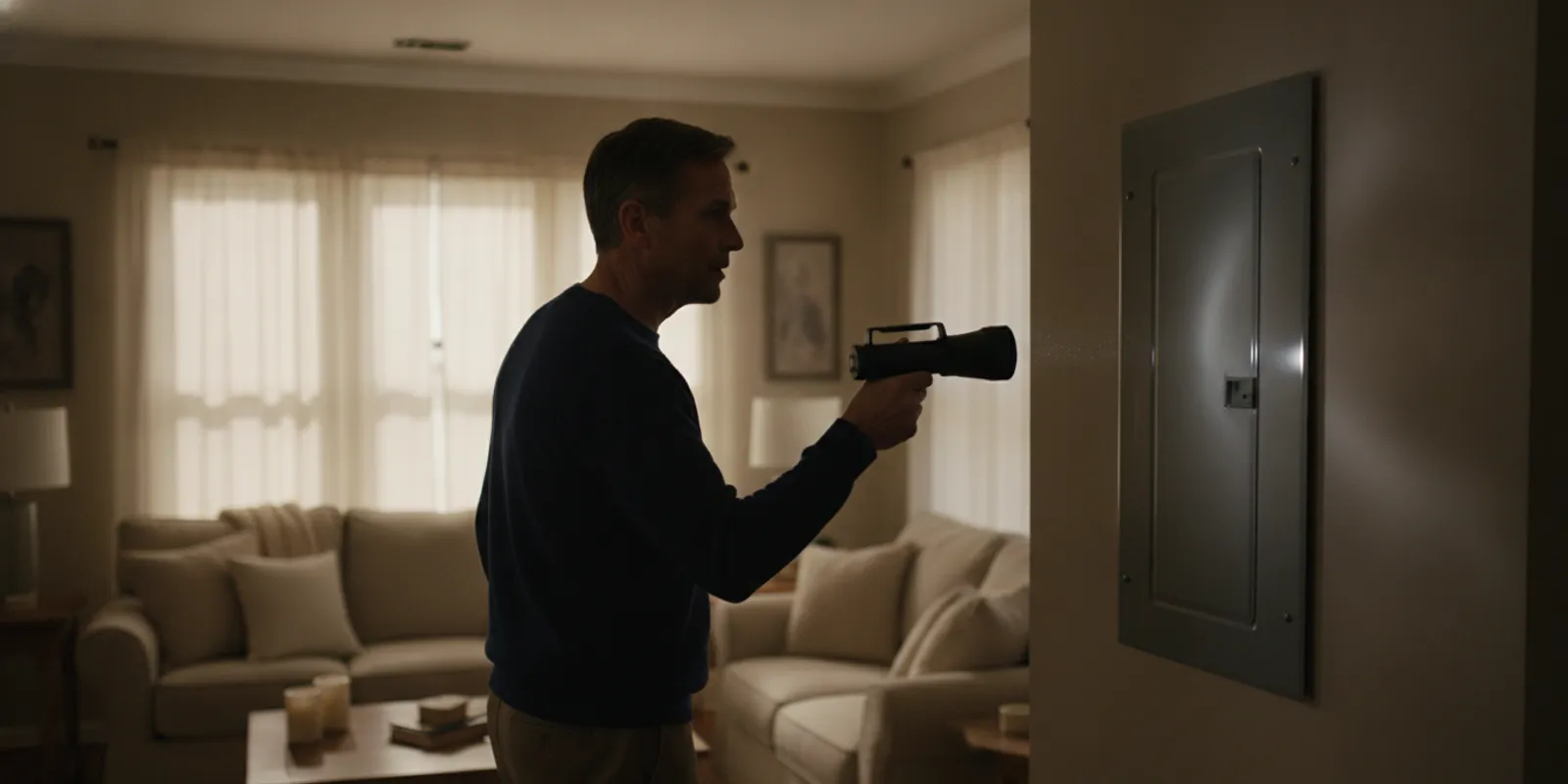
If you need an electrician after power outage Barrington IL, first work out whether power is still out across the area or whether the problem is limited to your property. Observe from a safe place, avoid touching damaged equipment, and treat smoke, sparks, heat, or a burning odor as warning signs. A few careful notes can help you decide whether to contact the utility, an electrician, or emergency services.
What should you check first after a power outage?
Start with the widest, simplest question: is the whole neighborhood without power, or is your home the only place affected? Look outside from a safe location. You might notice whether nearby homes, streetlights, or businesses appear to have electricity. Do not walk toward damaged poles, fallen branches tangled with wires, or utility equipment to get a closer look.
If the surrounding area is dark too, check your electric utility’s official outage information or report the interruption to the utility. Utility crews handle problems on their system. An electrician can help with a problem on the customer side of the service, but a household contractor cannot restore a neighborhood feeder or repair utility-owned equipment. If you are unsure where the issue lies, report what you observe and ask the utility how to proceed.
If nearby homes have power, note exactly what is working in yours. Are all rooms dark, or only one area? Do ceiling lights work while receptacles do not? Did power return everywhere except one appliance or a group of outlets? This first inventory is useful even if you cannot identify the cause. It helps keep the service call focused on observable facts rather than a guess.
- Use a flashlight rather than an open flame, especially around electrical equipment.
- Keep refrigerator and freezer doors closed as much as practical while power is out.
- If the power is flickering or repeatedly returning and dropping, avoid running sensitive equipment until conditions are stable.
- Do not touch a downed wire, even if it appears inactive, or anything in contact with it.
- Stay away from wet floors, flooded rooms, or equipment that may have been exposed to water.
Do not use an outage as a reason to inspect inside electrical equipment. You can look at the outside of a closed panel from a safe distance, but do not remove its cover. A dark display, a tripped breaker handle, or a service interruption does not tell you by itself whether the equipment is safe to handle.
When should you call an electrician after power outage Barrington IL?
Contact a qualified electrician when utility power has returned but a portion of the home remains without electricity, a breaker will not stay in its normal position, lights or receptacles behave abnormally, or you see signs of damage around household electrical equipment. These symptoms can have several causes. The timing after an outage is important information, but it does not prove what failed or whether the outage caused the issue.
Seek urgent help if there is a burning smell, smoke, visible sparking, unusual buzzing or crackling, or heat at an outlet, switch, or closed panel. Do not touch the equipment or continue using the affected circuit. If you see flames or smoke that may indicate a fire, leave the building and call emergency services. If there is immediate danger, keep people away and do not delay to take photographs or investigate.
Downed conductors and damaged utility equipment are not a household repair. Keep far away, warn other people from a safe distance, and contact the utility or emergency services as appropriate. If a storm has left wires in a street or yard, assume they may be energized. Do not move a branch, vehicle, fence, or other object that may be touching a wire.
For non-emergency symptoms, describe what happened and arrange an inspection rather than trying repeated resets. Brilliant Home Services provides electrical service, and its Barrington electrical service information is a local starting point. A service professional can assess the reported symptoms and explain what work, if any, is appropriate.
How can you tell whether the problem is utility-side or inside your home?
There is no single observation that identifies every outage cause, but the pattern can help you decide who to contact first. If neighboring properties are also out, the utility is the appropriate first contact for outage status. If the neighborhood has power and only your property is affected, the issue may be within your service connection or home electrical system. The utility may still need to assess its equipment before a household repair can be completed.
A partial outage can be less straightforward. For example, power may be available in most rooms while a group of receptacles, lights, or one larger appliance is off. The affected area could correspond to a circuit or connected equipment, but do not assume that this identifies a specific fault. Write down what works and what does not. If you can safely observe whether a nearby property has power, include that fact when you contact the utility or electrician.
Consider these examples:
- Several nearby homes and streetlights are dark: Check the utility’s outage channel and report the outage. Do not open your panel just to confirm what you already know.
- Your home is dark, but nearby properties appear to have power: Contact the utility for guidance about the service supply, and seek electrical help if the utility says its supply is available or if there are warning signs inside.
- Most of the house works, but a circuit or group of outlets is off: Record which rooms and devices are affected. If a breaker has tripped or the problem returns, have it assessed rather than repeatedly resetting it.
- Lights dim, flicker, or change behavior after power returns: Stop using affected equipment if there are other warning signs, and contact an electrician to describe the pattern.
These are routing clues, not do-it-yourself diagnostic instructions. Your utility and electrician can tell you which party needs to inspect the next part of the system. If you contact Brilliant, the service area information can help you review the areas served.
What can an outage reveal about a breaker or circuit?
A protective device may interrupt power when a circuit has a problem or when its operating conditions call for it to open. A breaker handle that appears out of line can be a clue, but the handle position does not establish the cause. Repeatedly switching a breaker is not a safe way to find out what is wrong. A breaker that trips again after a reset may be responding to a continuing issue.
Only consider using a breaker’s ordinary external control if the panel and surrounding area are dry, intact, and free of warning signs, and if the panel instructions are clear. Do not force the handle. Do not operate equipment if you smell burning, hear buzzing or crackling, see scorching, notice heat, or suspect water intrusion. Do not remove the panel cover, touch internal components, hold a breaker in place, bypass it, or replace it with a larger one.
If a breaker trips once and you can safely use its normal control, make a note of what was operating at the time. If it trips again, leave it alone and arrange qualified help. Do not unplug or move equipment if doing so would require approaching a hot, wet, sparking, or otherwise unsafe area. A qualified professional can inspect the circuit and recommend next steps.
For a closer look at related warning signs, see this guide to circuit breaker problems in Barrington. If the symptoms seem to involve multiple circuits or the service equipment, an electrician may also need to consider the panel. The article on what homeowners should know about replacing an electrical panel explains the planning questions that can matter when panel work is being considered. Neither symptom alone means that replacement is automatically necessary.
Could the outage have damaged an appliance or caused a surge?
An outage and a voltage surge are not the same thing. An interruption means power is unavailable; a surge is a brief increase in voltage. Electrical events can occur around the time power is interrupted or restored, but an outage does not prove that a surge happened. Likewise, a device that stops working afterward may have failed for another reason, including a pre-existing fault or an ordinary equipment problem.
Make a list of devices that stopped working, started behaving differently, or lost settings. Include the approximate time you noticed each problem and whether the device was on, plugged in, or operating when the power changed. Avoid repeatedly switching a malfunctioning device on and off to test it. Follow the manufacturer’s instructions for a normal restart, and keep a device unplugged if it is visibly damaged, unusually hot, smoking, or making an abnormal sound.
Think about the pattern instead of naming a cause. If one appliance is affected, report that. If several unrelated devices in different rooms developed symptoms at about the same time, tell the electrician that too. The pattern helps a professional decide what should be checked, but it does not establish the diagnosis on its own.
If your concern is protection against future voltage events, ask an electrician about options suited to your home and the equipment you want to protect. Whole-home and point-of-use protection are different approaches, and the right choice depends on your installation, connected devices, and goals. A protective device is not a repair for damaged wiring, a defective appliance, or a problem with the utility supply. Do not buy or install equipment based only on the assumption that the most recent outage included a surge.
What is safe to do yourself while you wait?
Safe homeowner actions are mostly observation, communication, and ordinary use of accessible controls. You can check whether a wall switch is on, note which rooms have power, check the status of a device’s display from a safe location, or consult your utility’s outage updates. You can also keep people away from an area where you notice heat, an unusual smell, water, sparks, or damaged electrical equipment.
Avoid tasks that require removing a cover, opening a receptacle, handling wiring, testing energized conductors, or reaching into a panel. Do not use a metal tool to investigate a device. Do not assume that a circuit is safe because a light is off or a breaker appears open. If water has reached an outlet, appliance, panel, or wiring, stay out of the area and ask a qualified professional or the utility for direction.
Use a simple stop rule: if an action requires touching equipment that is wet, hot, damaged, sparking, or making an abnormal sound, do not do it. If you are unsure whether an area is safe, step away. That restraint is useful information to share with the service professional; you do not need to reproduce the symptom or uncover the equipment yourself.
| What you observe | Safe homeowner response | Who to contact |
|---|---|---|
| Nearby homes are also without power | Check outage updates and report the interruption from a safe location. | Electric utility |
| Only part of your home is without power | Record affected rooms and equipment; do not open the panel. | Electrician if utility service is available or symptoms persist |
| A breaker trips again after an ordinary reset | Stop resetting it and leave the circuit unused if safe to do so. | Qualified electrician |
| Heat, burning odor, buzzing, sparks, smoke, or visible damage | Keep away; do not touch or operate the affected equipment. | Emergency services for fire or immediate danger; electrician for assessment |
| Downed wire or damaged utility equipment | Stay well away and warn others without approaching it. | Utility or emergency services as appropriate |
| Flooding or water near electrical equipment | Do not enter or touch equipment in the affected area. | Emergency help if there is immediate danger; utility or electrician for guidance |
What should you tell the electrician when you call?
You do not need to arrive with a diagnosis. A short, accurate account of the events is more useful than a guess about a failed component. Start with the outage’s approximate time and duration, whether your neighbors were also affected, and whether the electrical symptoms began during the interruption or after power returned.
Then describe the scope. Rather than saying only “the electricity is acting strange,” identify the rooms, lights, receptacles, or appliances involved. If the issue is intermittent, explain when it appears and how long it lasts. If a breaker tripped, say whether it happened once or more than once and whether you used its normal control. Do not repeat a reset to create a clearer example.
- Approximate outage start and restoration times, if known.
- Whether the utility reported a neighborhood outage or nearby properties were affected.
- Which rooms, outlets, lights, or devices stopped working, and which still work.
- Any odor, unusual sound, heat, visible damage, water, or storm-related debris you noticed.
- Whether the problem is constant or comes and goes, and what you were doing when it occurred.
- Any recent work or known changes involving the affected area, if relevant.
Photographs can sometimes help communicate what you saw, but take them only from a safe distance and only when doing so does not bring you near a hazard. Do not remove a cover or move objects to obtain a better view. If you did not take a photo, a clear verbal description is enough to start the conversation.
When arranging service, ask what information is useful before the visit and whether the reported condition needs urgent attention. The company’s contact and scheduling page is available for service requests. Keep the path to the affected area clear if it is safe, but do not rearrange equipment or clean up material that may be touching damaged electrical components.
What might happen during an electrical inspection?
The first step is usually a conversation about the symptoms, timing, and affected areas. An electrician may ask whether the utility has confirmed power is available and whether you noticed a repeated breaker trip, a burning odor, heat, water, or visible damage. Sharing what you know helps direct the assessment. If you do not know an answer, say so rather than trying to inspect the equipment.
The inspection itself depends on the reported condition. A professional may examine accessible equipment, trace which parts of the home are affected, and look for signs relevant to the complaint. The precise scope depends on what is found and what can be assessed safely. The visit should not be treated as proof of a cause before the equipment has been evaluated.
Ask the electrician to explain what was observed, what remains uncertain, and what repair or additional assessment is recommended. If more than one option is appropriate, ask what each option addresses and what it does not address. If a suggested repair involves a panel, circuit, outlet, lighting, or service equipment, ask how that recommendation relates to the symptoms you reported.
You can also ask whether affected equipment should remain unused until work is complete, whether any follow-up with the utility is needed, and whether permits or other coordination apply to the proposed work. Do not assume a reset or the return of some lights means that every affected part has been inspected. The goal is to understand the finding and next step, not to press for a particular repair without evidence.
How can you prepare your home for the next outage?
A modest plan can make an interruption less confusing. Keep flashlights and batteries where household members can find them, save your utility’s outage reporting method, and agree on how family members will communicate if mobile service or home internet is unavailable. Identify any equipment that needs power for health, work, or accessibility, and consult its manufacturer or care provider about an outage plan rather than relying on improvised electrical changes.
Before an outage, learn which breakers correspond to which areas only through safe, ordinary labeling practices; do not open equipment to create a map. If the panel directory is unclear, ask an electrician about having it reviewed. Keep the area around the panel accessible and dry. Do not store items where they block safe access, and do not place the panel in a location where a leak or flood could expose it to water.
For general household emergency planning, consult the federal preparedness resources at Ready.gov. Check your appliance manufacturers’ instructions for shutting down and restarting their products. If your home has backup power equipment, follow its instructions and have questions about installation or electrical connections addressed by a qualified professional. Do not connect a generator to household wiring through an improvised cord or arrangement.
If you want to discuss home electrical protection or a system concern before the next interruption, you can review Brilliant’s electrical service information. If your concern is lighting that behaves differently or needs repair after an event, its page on lighting services may also help you identify the relevant service area. A service page is not a diagnosis; describe the actual symptoms when requesting help.
How should you think about a follow-up if lights or outlets still fail?
After power returns, do a calm room-by-room observation without taking equipment apart. Make a list with three columns: what works normally, what does not work, and what seems inconsistent. For example, you might record that the hallway light works, two bedroom receptacles are off, and a kitchen appliance display is blank. Avoid writing “the panel is bad” unless a professional has confirmed that. Keeping the notes factual prevents a guess from being mistaken for a finding.
If a light flickers or dims, note whether it is one fixture or several, whether it changes when another ordinary load is used, and whether the symptom is ongoing. Do not intentionally switch heavy appliances on and off to provoke a change. If you notice heat, a burning odor, buzzing, or sparks, stop observing and move away. The guide to flickering lights in Barrington can help you describe the symptom, but it does not replace an inspection when warning signs are present.
For a receptacle that no longer works, do not remove its faceplate or insert tools to investigate it. Note what is plugged in and whether other outlets in the room also lost power, but do not keep moving devices between outlets if you see damage or smell something unusual. You can review the information on electrical outlet installation and repair to understand the general service topic and then report your observations to a professional.
Most importantly, separate urgency from inconvenience. A single nonworking light without other warning signs may be a scheduling issue; smoke, sparks, abnormal heat, or an electrical odor changes the response. If you are uncertain, describe the condition when calling and ask what to do while waiting. Do not use a damaged outlet or circuit simply because other parts of the home have power.
What questions should you ask before approving work?
Once a professional has assessed the issue, ask for a plain-language explanation of the finding. A useful explanation should connect the observed symptom to the recommended action, while making clear where uncertainty remains. If the power interruption itself cannot be confirmed as the cause, ask what evidence supports the proposed repair and whether another source, such as utility service or an appliance, should also be considered.
- What did you find, and what did you inspect to reach that conclusion?
- Which part of the home or equipment does the recommendation address?
- Is there a temporary step I should take while waiting for repair or parts?
- Should any circuit, outlet, or appliance stay out of use?
- Does the work require utility coordination, a permit, or a follow-up inspection?
- What would indicate that the problem has returned, and who should I contact?
These questions are useful whether the recommendation is a small repair or a larger project. They do not imply that every outage leads to repair, panel replacement, or surge protection. The appropriate work depends on the actual condition found. If a recommendation is not clear, ask for it to be explained before deciding how to proceed.
Frequently Asked Questions
Should I reset a breaker after an outage?
Only consider using its ordinary external control if the panel and surrounding area are dry and intact, there are no warning signs, and you can follow the panel instructions without forcing it. If the breaker trips again, stop resetting it and arrange an inspection. Do not remove the panel cover or touch internal components.
How do I know if my power outage caused a surge?
You may not be able to determine that from timing alone. An outage does not prove a surge occurred, and a device that fails afterward may have another cause. Record which devices were affected and when, then ask a qualified professional to assess the symptoms.
Who do I contact if the whole neighborhood is without power?
Contact your electric utility for outage reporting and restoration information. Stay away from downed wires and damaged utility equipment. Call emergency services if there is a fire or immediate danger.
Can I open the panel to look for damage?
No. Do not remove its cover or touch anything inside. Report visible concerns from a safe distance, including smoke, scorching, unusual sound, or heat, and keep away from the equipment if you notice any of them.
What should I do if only one room has no power?
Note the room, lights, and outlets affected, and check whether there are warning signs without touching equipment. Do not repeatedly reset a breaker or open outlets. If power does not return or a breaker trips again, contact an electrician for assessment.
What is the next step after an outage?
If power is back but your home still has an electrical problem, share your observations with the utility or a qualified electrician as appropriate. Keep away from damaged equipment, do not attempt internal repairs, and use the contact page to schedule service in the Barrington area when professional electrical help is needed.
Ready to Get Started?
Contact Brilliant Home Services for professional, reliable service in Chicagoland. We are available 24/7 for emergencies.