Best EV Charger for Home in Illinois: A 2026 Guide
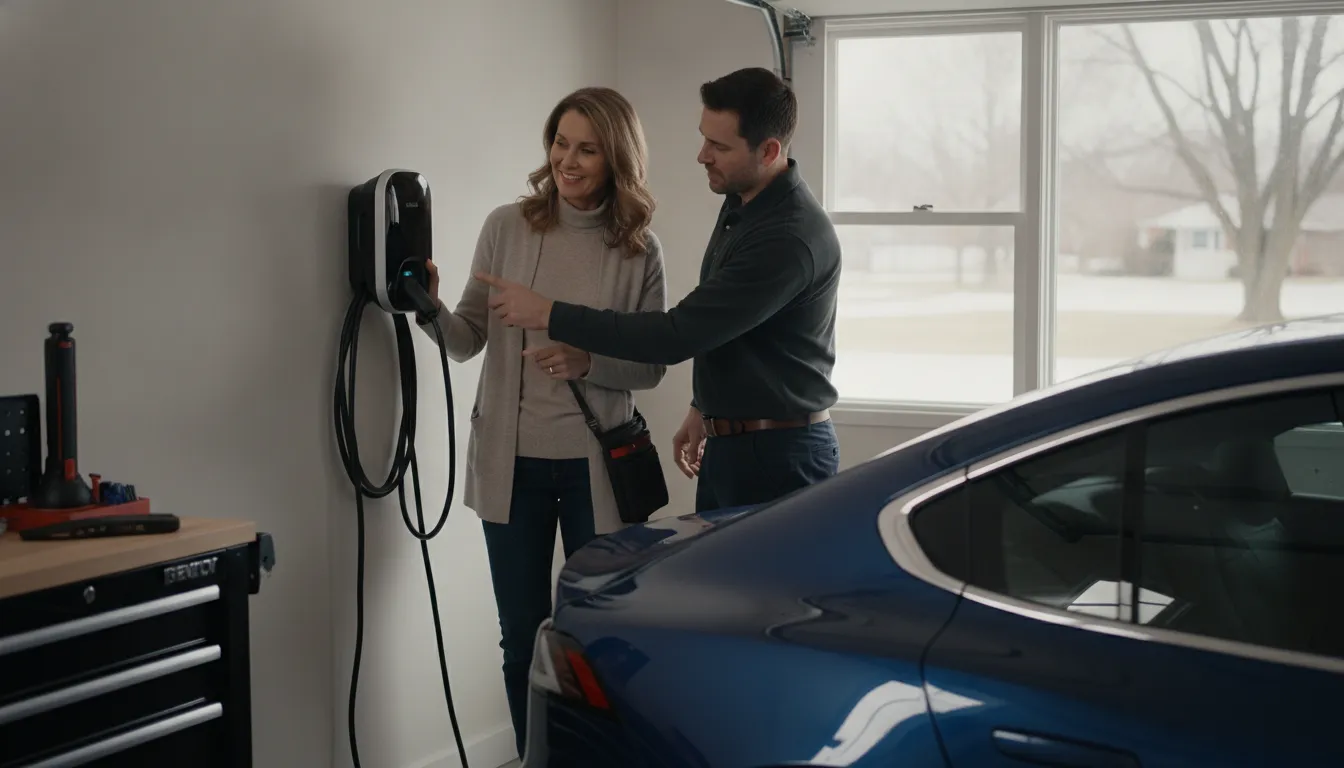
Choosing a home charger is not just a matter of selecting the highest output on the box. Your vehicle's onboard charger, connector, daily routine, parking position, and home's electrical capacity all affect whether a unit is a practical fit.
The best EV charger for home is a Level 2 model that matches your vehicle's connector and onboard charging limit. Choose useful features, adequate cable reach, and a setup that fits your home's electrical capacity. Check both the vehicle and charger specifications. Ask a licensed electrician to assess the circuit and installation requirements.
Those details matter when comparing equipment for an Illinois home. For a wider view of local charging projects, see Brilliant Home Services' Chicagoland EV charger installation overview. Start by matching charger capabilities to your driving routine and vehicle.
How to Choose the Best EV Charger for Home in Illinois
Start with the miles you drive on a typical day and how long the vehicle stays parked at home. Many drivers can meet daily needs with overnight Level 1 charging when a suitable dedicated-circuit outlet is near the parking spot. Level 2 may be a better fit for longer commutes, irregular schedules, multiple vehicles, or a battery that needs more than the usual overnight dwell time. The U.S. Department of Energy describes both as common home charging options: home charging with Level 1 and Level 2 equipment.
For the best EV charger for home use, match the charger's output to what your vehicle can accept, rather than choosing the largest rating available. The vehicle's onboard charger sets the maximum AC charging rate; a higher-output EVSE cannot make the car charge beyond that limit. Check your vehicle manual for its onboard charging capability, then compare it with the listed charger output.
The EPA notes that Level 2 models range from 16 to 80 amps, with 30 to 40 amps more common. The right fit depends on your car and home.
- Daily travel and parking: Consider how much range you use and whether the car reliably has overnight time to recharge. A consistent long parking window may make a different product suitable than frequent, shorter charging windows.
- Connector: Confirm whether the vehicle uses J1772 or J3400/NACS. Adapters can support charging across connector types, but verify compatibility for your specific vehicle and charger before buying.
- Cable reach: Measure the path from the intended mounting location to the vehicle's charging port with the car parked normally. Allow enough reach without stretching the cable across a walkway or creating a trip hazard.
- Safety listing: Look for recognized safety certification and confirm the exact model and configuration in the manufacturer's documentation. The Department of Energy recommends purchasing safety-certified charging equipment.
These choices narrow the product shortlist, but they do not confirm that a particular setup fits the home's electrical conditions. For guidance on the electrical side, see Brilliant's residential electrical services. Keep equipment selection separate from the later decision about the home's installation arrangement.
Which Home EV Charger Features Matter Most?
Start with fit, not the highest output rating or longest feature list. Compare the vehicle's AC limit, connector, home electrical setup, and cable reach, then consider which connected features would be useful.
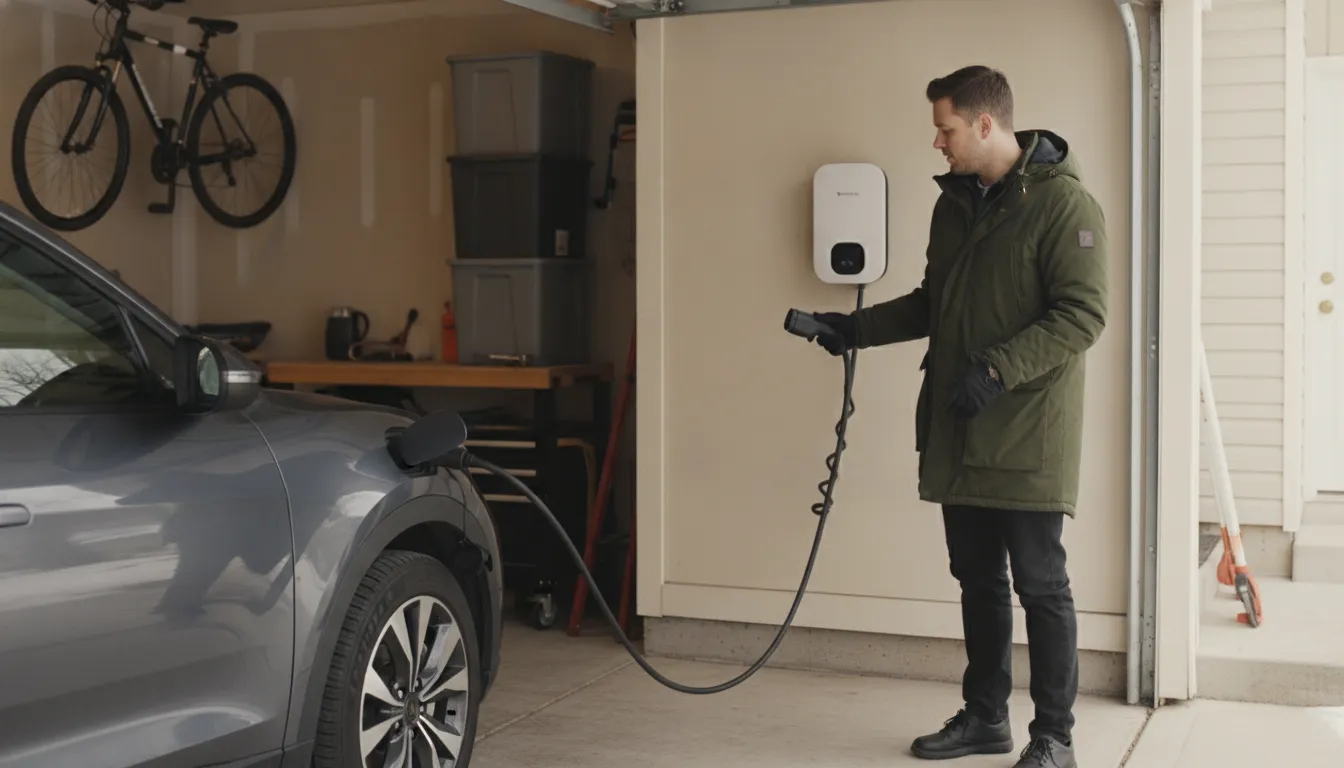
| Decision factor | What it means | How to compare |
|---|---|---|
| Output and vehicle limit | Amperage describes charger output, but the vehicle's onboard charger sets the maximum AC rate it can accept. | Check the vehicle manual's AC charging limit and compare it with charger ratings and the home's available electrical capacity. A higher-rated unit cannot make a vehicle accept more power. DOE home charging guidance discusses the Level 2 option. |
| J1772 or NACS connector | These are major home-charger connector types. An adapter may support charging across connector types, but compatibility should be confirmed. | Identify the vehicle inlet and check its manual and the charger maker's compatibility guidance, including any required adapter. EPA explains connector choices. |
| Plug-in or hardwired | Some equipment connects to a suitable outlet; other units connect directly to the circuit. | Compare the unit's permitted configuration with the home's electrical setup and installation plan. Have an electrician confirm which arrangement is appropriate rather than assuming the options are interchangeable. |
| Cable reach and weather | Cable length affects whether the parked vehicle can connect comfortably. Outdoor placement requires outdoor-rated charging equipment. | Measure from the proposed mounting point to each vehicle's charge port, allowing for normal parking. For an outdoor location, check the equipment rating and have the installation's exposed electrical components assessed. DOE guidance covers outdoor equipment. |
| Safety certification | Independent safety certification is a key equipment-screening factor. | Look for recognized safety certification and follow manufacturer installation instructions. The Department of Energy recommends certified equipment and a certified electrical contractor. |
| App and scheduling | Connected models may offer remote monitoring, controls, charging timers, or usage data; features vary. | Decide whether scheduling or remote status is useful, then verify the specific functions and whether they depend on Wi-Fi or an app. Avoid paying attention to feature names alone; confirm how the chosen model works. |
No single feature makes a charger the best fit for every household. Compare your vehicle and charger manuals, then ask a qualified electrician to confirm the electrical arrangement. That narrows the shortlist to compatible, practical equipment.
How Do ChargePoint, Tesla, Wallbox, and Other Chargers Differ?
These brands show how home chargers vary; they are not a ranked list. Compare connector fit, app features, and installation configuration. A product feature does not guarantee every vehicle or electrical setup can use it. Check the vehicle manual and have an electrician review the home requirements.
ChargePoint Home Flex offers connector and installation choices. The maker lists J1772 and NACS versions, plus hardwired and plug-in configurations. Its app connects home charging with its public network. These choices may suit drivers who want to manage home and public charging in one service. Confirm connector and configuration against your vehicle and home's electrical setup. See current ChargePoint configurations.
Tesla Wall Connector is another model to compare for compatibility and app features. Connector standards are changing, and adapters can bridge some differences. Do not assume an adapter is included or approved for every pairing. Check the vehicle and charger manuals before deciding. Fit matters more than assuming one brand suits only one kind of driver.
Wallbox Pulsar Plus is an example of a charger with connected features and configuration options. Wallbox lists 40-amp plug-in and 48-amp versions. It also describes app scheduling and optional energy-management functions. A higher rating is not automatically a better fit. Home capacity and the vehicle's onboard charger matter. Review Wallbox's current specifications and ask an electrician to assess your setup.
Emporia is another model family with connector and wiring choices. A product review reports J1772 or NACS/J3400 versions, with plug-in or hardwired configurations. Verify current availability and exact specifications with the manufacturer. Across brands, compare connector match, app dependence, installation configuration, support, and safety certification. The Department of Energy recommends safety-certified equipment and a certified electrical contractor. Read the DOE home charging guidance.
Before choosing, check whether an app, account, or Wi-Fi connection is needed for the functions you want. Verify warranty and support terms for the exact model and connector. These checks can be more useful than choosing by a headline feature alone.
JuiceBox deserves a support check before purchase. Consumer Reports reports that Enel X Way ended North American operations and closed app service. Existing owners should check current guidance before relying on app features.
Will a Level 2 Charger Work With Your EV and Electrical Setup?
Compatibility has two sides: the charging connector must work with your vehicle, and the home must be able to support the equipment you choose. Check both before comparing features or buying a unit.
Level 2 means 240-volt AC charging equipment for home use. That describes the power supply category, not a guarantee that every charger will deliver the same rate or suit every home. The U.S. Department of Energy explains the Level 2 voltage and recommends asking an electrician whether a home has adequate capacity: DOE home charging guidance.
Match the connector to your vehicle
J1772 and J3400, commonly called NACS, are major connector types for home charging. Some equipment is offered with one or the other. Adapters can bridge certain differences. Confirm your vehicle's inlet and check the vehicle and charger makers' guidance on supported adapters. Do not assume every combination is compatible. The EPA outlines connector options in its home EV charging guide.
Check the vehicle's AC charging limit
The charger supplies AC power, while the vehicle's onboard charger converts it for the battery. That onboard component sets the maximum AC rate the vehicle can accept. A higher-output home unit will not always charge your EV faster. Compare its output with the vehicle's stated AC capability. A plug-in hybrid may have different needs from a fully electric vehicle, so use your owner's manual.
Have the home's capacity assessed
A Level 2 unit also needs an electrical arrangement that fits the house. Some homes may not have enough capacity for the selected equipment. A qualified electrician can assess whether the home can support it. Do not estimate panel capacity from a product listing or a generic rule of thumb.
- Identify your vehicle's connector and AC charging limit.
- Confirm any adapter is supported by the vehicle and charger makers.
- Ask a qualified electrician to assess the home's capacity for the selected unit.
If capacity is uncertain, see this overview of an electrical panel upgrade for EV charging. It covers the panel question in more detail without assuming an upgrade is needed.
What Matters for a Garage or Outdoor Charger Location?
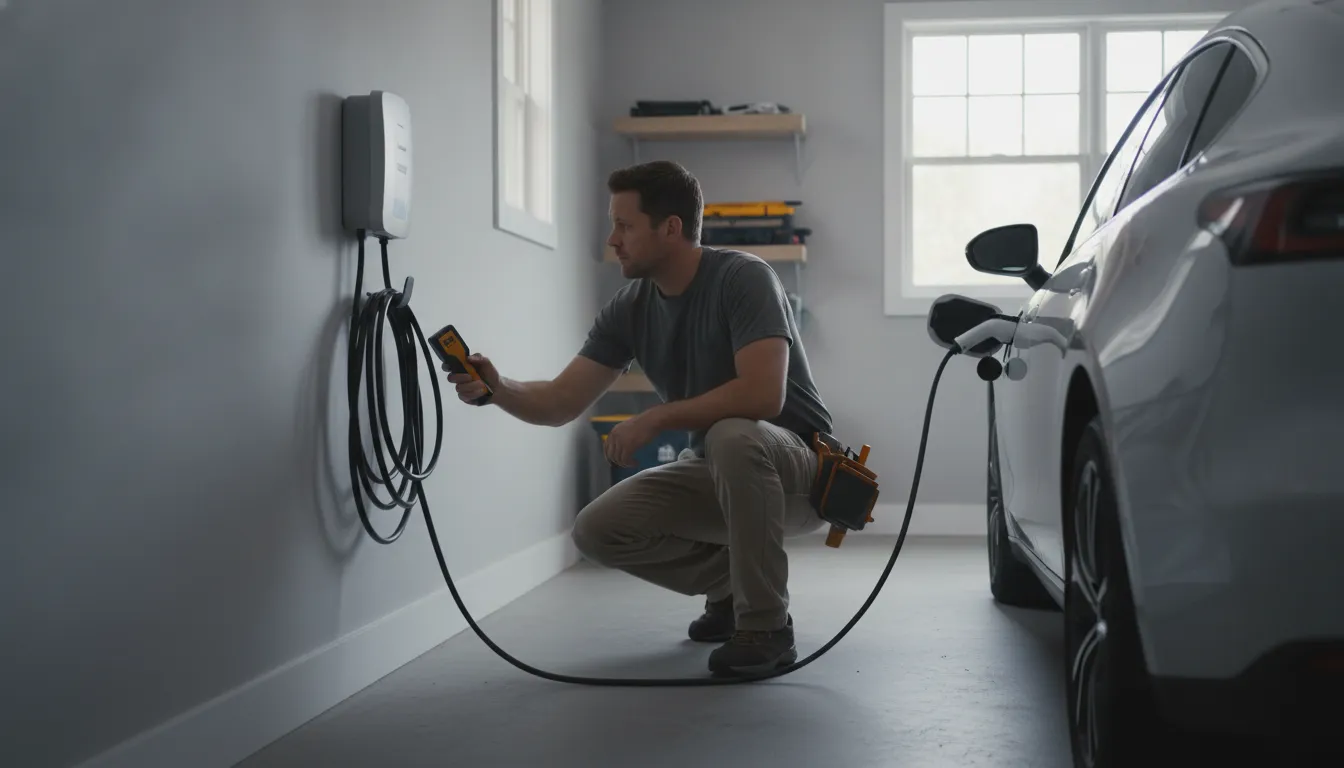
- Match the cable to where the charge port sits. Compare the charger cable length with the vehicle's charge-port position and likely parking angle. Measure the route from the proposed mounting point to the port. Leave slack, but avoid stretching the cable across a walking path or where a door, gate, or vehicle could pinch it. Check both vehicles if more than one may use the charger.
- Start with the usual parking spot. Place the unit where the car normally sits, not where it is easiest to mount in isolation. Check whether the cable can reach when the vehicle backs in or pulls in. A tidy route keeps the cable from obstructing garage access.
- Match equipment to weather exposure. A garage may offer shelter, while an exterior wall can work with outdoor-rated equipment and a suitable electrical installation. The Department of Energy notes outdoor charging is safe with outdoor-rated equipment: DOE guidance on charging at home. Have the installer assess the mounting surface and exposure.
- Check network coverage if using connected features. If monitoring or scheduling matters, check the manufacturer's connectivity needs and whether the signal reaches the location. Confirm what controls remain if the connection is unreliable.
- Review the site before choosing a spot. Mounting location, cable path, vehicle access, exposure, and electrical setup should work together. For wider context, see the Chicagoland EV charger installation guide. The home EV charger installer guide covers the separate choice of an installation provider.
How Can Illinois Homeowners Compare Installation Readiness?
A charger that fits your vehicle still needs to fit your home. Before choosing equipment, consider how you charge now, where the vehicle parks, and whether Level 2 is practical for the property. The U.S. Department of Energy notes that many drivers can meet daily needs with overnight Level 1 charging if a suitable dedicated-circuit outlet is nearby. Level 2 may suit longer commutes, less regular schedules, or vehicles that need more charging during typical overnight downtime.
A site assessment separates equipment selection from electrical work. It can clarify the parking location, charger placement, cable reach, and route from the electrical panel. An electrician can review the home's capacity for the selected equipment. Some homes may not have enough capacity for Level 2 as-is. A qualified electrician can identify whether additional circuits or other work are needed. See the Department of Energy's home charging guidance.
Permits and code requirements are not a universal checklist. Home installations must comply with applicable state and local rules, and authorities may require permits. Requirements can vary by jurisdiction. Confirm the steps for the home's municipality rather than assuming a neighbor's process applies.
When comparing installation plans, ask what the assessment includes, how capacity and code compliance will be evaluated, and who handles required permit coordination. Keep equipment and installation budgets distinct. Brilliant's EV charger installation service includes a free, detailed estimate up front. For incentives, check current rules and eligibility in the 2026 ComEd EV charger rebate guide, since terms can change.
Brilliant Home Services provides Level 2 charger installation in Chicagoland, including the northwest suburbs, and is based in Barrington. This is not a statewide service claim. Its process may include site assessment, permit management, code review, and installation. Learn about electrical services and EV charger installation. Once site readiness is clear, compare equipment against the vehicle's compatibility requirements and your charging routine.
Frequently Asked Questions
What features should I compare in a home EV charger?
Start with connector fit, output that suits your vehicle and home, cable reach, and plug-in or hardwired configuration. Check safety certification. Optional Wi-Fi, scheduling, and energy monitoring matter if you will use them. The Department of Energy recommends safety-certified equipment.
Should I choose a J1772 or NACS connector?
Check your vehicle's inlet and manual. Choose a matching connector or confirm an adapter is appropriate for your vehicle. J1772 and J3400, commonly called NACS, are major connector types. Adapters can support charging across them, according to the EPA home-charging guide.
Can a home EV charger be installed outdoors?
Yes, if the unit is rated for outdoor use. The wiring enclosure and, for a plug-in unit, the outlet enclosure also need outdoor protection. Have the location and exposure assessed rather than relying on the charger rating alone. See the DOE home charging guidance.
Will a higher-output charger charge every EV faster?
No. The vehicle's onboard charger limits the AC rate it can accept. A more powerful home unit cannot exceed that limit. Compare the vehicle's AC capability with charger output and confirm the home's electrical capacity can support the setup.
Are all home EV chargers basically the same?
No. Units differ in output, connector, installation configuration, smart features, and outdoor rating. The right combination depends on your vehicle, parking layout, routine, and electrical setup, not the highest rating alone.
Schedule a Home EV Charger Assessment
Choosing equipment is only part of the decision. A review of vehicle compatibility and your home's electrical setup can help clarify next steps. For Chicagoland service, Schedule Service Now with Brilliant Home Services to discuss a home EV charger assessment.
Ready to Get Started?
Contact Brilliant Home Services for professional, reliable service in Chicagoland. We are available 24/7 for emergencies.