Do I Need a Panel Upgrade for an EV Charger?
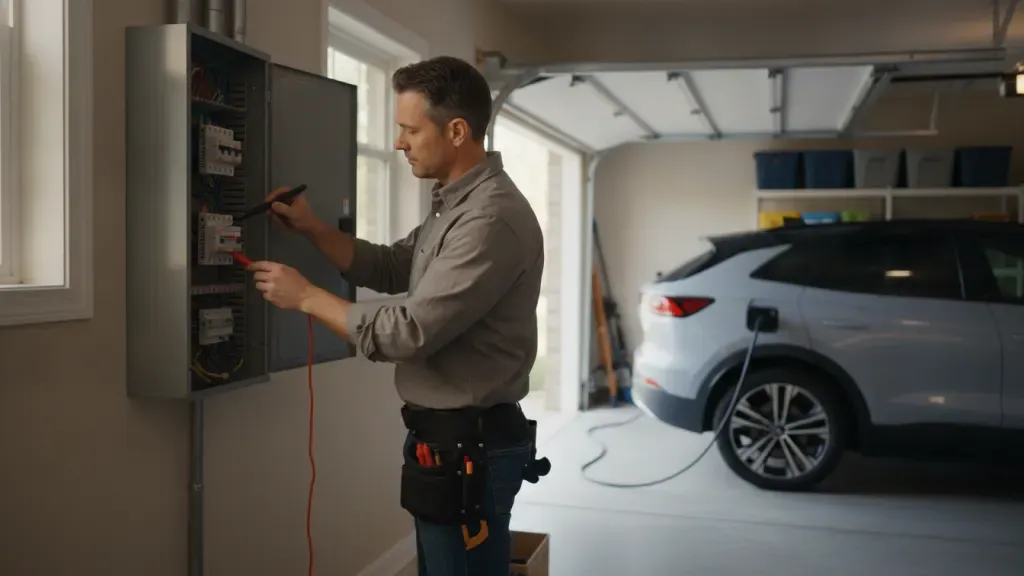
If you are asking whether you need a panel upgrade for an EV charger, the short answer is: maybe, but an electrician must review your panel, service size, existing loads, and charger requirements to know for sure. Many homes can support a Level 2 charger without a full upgrade, while others need a circuit change, load-management equipment, or more electrical capacity.
Schedule Service Now for an EV charger and panel assessment.
Direct answer: A panel upgrade is not automatically required for every EV charger installation. The deciding factors are your service amperage, the continuous load created by the charger, the capacity already used by your home, and the installation requirements at your property. A professional load calculation is safer and more reliable than judging by the panel's age or the number of open breaker spaces.
Brilliant Home Services helps Chicagoland homeowners plan electrical upgrades around the way their homes actually operate. That means looking beyond the charger itself and considering heating and cooling equipment, electric ranges, dryers, hot tubs, generators, future additions, and the location of the proposed charging equipment.
What amperage does an EV charger require?
A typical Level 2 home EV charger uses a dedicated 240-volt circuit and may require substantially more capacity than a standard household receptacle. The exact circuit and breaker requirements depend on the charger manufacturer's instructions and the vehicle's charging capability, so the name "Level 2" alone does not determine whether your panel can support it.
Why is Level 2 charging different from a regular outlet?
A standard household outlet is designed for ordinary plug-in loads. A Level 2 charger is generally installed as dedicated equipment that can deliver faster charging by using a 240-volt circuit. It may run for several hours at a time, which is why the circuit has to be evaluated as a continuing part of the home's electrical demand.
The charger also needs a suitable location, wiring route, overcurrent protection, disconnecting method where required, and equipment that is compatible with the home's electrical system. A panel can have empty spaces and still lack enough overall capacity. Conversely, a home with an older-looking panel may have enough capacity after a professional assessment.
What information should you gather before an assessment?
- The EV make and model, if you already own the vehicle.
- The charger model or installation instructions you are considering.
- The distance from the electrical panel to the planned charger location.
- The service rating printed on the main disconnect or service equipment.
- Large electrical loads such as an electric furnace, heat pump, range, dryer, hot tub, or pool equipment.
- Any planned additions, remodeling, solar equipment, battery storage, or standby generator.
The U.S. Department of Energy Alternative Fuels Data Center provides background on electricity and alternative-fuel infrastructure. For the decision at your home, however, a site-specific electrical review remains essential because two houses with the same charger can have very different existing loads.
How do I know if my current panel can handle an EV charger?
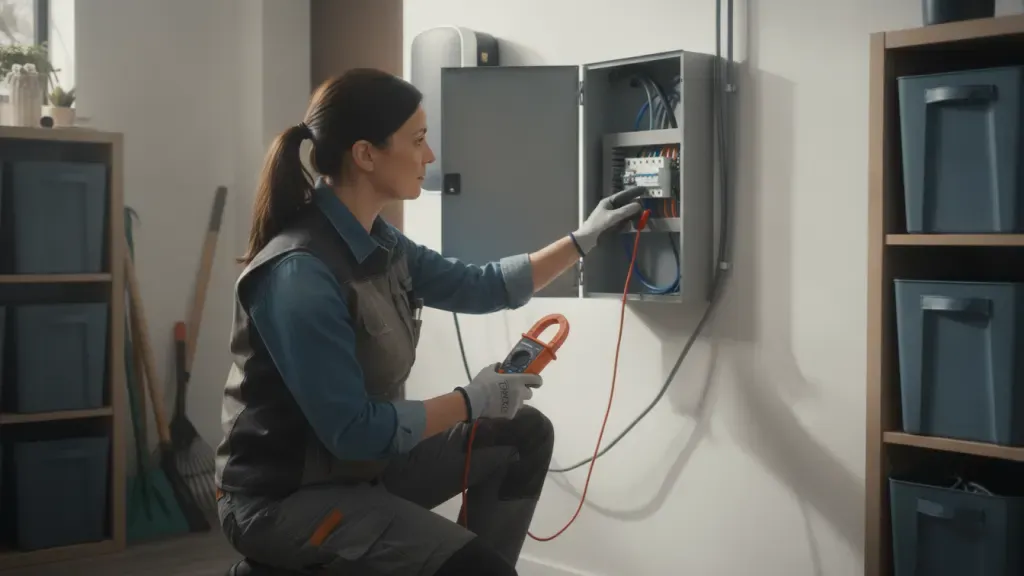
Your current panel can handle an EV charger only when the service, panel, wiring, and calculated household load are compatible with the proposed equipment. The most dependable answer comes from a licensed electrician who confirms the service rating, identifies existing loads, performs the appropriate load calculation, and checks the planned circuit route.
What does an electrician check?
- Service rating: The electrician identifies the capacity of the home's incoming electrical service and the rating of the main equipment.
- Panel condition: The inspection looks for heat damage, corrosion, crowded conductors, obsolete equipment, loose connections, and other safety concerns.
- Existing demand: Major appliances and electric systems are reviewed so the charger is not evaluated in isolation.
- Charger load: The proposed equipment is reviewed using its actual installation instructions, circuit requirements, and intended charging schedule.
- Wiring route: The electrician considers conductor sizing, distance, routing, penetrations, protection, and the charger location.
- Future plans: A design that works today may be undersized if you are planning a heat pump, electric range, generator, addition, or workshop.
Does an open breaker space prove that I do not need an upgrade?
No. An open space tells you that a breaker may physically fit, but it does not prove that the service or panel has enough capacity. A charger circuit must be compatible with the panel's design, and the home's total calculated demand still matters. A professional should also confirm that the panel is in acceptable condition and that the proposed work can be completed safely.
Does an older panel always need to be replaced?
No. Age alone does not answer the question. An older panel may need replacement because of its condition, compatibility, limited capacity, or safety concerns, but another older panel may support a carefully designed circuit. The right recommendation comes from the equipment and load review, not from a blanket rule based on installation year.
For related electrical planning, see Brilliant Home Services electrical services. The goal is to select an installation path that supports the charger without creating an unsafe or inconvenient burden on the rest of the home.
What are the signs you need a panel upgrade before EV charger installation?
You may need a panel upgrade before EV charger installation when the existing service cannot accommodate the calculated load, the equipment is damaged or incompatible, or the installation would leave too little capacity for normal household operation. Warning signs should prompt an assessment, not a do-it-yourself diagnosis.
- Your main service is already heavily loaded: Several large electric appliances operate at the same time, leaving little practical capacity for another continuous load.
- The panel shows heat or damage: Discoloration, melted components, burning smells, buzzing, or repeated tripping require prompt electrical attention.
- The panel is obsolete or incompatible: Some equipment may have limitations that affect safe expansion or the availability of suitable breakers.
- You are adding several major loads: An EV charger combined with a heat pump, electric range, hot tub, or workshop can change the electrical design decision.
- The proposed charger route is unusually long: A distant garage or detached structure can add design, voltage-drop, trenching, or equipment considerations.
- The charger instructions require more capacity: The manufacturer's requirements may exceed what the existing panel and service can safely provide.
- Your current system already has nuisance trips: Existing tripping or flickering should be diagnosed before a new charger circuit is added.
These signs do not automatically mean a full service replacement is necessary. Possible solutions can include a different charger setting, a smaller approved circuit, load-management equipment, a subpanel in an appropriate location, or a service and panel upgrade. The solution should follow the assessment and the actual equipment specifications.
Schedule Service Now to review your panel capacity before buying a charger.
How does a panel upgrade affect EV charger installation cost?
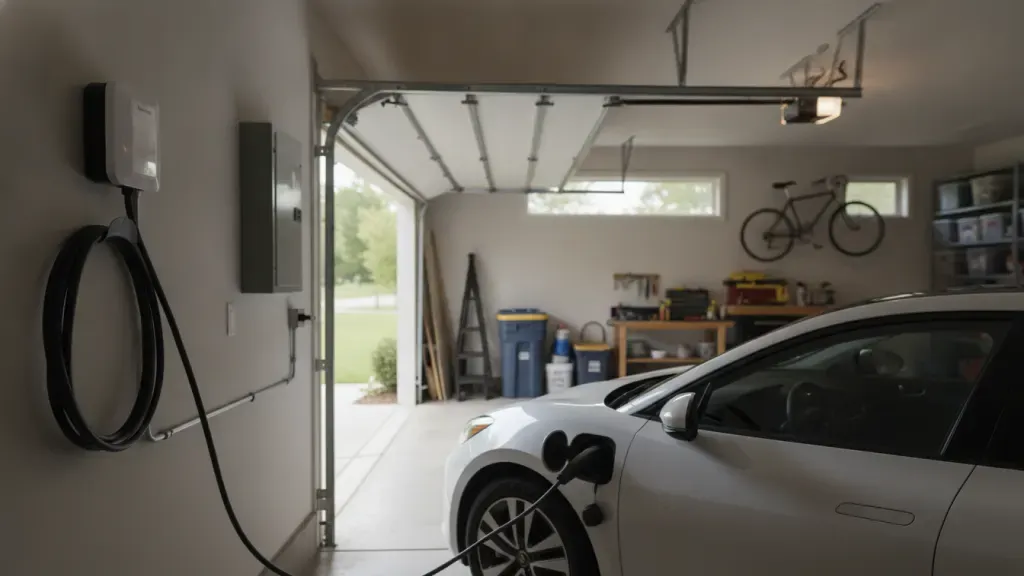
A panel upgrade can add to an EV charger project's total cost because it expands the work beyond installing the charger circuit. The final scope depends on the existing equipment, the service entrance, the distance to the charger, required materials, site access, permits, and any repairs discovered during the assessment. A responsible estimate should be based on the property rather than a generic online number.
What work may be included?
- Removing or replacing an incompatible panel.
- Installing a larger panel and compatible breakers.
- Updating conductors or other service equipment when required.
- Adding a new feeder or subpanel when the design calls for one.
- Running a dedicated charger circuit to an attached or detached garage.
- Making grounding, bonding, labeling, or other code-related corrections.
- Coordinating permits and inspections required by the local authority.
- Repairing unsafe conditions found during the evaluation.
The charger and panel should be planned as one system. Choosing a charger before confirming the electrical path can lead to a design that must be changed later. Brilliant Home Services can review the proposed equipment and explain which work is necessary, which options are available, and which items are outside the charger installation itself.
Can a 100-amp panel support a Level 2 charger?
A 100-amp panel may support a Level 2 charger in some homes, but it is not possible to approve the installation from the service rating alone. The electrician must evaluate the home's calculated demand, the charger's circuit requirements, the condition of the equipment, and the home's other major loads.
When might a 100-amp panel be workable?
A 100-amp service may be workable when the existing household demand is modest, the proposed charger has an appropriate configuration, the panel and service equipment are in good condition, and the calculated load remains within the permitted design limits. Load-management technology may also be an option when it is compatible with the charger and the home's electrical system.
When might an upgrade be the better choice?
An upgrade may make more sense when the home already relies on several large electric loads, when the panel has safety or compatibility concerns, or when the homeowner expects additional electrification soon. Upgrading once may be more practical than designing a series of temporary changes, but that decision should be based on the home's plans and the electrician's findings.
| Situation | What it may mean | What to ask the electrician |
|---|---|---|
| 100-amp service with modest existing loads | A Level 2 charger may be possible after a load review. | Can the proposed charger and circuit fit within the calculated demand? |
| 100-amp service with electric heat and several major appliances | Available capacity may be limited. | Would load management or a service upgrade be safer and more useful? |
| Panel has damage, obsolete components, or nuisance trips | The panel condition needs attention before adding a new load. | Should the panel be repaired or replaced before charger work? |
| Homeowner plans more electrification | Future demand may change today's recommendation. | What capacity should be planned for future equipment? |
What should Illinois homeowners expect during the assessment?
For an Illinois homeowner, the assessment should connect the proposed charger to the actual property, not just to a product brochure. The electrician should discuss the service, panel, charger location, wiring route, equipment requirements, and the local process for permits or inspections when those apply.
What should you ask before approving the work?
- What charger model and circuit size does the proposal cover?
- Was the existing service and panel capacity evaluated?
- Does the proposal include the wiring route and any garage or exterior work?
- Are permits and inspections part of the planned scope when required?
- What happens if the panel inspection finds an unsafe condition?
- Will the design leave room for future electrical equipment?
- What parts of the work are installation, and what parts are optional upgrades?
Requirements can vary by municipality and project scope, so a qualified local electrician should confirm the applicable process for your address. Brilliant Home Services serves homeowners throughout Chicagoland, including Barrington and nearby communities, with electrical planning, panel work, and EV charger installation.
The broader EV charger and home generator installation guide explains how charging and backup power fit into a larger home plan. This article focuses specifically on the panel-capacity question that should be answered before the installation is scheduled.
Frequently asked questions about panel upgrades for EV chargers
Do all Level 2 EV chargers require a panel upgrade?
No. A panel upgrade is not automatic. The answer depends on the existing service capacity, household loads, charger requirements, panel condition, and the results of the electrical assessment.
Can I install an EV charger in an empty breaker space myself?
An empty breaker space does not prove that the service can handle the charger, and EV charger circuits involve equipment and installation requirements beyond simply adding a breaker. Have a qualified electrician evaluate and install the circuit.
Is a 200-amp panel always enough for an EV charger?
No. A 200-amp service often provides more capacity, but the home's existing demand, charger specifications, panel condition, and future loads still need to be reviewed.
What if my panel cannot support the charger?
Depending on the assessment, options may include a different approved charging configuration, load-management equipment, a subpanel, repairs, or a panel and service upgrade. The right option depends on the property and equipment.
How can I get a panel and EV charger assessment in Barrington?
Contact Brilliant Home Services through the contact page to discuss an EV charger and electrical panel assessment. You can also call (847) 588-2533.
Schedule Service Now for a professional panel and EV charger assessment.
Ready to Get Started?
Contact Brilliant Home Services for professional, reliable service in Chicagoland. We are available 24/7 for emergencies.