What Size Electrical Panel Do I Need Illinois?
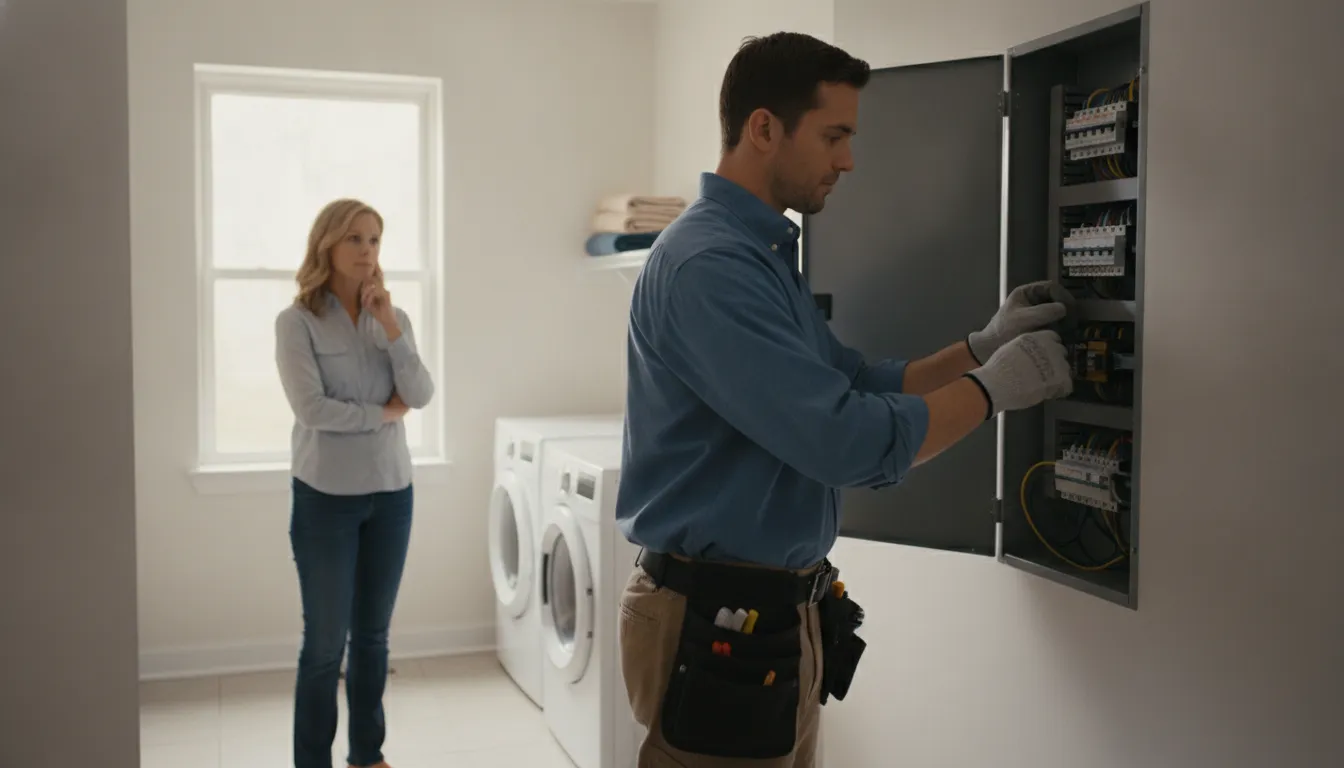
Adding an EV charger, heat pump, electric range, or workshop equipment can make your home’s electrical capacity an important planning question. The number printed on the panel is only the starting point, especially in an older Illinois home.
The answer to what size electrical panel do i need illinois depends on your home’s calculated electrical load, existing service, major appliances, and planned upgrades. Many newer homes use 200-amp service, while older homes may have 60- or 100-amp panels. A licensed electrician should complete a load calculation and inspect the service before recommending an upgrade.
For homeowners in Barrington and the northwest suburbs, the safest choice is the capacity your home actually needs, with room for realistic future demand. Brilliant Home Services provides electrical services for Barrington and northwest Chicago suburbs, including panel assessments and upgrades. Schedule Service Now to discuss your home’s electrical plans, then use the guide below to understand how service size is determined.
What size electrical panel do I need Illinois homeowners to plan for?
Short answer: There is no single electrical panel size that fits every Illinois home. The right rating depends on a professional load calculation, the existing service equipment, and the electrical demand created by your home and planned improvements. A licensed electrician should evaluate the property before recommending a panel upgrade or service change.
Amperage, shown as amps, describes how much electrical current a panel and service can safely distribute. Your main panel is often located near the electric meter and may display a rating such as 100 or 200 amps. That number describes service capacity, not the amount of electricity your home uses at every moment. The panel still needs enough capacity for the loads that may operate together.
Common panel ratings in Illinois homes
Older homes may have 60- or 100-amp service, while newer homes commonly have 200 amps or more. Common residential ratings include 60, 100, 125, 150, 200, and 220 amps. Some larger homes may have 300- or 400-amp service. These ranges provide useful context, but they do not establish a required rating for your address.
For example, a home with gas heat, gas cooking, and limited electric equipment may have a different calculated demand than a home with electric heating, cooking, and water heating. Multiple HVAC systems, an EV charger, solar equipment, a generator, or a new addition can change the calculation. A 200-amp service is common in modern homes, but it is not an automatic Illinois requirement. The same principle applies to larger ratings: more capacity is not a substitute for evaluating the actual design.
How a load calculation determines capacity
A load calculation adds the electrical demand of the home’s systems and accounts for how those loads are expected to operate. A residential service worksheet may review lighting, appliances, cooking equipment, a dryer, HVAC equipment, motors, and other loads. The electrician also considers the condition and rating of the panel, service conductors, meter equipment, and available circuit space.
Ask for the calculation to include both current needs and realistic plans. That makes the discussion more useful if you are remodeling, converting from gas to electric, adding an EV charger, or planning other major equipment. A subpanel may create additional circuit space when the main service has capacity, but it does not increase the home’s main service amperage.
- Locate the main panel and note its labeled amperage without removing the cover.
- List major electric appliances and equipment, including planned additions.
- Record whether heating, cooking, and water heating use gas or electricity.
- Ask a licensed electrician for a load calculation and on-site service evaluation.
For Barrington and northwest Chicago suburbs homeowners, a careful assessment is the safest way to match service capacity to the property. Explore electrical services for Barrington and northwest Chicago suburbs when planning an inspection or panel upgrade.
What signs suggest your electrical panel is too small?
A panel that seems too small may show several warning signs, but no single symptom proves that the service is undersized. A panel distributes a fixed amount of electrical power, measured in amperes. The home’s actual demand depends on its appliances, heating and cooling equipment, wiring, and planned upgrades. Treat these clues as reasons to schedule an assessment, not as a diagnosis.
Recurring breaker trips
If the same breaker trips repeatedly, the circuit may be overloaded, or the equipment connected to it may have a fault. A main breaker that trips can indicate a broader service or equipment problem. Resetting a breaker once after an isolated event may be reasonable, but repeated trips deserve professional troubleshooting. Do not install a larger breaker to stop the trips. The breaker, wiring, and panel must be evaluated together.
Flickering lights, dimming, or unusual heat
Lights that flicker or dim when a large appliance starts can point to a connection, circuit, or capacity concern. They can also have other causes, so the symptom alone cannot identify an undersized panel. Stop and seek prompt electrical help if you notice a burning odor, buzzing, scorch marks, melted plastic, rust, or heat around the panel, meter equipment, outlets, or switches. Electrical service work can expose a person to energized conductors and cause serious injury or death, as municipal safety guidance warns: Wheaton’s electrical service panel guidance.
Little or no breaker space
A crowded panel or a lack of open breaker spaces can make a planned project more complicated. That does not automatically mean the home’s main service lacks capacity. A subpanel may add circuit space when the main panel has capacity, but it does not increase the home’s main service amperage. A qualified electrician needs to inspect the panel, service rating, conductors, and calculated load before recommending a solution.
Planned equipment will not fit the current demand
Adding an electric vehicle charger, heat pump, electric range, water heater, generator, addition, or other substantial equipment may expose a capacity limitation. The right question is not simply whether a new breaker can fit. A load review should account for existing and planned equipment, including heating, cooling, cooking, motors, and other loads.
For a safe next step, avoid opening the panel cover, moving wires, or testing energized components yourself. Photograph the outside label from a safe position if you can do so without touching equipment, note which appliances were operating when symptoms occurred, and arrange a professional electrical assessment. An electrician can distinguish an undersized service from a circuit fault, damaged equipment, or another issue and explain the appropriate path for your Illinois home.
How do 100-amp, 200-amp, and 400-amp service compare?
Amperage describes how much electrical current a home’s service can safely deliver. The number on the main panel is useful, but it does not answer the question by itself. A load calculation considers the equipment that may operate at the same time, along with the condition of the service and the home’s planned improvements.
| Service rating | General context | Loads that may affect the evaluation |
|---|---|---|
| 100 amps | May be found in older homes or homes with relatively limited electrical demand. | Gas heating, cooking, and water heating can reduce electrical demand. Electric appliances, an EV charger, or planned additions may change the calculation. |
| 200 amps | A common service rating for many newer or updated homes, but not an automatic requirement for every Illinois property. | Electric heating, air conditioning, cooking, clothes drying, water heating, workshops, EV charging, solar equipment, or future remodeling may affect capacity. |
| 400 amps | May be considered for a very large or heavily electrified home with substantial present or planned demand. | Multiple large electric systems, heat pumps, induction cooking, solar, pools, spas, generators, or other major loads require careful professional evaluation. |
Square footage alone does not determine the right service size. Two homes of similar size can have very different electrical demand. One may use gas for heating, cooking, and hot water, while the other may rely on electric equipment for those functions. The second home could also be preparing for an EV charger, heat pump, induction range, solar installation, or an addition. Those decisions can matter more than the floor plan alone.
A residential service worksheet typically reviews general lighting, fixed appliances, cooking equipment, dryers, heating or air conditioning, motors, and other loads such as a pool pump or spa. It then uses the calculated electrical demand to estimate service amperage. The worksheet is educational, however, and the final adjustments should be made by a qualified electrical professional. See the electrical capacity for EV charging before treating a planned charger as an afterthought.
These figures are general education, not a recommendation for your home. A licensed electrician serving Barrington and the northwest Chicago suburbs can inspect the existing panel, service conductors, and connected equipment, then calculate present and future loads. That assessment is the reliable way to determine whether the existing capacity is appropriate, whether additional circuit space is enough, or whether a service upgrade should be evaluated.
Do you need a panel upgrade for an EV charger or solar?
Not automatically. Installing an EV charger or solar array does not, by itself, mean your home needs a larger electrical service. The answer depends on the capacity already available, the equipment being added, and the home’s calculated load. A licensed electrician should review those factors before recommending a panel upgrade, load-management equipment, or another solution.
For context, one general electrical guide lists most Level 2 EV chargers at approximately 30 to 50 amps. That is a useful planning range, not a universal requirement for every charger or vehicle. The charger’s specifications, charging speed, installation method, and the home’s existing demand all matter. You can learn more about electrical capacity for EV charging before planning the installation.
What else belongs in the load review?
An EV charger or solar equipment may be only one part of a larger electrical-planning decision. A load review should account for both current equipment and projects you expect to complete soon, including:
- Electric furnaces, central air conditioning, heat pumps, and other electric HVAC equipment
- Induction cooking equipment, electric ranges, and electric water heaters
- Generators, battery systems, and solar inverters
- Pool pumps, spas, and other outdoor equipment
- Home additions, finished spaces, workshops, and remodels that add circuits
Residential service worksheets commonly organize the review around lighting, fixed appliances, dryers, cooking equipment, heating or air conditioning, motors, and other loads. Pools and spas can appear in that “other loads” category, while a pump or similar motor may require separate consideration. A worksheet may express the calculated service load in volt-amperes and divide it by 240 to estimate service amps, but it is an educational starting point. The contractor responsible for the work must make the final adjustments for the specific property and equipment.
When might an upgrade be part of the plan?
An upgrade may be appropriate when the calculated demand approaches the existing service capacity. A larger service or panel may also be needed when the panel lacks suitable spaces or compatible equipment, or when several major electric systems are being added together. Solar can require review of the panel’s bus rating, breaker arrangement, and connection method. Those details cannot be determined from the solar array size alone.
Adding a subpanel may create circuit space when the main panel has capacity, but it does not increase the home’s main service amperage. In Barrington and the surrounding northwest Chicago suburbs, an electrician should inspect the panel, service conductors, equipment ratings, and available working space, then explain the safest code-compliant path. Do not open or modify energized service equipment yourself. A professional load calculation gives you a defensible answer based on your home’s actual present and future needs.
What does panel sizing cost in the Chicago suburbs?
There is no reliable one-size-fits-all price for panel sizing or a possible upgrade in Barrington and the surrounding Chicago suburbs. The scope has to be understood first. A licensed electrician should evaluate the existing service, calculate the home’s electrical load, and identify the work required before a quote can be meaningful.
What can change the scope of the work?
Panel size is only one part of the assessment. The condition and capacity of the current panel, meter equipment, service entrance conductors, grounding, and branch wiring can all affect the recommended approach. A home may need more than a replacement panel if related equipment is outdated, damaged, or unable to support the planned load.
Equipment choices also matter. Electric heating, cooking, water heating, HVAC systems, an EV charger, solar, a generator, a pool, or a future addition can increase demand. A residential service worksheet accounts for lighting, fixed appliances, dryers, cooking equipment, heating or air conditioning, motors, and other loads. It also notes that a contractor is responsible for final adjustments, so an online calculator cannot replace a professional review. See the service-load worksheet for the categories an electrician may consider.
Site conditions can add complexity, too. Limited working space, difficult access, long wiring runs, concealed conductors, coordination with the utility, and the requirements of the local authority having jurisdiction may affect the work plan. Clearance and installation details must be confirmed for the specific property rather than assumed from a general rule.
What should you request with an assessment or quote?
- A written load calculation based on the home’s current equipment and planned additions.
- An inspection of the panel, service conductors, grounding, breakers, and visible wiring.
- A clear explanation of whether the scope involves a panel replacement, a larger service, circuit changes, or related repairs.
- Confirmation of utility coordination, inspection steps, and applicable local requirements.
- A description of the equipment, workmanship, cleanup, and any assumptions included in the proposal.
Brilliant Home Services provides electrical inspections, panel installation and upgrades, and related planning for northwest Chicagoland homes. Request an assessment so the recommendation reflects your home’s actual condition and future electrical needs, not an unsupported price guess.
How is a panel assessment scheduled in Barrington?
Scheduling a panel assessment starts with a conversation about your home, your current electrical equipment, and any changes you are considering. If you are planning an upgrade, remodel, EV charger, heat pump, generator, or other major addition, share those details when you contact a Barrington electrician. They help the electrician evaluate present demand and plan for realistic future use instead of guessing from square footage alone.
- Discuss the reason for the assessment. Explain symptoms such as limited circuit space, nuisance tripping, or an aging panel. Also mention planned appliances and systems, including electric heating, cooking, water heating, HVAC equipment, an EV charger, solar, a generator, pool equipment, or a home addition. These details help define the scope of the review.
- Inspect the panel and service equipment. The electrician reviews the panel’s current rating, physical condition, labeling, breakers, available circuit space, and signs of damage or overheating. They also consider the service conductors and the context around the electric meter. The panel rating describes the amount of power the equipment is designed to distribute, but the label alone does not determine whether an upgrade is appropriate.
- Review the home’s calculated load. A proper load review considers lighting, fixed appliances, cooking equipment, dryers, heating or air conditioning, motors, and other significant loads. The electrician compares current demand with the equipment’s service capacity, then accounts for planned additions. A general worksheet can support education, but the final assessment should come from a qualified professional familiar with the home’s actual installation.
- Check clearance, grounding, and applicable requirements. The assessment includes working space around the equipment for safe operation and maintenance. It also considers grounding, branch-circuit conditions, manufacturer specifications, and requirements that apply to the project and location. Local guidance states that electrical working space must be maintained around equipment, and that new panels and breakers must follow product listings and installation instructions: Wheaton electrical service panel guidance.
- Review the recommended next step. After the inspection and load review, ask the electrician to explain the findings, options, expected scope, and any additional information needed before work begins. The result may be an assessment for a panel upgrade, repairs, improved circuit planning, or no immediate change. It should be based on the home’s condition and calculated demand, not a guaranteed size.
Do not remove the panel cover, handle breakers, or open energized equipment to prepare for the visit. Service equipment can contain energized conductors even when a main breaker is off, creating a serious injury risk. Leave the inspection to a licensed electrician and request an assessment when you are ready.
Frequently Asked Questions
What is the standard electrical panel size for a modern home?
For many modern homes, 200 amps is common, but it is not an automatic requirement. The correct rating depends on a load calculation that considers heating, cooking, water heating, appliances, HVAC equipment, and planned additions. Older homes may have 60- or 100-amp service, while larger homes may need more. Rewiring America explains common residential panel ratings.
Is 100 amps enough for a 1,500-square-foot house?
It may be enough, but square footage alone cannot answer the question. A home using gas for heating, cooking, and water heating may have lower electrical demand than a similarly sized fully electric home. A licensed electrician should calculate the existing and planned loads before confirming that 100-amp service is adequate.
Do I need 200 amps for an EV charger?
Not necessarily. Most Level 2 EV chargers draw about 30 to 50 amps. So the key question is whether the existing service has enough capacity after the home’s other loads are counted. This electrical panel guide notes the typical Level 2 charger range. An electrician can evaluate the panel and charger circuit together.
Can I install a second panel instead of upgrading?
Sometimes, if the main service has sufficient capacity and the installation meets applicable requirements. A subpanel adds circuit space, but it does not increase the home’s main service amperage. If the service is already fully loaded, a subpanel alone will not solve the capacity problem.
How do I tell if my panel is 100 amps or 200 amps?
Look for the rating on the panel label or the main disconnect, where a number such as 100 or 200 amps is commonly shown. Do not remove the cover or handle energized equipment to investigate. If the label is missing, damaged, or unclear, have a licensed electrician identify the service rating safely and assess whether it supports your home’s needs.
Schedule a Safe Panel Assessment
If you are unsure whether your electrical panel can support your home’s current or planned needs, a professional assessment can help clarify the next step. Brilliant Home Services can review your situation and explain practical options for your Barrington or northwest Chicago suburb home. Schedule Service Now to request an assessment and speak with the team about your electrical panel.
Ready to Get Started?
Contact Brilliant Home Services for professional, reliable service in Chicagoland. We are available 24/7 for emergencies.