Why Is a Furnace Short Cycling in a Barrington Home?
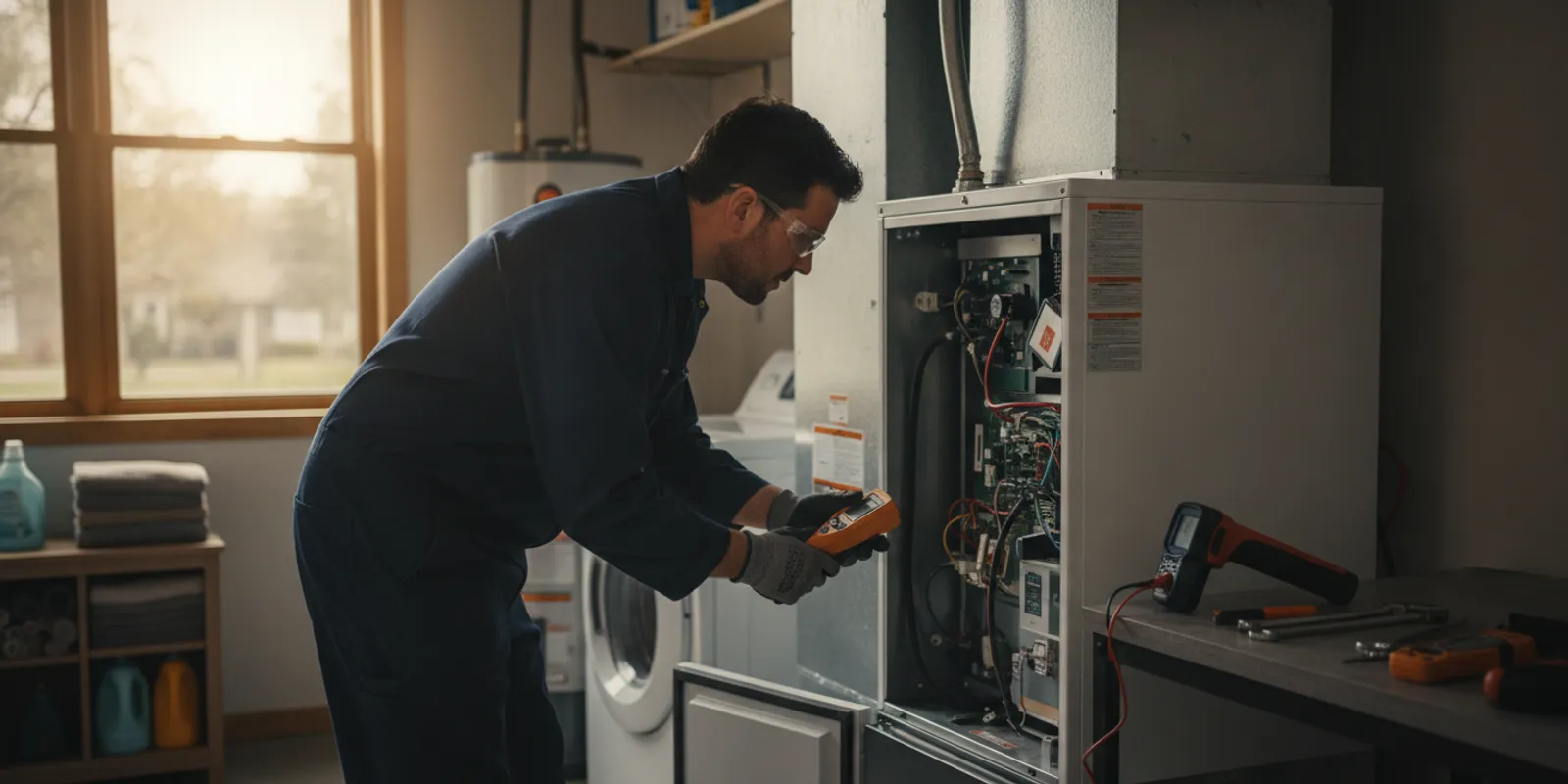
If your furnace starts, runs briefly, shuts off, and starts again soon afterward, you may be noticing furnace short cycling in a Barrington home. The pattern can have several causes, from a restricted filter to a control or equipment issue, and the run time alone cannot identify which one applies. This guide explains what to observe, what you can safely check, and when to request professional help.
What does furnace short cycling mean?
A heating cycle begins when the thermostat calls for heat. The furnace starts, warms the home, and stops when the thermostat's setting is reached or when a control interrupts operation. Short cycling describes a repeated pattern in which heating runs end sooner than expected and the furnace starts again before the home has been comfortably heated. There is no single cycle length that diagnoses every furnace. Equipment type, outdoor temperature, thermostat placement, duct layout, and the home's heat loss all affect how long a normal run lasts.
Look for repetition and context instead of judging one brief run. A furnace may run for a short period after a thermostat adjustment, during relatively mild weather, or when there is little heating demand. A concern is more likely when starts and stops repeat, rooms remain cold, the pattern is new and persistent, or the furnace stops during its start sequence. Keep a simple record of approximate start and stop times, the thermostat setting, and whether the blower keeps running after the burners stop.
Short cycling is a symptom, not a diagnosis. It does not automatically mean the furnace must be replaced, and a particular sound or run time does not prove that one part has failed. A technician may need to determine whether airflow, thermostat signals, safety controls, fuel delivery, drainage, duct conditions, or another issue is interrupting the heat cycle. For information about the company's heating work, see heating services.
Why is a furnace short cycling in a Barrington home?
Several conditions can cause a furnace to stop before the thermostat is satisfied. Some are visible without touching the equipment. Others involve electrical, combustion, or safety systems and should be left to a qualified professional. The possibilities below help organize what you notice; they do not identify a fault in a particular furnace. More than one factor can also be present at the same time.
Could restricted airflow be stopping the furnace?
A dirty or clogged filter can reduce the air moving through the system. If airflow is too low, heat may not be carried away from the furnace as intended. An internal safety control, usually the high-limit switch, may then stop heating to protect the equipment. The guide to furnace limit switch symptoms covers that control in more detail. The blower may continue to move air while the system cools, and the furnace may try to heat again later. A filter is only one possible restriction: a blocked return grille, obstructed intake, closed or covered register, duct problem, or blower issue can also affect airflow, depending on system design.
Check the filter's condition and follow the manufacturer's directions for size, orientation, and replacement interval. A filter should fit correctly; do not force in a different size or run the furnace without a filter as a test. A filter that looks clean is not proof that airflow is normal, just as a dusty filter does not prove it is the only cause. If a correct new filter does not change the repeated shutdowns, avoid continuing to replace filters in hopes of solving an issue that needs diagnosis.
Walk through the rooms and look at accessible supply registers and return grilles. Move furniture, rugs, curtains, boxes, or other items that cover them. Avoid closing many registers to push more heat into another room. The duct system is designed to move a certain volume of air, and restricting outlets can affect that path rather than improve comfort. If some rooms have weak airflow while others seem normal, note the difference rather than opening equipment or modifying ducts.
Can the thermostat or its location contribute?
A thermostat measures conditions near its own location, not the temperature in every room. If it is in direct sunlight, near a heat-producing appliance, beside a draft, or close to a supply register, it may sense a temperature that does not represent the rest of the home. It could end a call for heat while distant rooms remain cool. A low battery, an unexpected schedule change, or a setpoint that was adjusted can also make operation appear erratic.
Check that the thermostat is set to heat and that the desired temperature is above the displayed room temperature. Review its schedule, especially if the pattern occurs at a recurring time or after a setback. Replace batteries only when the thermostat instructions call for it. Do not open the thermostat, adjust wiring, or move it as a test. If the display changes suddenly, shows an error, or appears inconsistent with the room, record what it shows and when the changes happen.
A useful comparison is to note the temperature shown at the thermostat and whether rooms at the far end of the home feel substantially different. That observation is more helpful than repeatedly raising and lowering the setpoint. A high setting cannot make a furnace produce heat continuously if a safety condition is interrupting operation, and repeated adjustments can obscure the original pattern.
Could the furnace be too large for the home's heating needs?
Equipment that supplies heat faster than the home can absorb it may satisfy the thermostat quickly and stop. In some cases, repeated quick runs can be related to sizing, duct design, or changes to the building. A home addition, new insulation, replacement windows, or other renovation may change heating demand or how warmth moves through rooms. These are reasons to ask for an evaluation, not a basis for concluding from run time alone that an existing furnace is oversized.
If the pattern began after a renovation, describe what changed and when. If replacement or major system work is being considered, ask how the home's heating needs and existing ductwork will be evaluated. Choosing equipment based only on the old furnace's label or a rough square-footage estimate may overlook the home's layout, insulation, windows, and distribution system. An assessment should account for the actual house rather than treating every home of similar size as identical.
Can dirty components or a drainage issue interrupt operation?
Dust or debris on internal components may interfere with heat transfer or operation. Some high-efficiency furnaces also create condensate that needs to drain correctly. A blocked drain, water-related sensor, or other condensate issue can interrupt operation. Visible water near the furnace is worth reporting, but it does not by itself establish where the water came from. Avoid taking apart a drain, pouring chemicals into it, or reaching into the cabinet. Internal cleaning and diagnosis can require access to components and should be handled by a trained technician.
Note whether water appears only during furnace operation, whether it is near a drain or another appliance, and whether the floor is wet or just marked. Do not touch water near electrical parts. If there is a substantial leak or you see water contacting wiring or equipment, keep clear and request appropriate help. A technician can distinguish a condensate concern from another source and determine whether it is connected to the cycling symptom.
Could ignition, flame sensing, or a safety control be involved?
A furnace may begin its start sequence but stop if it cannot establish or confirm a safe flame. A control may also interrupt heating when it detects a condition that needs attention. The exact sequence differs across equipment types. A clicking sound, a brief burst of warm air, or a momentary pause does not establish which component is involved. A recurring fault indicator can provide useful diagnostic information, but it does not necessarily name the failed part.
Do not bypass a safety switch, remove access panels while the furnace is operating, adjust gas components, or repeatedly reset the system. Resetting may clear an indicator or change the sequence without fixing the cause, and it can make the original behavior harder to describe. If the furnace repeatedly stops during startup or displays the same fault, record the indicator from a safe position and arrange professional assessment.
Could duct leakage or uneven distribution explain the symptoms?
Leaky, poorly balanced, or obstructed ductwork can prevent heat from reaching the thermostat and rooms as intended. A thermostat might be satisfied quickly while a distant room remains uncomfortable, or air delivery may vary from room to room. These distribution problems do not always cause short cycling, but they can accompany it or make the symptom harder to interpret. Note which rooms feel cold, whether airflow seems weak, and whether the issue began after duct or remodeling work.
Do not tape over vents, seal unknown openings, or alter duct connections around the furnace as a diagnostic experiment. A visible gap does not always reveal whether a duct should be sealed or how the system is balanced. Share the locations and timing of the comfort differences so a technician can consider the whole heating path, from equipment to rooms.
Can weather or ordinary operating changes look like cycling?
A furnace's run time changes with outdoor conditions and the amount of heat the home needs. A mild afternoon, a recent change in thermostat setting, or a programmed recovery from a setback can produce a different pattern from a cold night with a steady setting. A blower may also continue briefly after the heat source stops, as part of normal operation. One shorter run, by itself, does not confirm that the furnace is short cycling.
Compare like conditions when you keep notes. Record whether the symptom happens at a consistent time, after a schedule transition, or during a noticeable weather change. If the furnace starts and stops repeatedly under steady settings and rooms do not reach the desired comfort, that persistent pattern deserves attention even if the weather has recently shifted.
What can you safely check before calling?
Simple observations can help a technician understand the symptom. Keep checks limited to normal homeowner controls and visible conditions. You do not need to recreate the shutdown or prove the cause. If anything smells unusual, looks damaged, or makes you uncertain, stop and contact a professional.
- Write down the sequence. Note when the furnace starts, when it stops, how long it stays off, and how often the sequence repeats. Approximate times are useful. Also record whether air from the registers is warm, cool, or weak and whether the blower continues after the heating stops.
- Check the thermostat controls. Confirm that it is set to heat and review its setpoint, displayed room temperature, schedule, and any visible alert. Avoid repeatedly changing the setting to provoke a response. Replace batteries only if the manufacturer's instructions call for it.
- Inspect the filter without entering the furnace. If the filter is accessible as intended and visibly loaded, replace it with the correct size and orientation, following equipment instructions. Record its size and when it was last changed. Do not remove a panel that you would not normally open for filter access.
- Look at accessible registers and returns. Move belongings away from them and note any rooms where airflow remains weak. Do not shut many registers or alter the ductwork in an effort to force more air elsewhere.
- Record visible alerts from a safe position. If an indicator or error code can be seen without opening the cabinet, write it down or take a photo. Do not reach behind a panel or treat a code as a complete diagnosis.
- Make a short timeline of recent changes. Note filter replacement, thermostat programming, renovations, new equipment, unusual weather, and recent service. Include when the cycling began and whether it has changed over time.
- Observe comfort by room. List which rooms are comfortable and which are not. Include whether the pattern affects the whole home or only one area. Do not try to measure hidden duct temperatures or enter restricted spaces.
Do not disassemble the furnace, reach into its cabinet, work on wiring, adjust gas valves, clean burners, or defeat a safety control. Avoid repeated power cycling. If the unit stops, note the circumstances and seek service guidance instead of repeatedly restarting it. For heating work information, visit the heating services page; if you need to explain the symptom, use the contact page.
When should you stop troubleshooting and seek help?
Arrange professional assessment when the furnace keeps cycling after basic airflow and thermostat checks, the home does not heat consistently, the equipment displays a recurring fault, or the issue returns soon after a filter change. Also request help if the furnace repeatedly stops during startup, the blower or airflow seems abnormal, or the symptom began after work on the heating system. A technician can inspect the system in context and determine whether the cause is an adjustment, maintenance need, control interruption, airflow issue, or repair.
Some warning signs are not routine service concerns. If you suspect a gas leak, leave the area and contact emergency services or the appropriate utility from a safe location. Do not operate switches or use flames if you suspect leaking gas; follow local emergency guidance. Treat a carbon monoxide alarm as serious. Move people and pets to fresh air and seek emergency help rather than troubleshooting or waiting to see whether the furnace restarts. The U.S. Consumer Product Safety Commission provides consumer safety information at its official website.
If there is a burning odor, visible smoke, sparking, or an unusual loud mechanical sound, keep clear. Turn the system off only if you can do so safely and request help. Do not continue running equipment that appears unsafe. For electrical symptoms such as repeatedly tripping breakers or a burning smell near electrical equipment, avoid resetting the breaker repeatedly and arrange an appropriate evaluation. You can review electrical service information, but urgent danger should be addressed first.
For a non-emergency, persistent heating issue, provide the symptom in ordinary terms rather than trying to name a failed part. Brilliant Home Services serves the Barrington area; see the Barrington service area information and company background. Those pages do not replace an assessment of the furnace, but they can help you find the relevant service and contact information.
What information should you share when scheduling service?
A concise description can help prepare for a visit. You do not need to diagnose the furnace or collect measurements beyond what is safe and readily observable. If you are calling about an urgent safety concern, say that first. Otherwise, share the facts that make the pattern easier to understand:
- The furnace make and model, if visible without removing a panel.
- Whether it starts, produces warm air, and then stops, or stops during startup.
- Approximate run and off times, how frequently the sequence repeats, and when it began.
- Whether the thermostat reaches its set temperature and which rooms remain uncomfortable.
- Any displayed code or indicator, recorded without opening the unit.
- The filter size, visible condition, and approximate date it was last changed.
- Any recent thermostat, duct, renovation, or equipment changes.
- Unusual noise, odor, visible water, or prior service related to the symptom.
A practical description might be: “The furnace starts, warm air comes through several registers, and the burners stop after a few minutes. It tries again several times in the evening. The thermostat is still below its setting, and the upstairs bedrooms feel cooler. I changed the filter last week and saw a flashing indicator, but did not open the furnace.” That gives a service professional observations and a timeline without asserting that a particular part is defective.
Another useful example is a pattern tied to a schedule: “The short runs happen just after the thermostat changes from its overnight setting. During the day, with a steady setpoint, the house heats normally.” That does not prove that the schedule is the cause, but it identifies a condition worth checking. If the issue follows a renovation, include the rooms affected and what was changed. Specific details help distinguish a thermostat timing question from a system that shuts down under other conditions.
Share safety concerns first. If an alarm is sounding, you smell gas, or there is smoke or sparking, do not wait to provide a routine service history before responding to immediate risk. For non-emergency help, request service using the contact page. You can also review the company's home service options.
What may a technician examine?
The process depends on the furnace and the observed symptom. A technician may begin by confirming the thermostat call, reviewing the operating sequence, checking accessible airflow conditions, and noting fault indicators. Depending on the equipment and evidence, further evaluation may involve relevant safety controls, ignition and flame-sensing operation, blower performance, temperature behavior, condensate management, thermostat placement, and duct conditions. Not every item applies to every furnace, and a list of possible checks is not a prediction that a particular repair will be needed.
A helpful diagnosis connects the observed pattern to evidence. The technician may ask when the cycle occurs, whether it happens after a setting change, and whether the home reaches its setpoint. They may compare how the furnace operates with the thermostat call and inspect parts of the system that a homeowner should not access. If a code is present, they can interpret it alongside tests and the model-specific service information rather than treating the code alone as a verdict.
Ask the technician to explain what was found, what evidence supports the diagnosis, and what options are available before authorizing work. If more than one issue is present, ask which affects safe operation or reliable heating and what can be addressed later. If a filter or blocked return was part of the problem, ask what conditions to watch for after correction. A clear explanation should connect the observed behavior to the recommended next step, not simply name a component without context.
Service timing, repair scope, and cost depend on the equipment and findings. Avoid relying on a generic online estimate as a promise for a particular home. When requesting service, describe the symptoms and ask what information is useful for the appointment. See furnace repair and heating service details for the relevant service path.
How do common short-cycling clues compare?
The clues below can help organize observations, but they cannot confirm a cause. Similar symptoms can come from different conditions, and one clue may have several explanations. Use the “safe next step” as a way to collect useful information, not as a do-it-yourself repair instruction.
| What you notice | Possible area to investigate | Safe next step |
|---|---|---|
| Weak airflow throughout the home | Filter, blocked returns, blower, or duct airflow | Inspect the filter and clear objects from accessible vents; arrange service if it persists. |
| One room or area is much warmer | Thermostat location, air distribution, or duct balance | Note affected rooms and avoid closing many registers. |
| Stops during startup or shows a recurring code | Ignition sequence or safety-control interruption | Record the code if visible; do not open the cabinet or reset repeatedly. |
| Water visible near the furnace | Condensate drainage or another source of water | Keep clear of water near electrical parts, do not dismantle a drain, and report it. |
| Pattern follows a schedule change | Thermostat program, recovery behavior, or another coinciding condition | Review the schedule and note when the pattern occurs. |
| Short runs continue after basic checks | Equipment, controls, airflow, or sizing condition | Request a professional diagnosis rather than guessing at a part. |
| Smoke, gas odor, or carbon monoxide alarm | Potential immediate safety hazard | Leave or move to fresh air as appropriate and seek emergency help; do not troubleshoot. |
How can you distinguish a brief normal run from a recurring problem?
Start with whether the home is reaching its set temperature and whether the pattern repeats under similar conditions. One brief run after a small setpoint adjustment is different from repeated starts every few minutes while rooms stay cold. A programmed thermostat can also change demand at predictable times. The distinction is not a universal number of minutes: furnace capacity, outdoor temperature, the home's insulation and layout, and control settings all affect cycle length.
Use a simple two-column log rather than a complicated measurement sheet. In one column, write the time and thermostat setting; in the other, record what the furnace did and how the rooms felt. For example, note “6:15 p.m., set to 70; warm air for a short run; stopped before displayed temperature reached 70; restarted twice in the next half hour.” In a separate note, record whether this happened after a schedule change, a filter replacement, or a particularly mild day. Avoid guessing at exact internal temperatures or opening the unit to obtain them.
Then compare the pattern over more than one observation, only if the system appears safe to operate. If the heating is steady, comfort is normal, and the run simply varied with demand, the isolated change may not represent a fault. If repeated starts persist, the home remains below the setpoint, the same indicator returns, or the pattern is worsening, stop trying to determine a diagnosis from the log and request an assessment. The purpose of tracking is to explain the symptom, not delay service.
What can homeowners do to reduce repeat problems?
Routine attention to simple conditions can support reliable operation, but it cannot guarantee that a fault will not occur. Follow furnace and filter manufacturer instructions. Keep the area around the equipment clear, avoid blocking return grilles, and pay attention to changes in sound, airflow, and heating performance. If the system has a maintenance schedule, follow its documentation and ask a service provider which tasks are appropriate for that particular equipment.
Keep a small home heating record with the filter size, replacement dates, thermostat schedule, and prior service findings. A brief history can help show whether the symptom returns after a particular change or appears during a certain weather pattern. Store manuals and service notes where they are easy to find, but do not treat an online parts list as permission to open or adjust the furnace. Internal repair and combustion checks are not homeowner maintenance tasks.
At the start of a cold spell, use the thermostat's normal controls to confirm that it calls for heat and look at accessible registers to make sure they are not blocked. Avoid waiting until a small, recurring symptom becomes a complete loss of heat. If a pattern persists or rooms heat unevenly, an assessment can clarify whether the cause is a filter or airflow condition, a control issue, equipment behavior, or something else. If you make a simple correction, such as removing an obstruction from a return grille, note whether the pattern changes rather than assuming that the issue is resolved permanently.
After a home improvement, tell the heating professional what changed. An addition, air-sealing project, insulation work, replacement windows, or alterations to ducts can affect how heat is distributed or how much the home needs. This does not mean the project caused a problem; it gives useful context if a new symptom follows. Ask for the system to be evaluated based on the home as it is now, not on assumptions about how it operated before the work.
Frequently Asked Questions
Is short cycling always a serious furnace problem?
Not necessarily. A single short run or brief change in operation does not establish a fault. Repeated cycles that leave the home cold, return after basic checks, or accompany an error or unusual condition should be assessed. Respond to gas, smoke, or carbon monoxide warning signs immediately rather than treating them as ordinary cycling.
Can a dirty filter make a furnace turn off early?
A restricted filter can reduce airflow, and reduced airflow may contribute to overheating and a safety shutdown. Check the filter using manufacturer guidance and replace it with the correct type if needed. If cycling continues, the filter may not be the only cause, so do not keep changing parts or attempting internal checks.
Should I keep resetting the furnace?
No. Repeated resets may hide useful fault information and do not correct the underlying cause. Record any displayed code and request service if shutdown repeats. Never bypass a safety control, and do not open the furnace to search for a fault.
Does short cycling mean I need a new furnace?
No conclusion about replacement can be made from this symptom alone. Airflow, thermostat, controls, drainage, duct distribution, and other conditions may be involved. A technician should explain the diagnosis and available options based on the equipment's condition and findings.
What should I do if the furnace stops heating completely?
Check the thermostat setting and visible filter condition only if safe, then arrange service if heat does not return. If you suspect gas, carbon monoxide, smoke, or an electrical hazard, leave or move to fresh air as appropriate and seek emergency help instead of troubleshooting.
A record of the cycle pattern, thermostat setting, and any visible alert can help a technician assess the problem. If your furnace continues to start and stop without heating the home reliably, request professional service before attempting work inside the unit.
Ready to Get Started?
Contact Brilliant Home Services for professional, reliable service in Chicagoland. We are available 24/7 for emergencies.