Tesla Wall Connector Installation in Barrington, IL
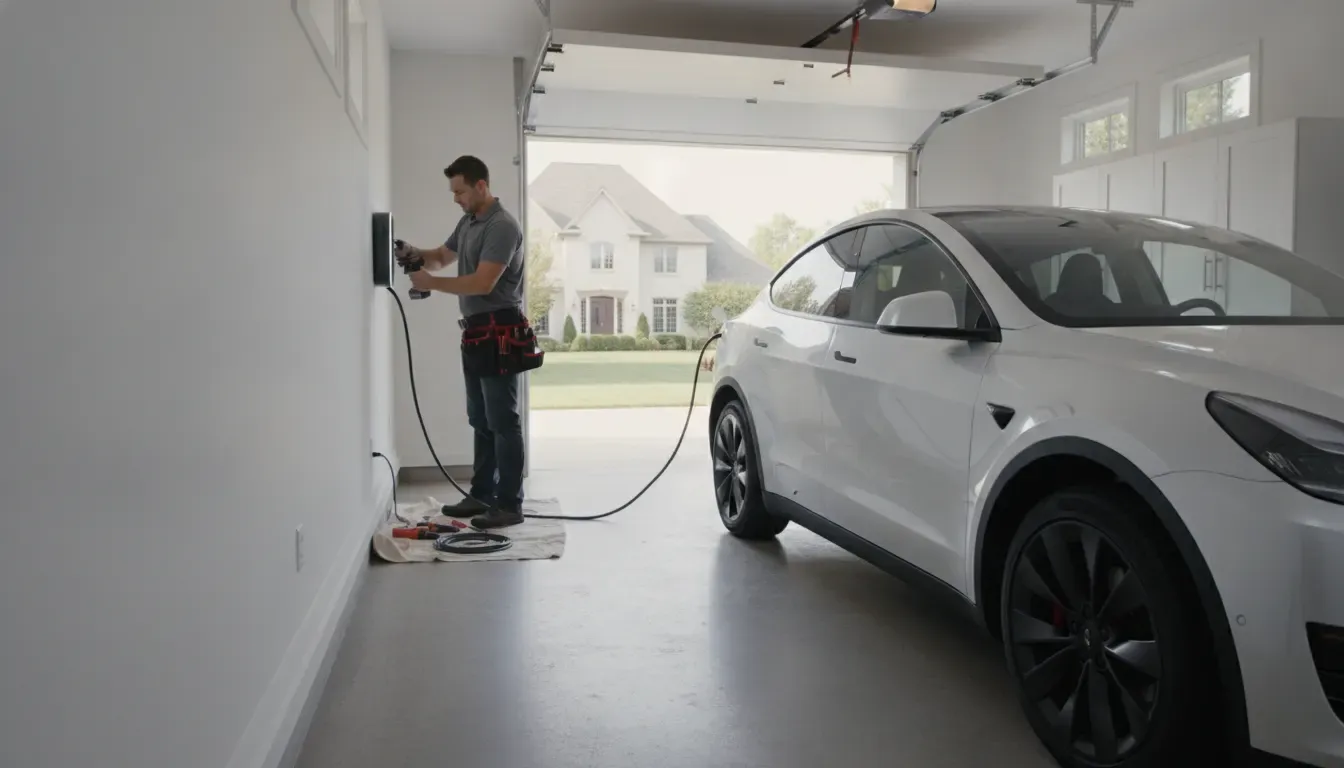
Planning Tesla Wall Connector installation in Barrington, IL starts with your home's electrical system, not with mounting the charger. A qualified electrician can evaluate your panel, choose a practical location, explain permit requirements, and build a safe charging setup around the way your household uses its vehicle.
Schedule Service Now for a Tesla Wall Connector installation assessment in Barrington.
Tesla Wall Connector installation in Barrington, IL typically includes a site review, electrical load assessment, dedicated circuit planning, wall mounting, wiring, local permit coordination when required, inspection, and startup testing. The exact equipment and scope depend on your Tesla model, panel capacity, cable route, parking location, and local requirements.
Brilliant Home Services helps homeowners plan EV charging as part of the property's broader electrical system. The family-owned company has served Chicagoland since 1956 and provides licensed, bonded, and insured electrical work, including EV charger installation. For a wider look at coordinating charging with backup power, read the Chicagoland EV charger and generator installation guide.
What Is a Tesla Wall Connector, and How Is It Different From a Mobile Connector?
A Tesla Wall Connector is permanently mounted home charging equipment connected to a dedicated electrical circuit. A Tesla Mobile Connector is a portable cordset that can be used with a suitable outlet. The Wall Connector is the more integrated option for a regular home charging location, while the Mobile Connector offers flexibility when you need to charge in different places.
The right choice depends on your driving routine, parking arrangement, available electrical capacity, and whether you want a dedicated charger that stays ready in one location. A Wall Connector can make daily charging more convenient when your vehicle is normally parked at home. It can also support a cleaner garage setup than repeatedly connecting a portable cordset.
| Consideration | Tesla Wall Connector | Tesla Mobile Connector |
|---|---|---|
| Installation | Permanently mounted and wired to a dedicated circuit | Uses a compatible outlet and can be stored or moved |
| Best fit | A primary home charging location used regularly | Flexible charging at home or at compatible destinations |
| Planning needs | Panel capacity, circuit, mounting surface, cable route, and permits | Outlet condition, circuit suitability, weather protection, and safe use |
| Daily convenience | Ready at a fixed location with a dedicated cable | Requires placing the connector and managing the cord |
Neither option should be connected to an unsuitable circuit or used with improvised wiring. Tesla's Wall Connector installation manual identifies the manufacturer's installation and safety requirements. A licensed electrician should confirm that the selected equipment, breaker, conductors, grounding, and installation location match the home and the applicable instructions.
What Does a Barrington Electrician Check Before Installation?
Before Tesla Wall Connector installation, a Barrington electrician checks the service rating, panel capacity, available breaker space, existing loads, wiring condition, grounding, charger location, and route between the panel and parking area. This assessment determines whether a standard installation is appropriate or whether electrical upgrades are needed first.
Older homes and remodeled properties can have very different electrical conditions. A panel may have open spaces but still lack the capacity for a continuous EV charging load. Conversely, a home with a newer panel may still need a longer conduit route, a different mounting surface, or corrective work before the charger can be connected safely.
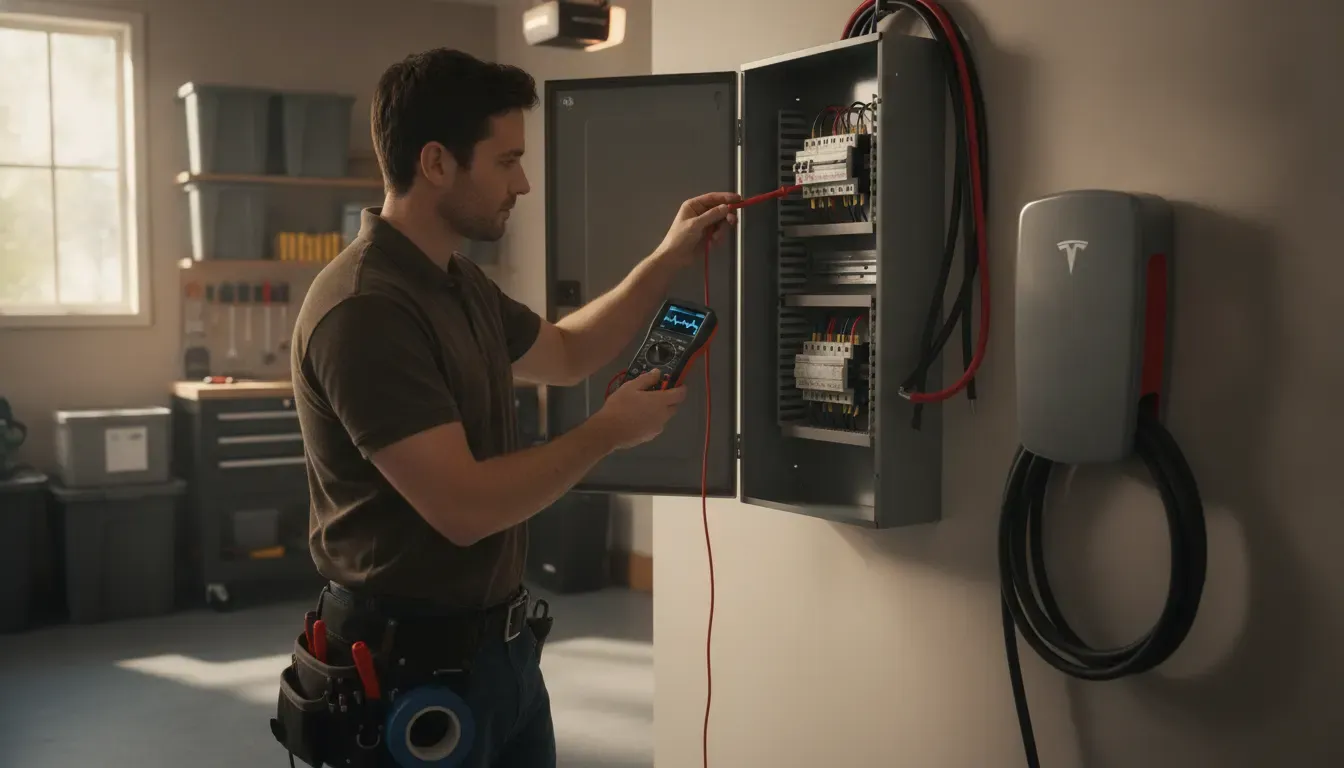
Panel capacity and existing household loads
EV charging is a sustained load that operates for longer periods than many ordinary household devices. The electrician considers the charging circuit alongside heating and cooling equipment, ranges, dryers, water heaters, hot tubs, generators, and other major loads. The assessment should reflect how the home actually operates, not just the number of unused breaker positions.
If the existing service cannot support the planned charger, the solution may involve a panel upgrade, service work, load management equipment, or a revised charging plan. The correct choice depends on the home's electrical design and your charging needs. Do not assume that a larger breaker alone will solve a capacity problem, and do not replace a breaker or add a circuit as a do-it-yourself project.
Mounting surface, cable reach, and wiring route
The installation location should let the charge cable reach the vehicle without strain and should leave enough room for practical use. The electrician evaluates the wall surface, stud or backing support, vehicle position, garage doors, walking paths, and the chance that the cable could be pinched or damaged. Outdoor locations require equipment and protection suitable for the conditions.
The distance from the panel to the charger also affects the project. A short route through accessible unfinished space may be straightforward. A longer route through finished walls, a detached garage, or an exterior section may require additional conduit, access work, or planning. These are site-specific decisions that should be reviewed before the installation date.
Equipment compatibility and safe connections
The electrician confirms the Wall Connector model, vehicle connection needs, circuit configuration, conductor requirements, grounding path, and overcurrent protection. The Tesla manual specifies installation details such as mounting, wire entry, copper conductors, and terminal connections for the covered Wall Connector model. Current manufacturer instructions should be used because equipment requirements can change between models or revisions.
Brilliant Home Services is an Eaton Certified Electrical Contractor and provides electrical panel, wiring, and EV charger services. That broader electrical experience is useful when a charger installation requires more than a simple device connection. The goal is a complete system that can charge reliably without compromising the home's safety.
Schedule Service Now to have your Barrington home's panel and charger location evaluated before installation.
Does Tesla Wall Connector Installation Require a Permit in Barrington?
Permit and inspection requirements depend on the property location, project scope, and local authority. In Barrington, homeowners should confirm the current requirements with the Village or use a qualified contractor who can coordinate the applicable electrical permit process. Do not treat another municipality's rules as a substitute for Barrington requirements.
The Village of Barrington's Building Permits and Inspections page provides the municipality's current permit and inspection information. It explains that applications and related documentation can be submitted through the Village's online portal, and that inspections must be scheduled through Development Services. Requirements can change, so the current local page is more reliable than an old forum post or a generic installation checklist.
What information may be needed?
Depending on the application, the permit process may involve the property address, contractor registration, an electrical plan, equipment information, circuit details, and the proposed installation location. The exact documentation is determined by the local authority. A contractor can identify what applies to your project and help avoid a delay caused by incomplete information.
Permit coordination is not merely paperwork. The review and inspection process gives the municipality an opportunity to confirm that the work follows applicable requirements. After the installation, an inspection may verify parts of the electrical work and help document that the project was completed through the proper process.
What should homeowners ask the installer?
- Who will determine whether a permit is required for this address?
- Who will submit the application and coordinate the inspection?
- What equipment and circuit information will be included?
- What work, if any, must be completed before the charger can be installed?
- How will the system be tested after the electrical work is complete?
A reputable installation plan should make these responsibilities clear before work begins. It should also distinguish the charger equipment from the electrical scope, permit requirements, and any panel or service work that could affect the project.
What Happens During Tesla Wall Connector Installation?
A typical installation includes a final site review, circuit and wiring preparation, Wall Connector mounting, electrical connections, testing, and homeowner instruction. The sequence varies with the property, but the electrician should keep the circuit de-energized during the relevant work, protect the home, verify the connections, and explain safe operation before leaving.
- Confirm the installation plan. The electrician reviews the charger location, parking position, panel, cable route, equipment, and any permit or inspection requirements. If site conditions differ from the initial discussion, the scope should be clarified before work continues.
- Prepare the circuit and route. The required circuit is planned and installed using conductors, protection, and routing that match the equipment and the home's electrical design. The route is secured and protected from damage, moisture, and unnecessary exposure.
- Mount the Wall Connector. The charger is fixed to a suitable vertical surface with enough clearance for the cable and handle. The mounting position should be convenient for the vehicle and should not create a trip hazard or obstruct normal garage use.
- Complete the electrical connections. The electrician lands the conductors, checks the grounding path, secures the connections, and follows the current manufacturer's torque and wiring instructions. The panel work is completed with attention to labeling and safe access.
- Coordinate inspection when required. If the local authority requires an inspection, the contractor follows the applicable scheduling and approval process. The charger should not be treated as complete until required inspections and corrections are addressed.
- Test and explain the system. The electrician verifies power, charging behavior, connection status, and protective functions appropriate to the installation. The homeowner should receive basic instructions for starting and stopping a charge and know what to do if there is unusual heat, odor, damage, or an error.
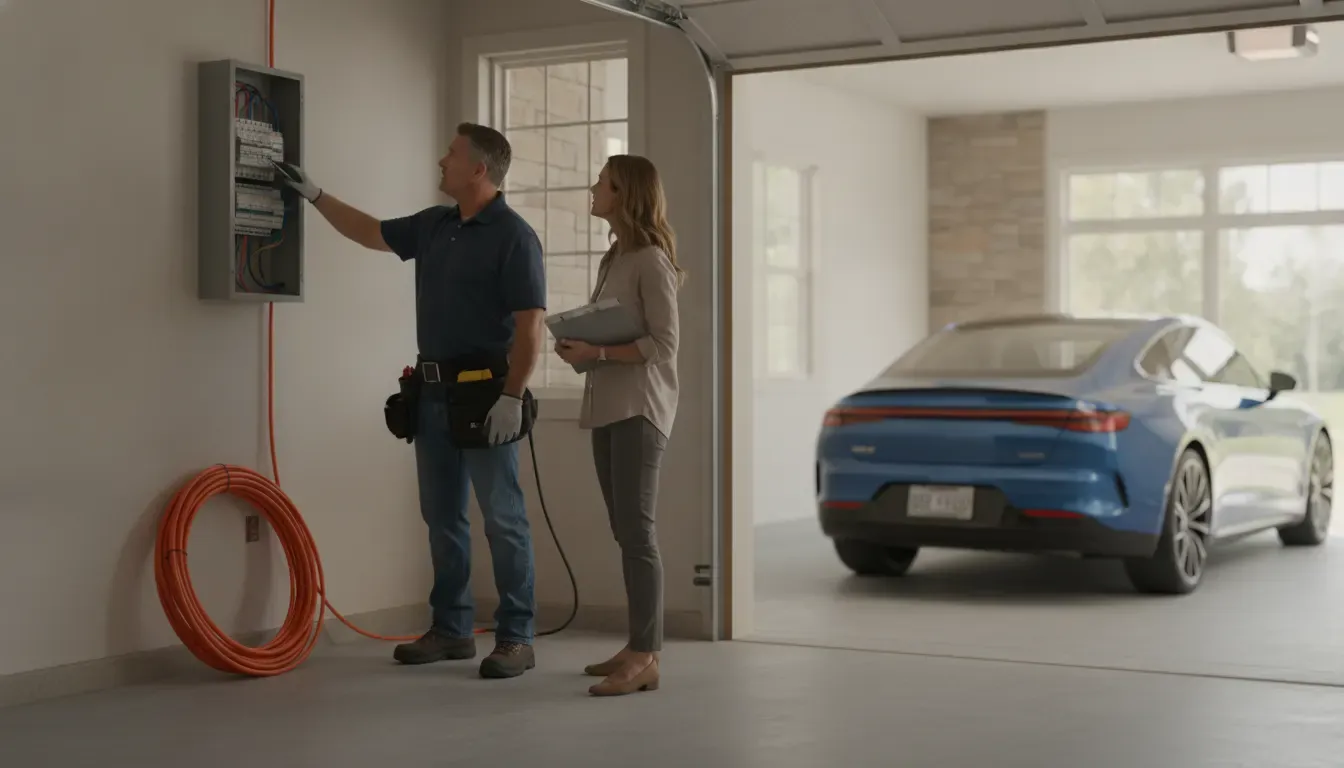
Installation time varies. A straightforward garage installation with adequate panel capacity may require less work than a project involving a long route, finished walls, an exterior location, a detached garage, or a panel upgrade. A contractor should give you a project-specific expectation after reviewing the property rather than promising the same timeline for every home.
How Can Barrington Homeowners Prepare for Installation?
Homeowners can prepare by identifying where the vehicle is normally parked, gathering the Wall Connector and vehicle information, keeping the panel and proposed mounting area accessible, and asking about permits, circuit capacity, testing, and future electrical loads. Clear site information helps the electrician design a safer and more efficient installation.
Before the assessment
- Note where the vehicle is parked overnight and where the charge port is located.
- Identify whether the charger will be inside a garage, outside, or in a detached structure.
- Keep the electrical panel, meter area, and proposed charger location accessible.
- Tell the electrician about planned appliances, additions, solar equipment, generators, or other large loads.
- Have the vehicle and Wall Connector model information available.
Questions to ask before approving the work
Ask what circuit and protection the installation requires, whether the existing service is adequate, how the wiring will reach the charger, and whether the local authority requires a permit or inspection. Confirm what is included in the scope, including panel work, conduit, mounting, testing, cleanup, and permit coordination.
It is also reasonable to ask who will perform the work and whether the contractor is licensed, insured, and experienced with EV charging systems. Brilliant Home Services describes its electricians as licensed, bonded, and insured and offers upfront pricing with no hidden fees. The company also provides electrical services across Barrington and nearby Chicagoland communities.
For homeowners considering broader electrical improvements, the Barrington electrician service page provides additional local service context. A Tesla Wall Connector project may be a standalone installation, or it may reveal a need for panel, wiring, outlet, or other electrical work that should be planned together.
Is a Tesla Wall Connector Right for Your Barrington Home?
A Tesla Wall Connector can be a strong fit when you regularly park at home and want a dedicated charging location. It is not automatically the right choice for every property. The decision should account for your driving routine, parking location, panel capacity, installation route, vehicle needs, and willingness to complete any required electrical upgrades.
A professional assessment helps you compare convenience with project scope. Some homeowners may prefer a permanently mounted Wall Connector because it keeps charging ready in the garage. Others may find a compatible portable solution better suited to occasional charging or a property where permanent installation is not practical.
The important decision is not simply which charger looks best. It is whether the complete charging system is compatible with the home's service, installed in a safe location, protected appropriately, and documented through the local process when required. A qualified electrician can explain the options without asking you to guess at the condition of hidden wiring or available capacity.
Schedule Service Now to discuss Tesla Wall Connector installation in Barrington, IL with Brilliant Home Services.
Frequently Asked Questions About Tesla Wall Connector Installation
Most Tesla Wall Connector questions come down to electrical capacity, installation location, permits, and the difference between permanent and portable charging. A site-specific assessment is the safest way to answer them because homes, panel conditions, vehicle needs, and local requirements vary.
Can I install a Tesla Wall Connector myself?
A Tesla Wall Connector requires electrical work that should be evaluated and completed by a qualified electrician. The installation involves circuit planning, panel connections, grounding, mounting, and manufacturer requirements. A professional can also determine whether a permit or inspection applies to your Barrington property.
Do I need a panel upgrade for a Tesla Wall Connector?
Not always. The answer depends on the home's service, existing loads, panel condition, available capacity, and the planned charging circuit. A panel with open breaker spaces is not automatically capable of supporting the added continuous load. An electrician should perform the assessment before recommending an upgrade or other solution.
Can a Tesla Wall Connector be installed outside?
Outdoor installation may be possible when the equipment, mounting, wiring method, and protection are suitable for the location. The electrician should evaluate weather exposure, cable reach, vehicle access, wall construction, and the route from the panel. Do not assume an indoor installation plan can be moved outdoors without changes.
How long does Tesla Wall Connector installation take?
Time depends on the panel, distance, wiring route, mounting surface, permit process, and whether upgrades are required. A simple installation may involve less work than one in a detached garage or a home with finished walls and limited electrical capacity. The contractor can give a more useful expectation after the site review.
What should I do if the charger shows an error or unusual heat?
Stop using the equipment if you notice unusual heat, burning odor, visible damage, repeated tripping, or another safety concern. Follow the vehicle and charger manufacturer's guidance, and contact a qualified electrician for evaluation. Do not open the panel or attempt to repair the charger while it is energized.
Ready to Get Started?
Contact Brilliant Home Services for professional, reliable service in Chicagoland. We are available 24/7 for emergencies.