Light Fixture Installation in Barrington, IL: Chandeliers, Pendants, and More
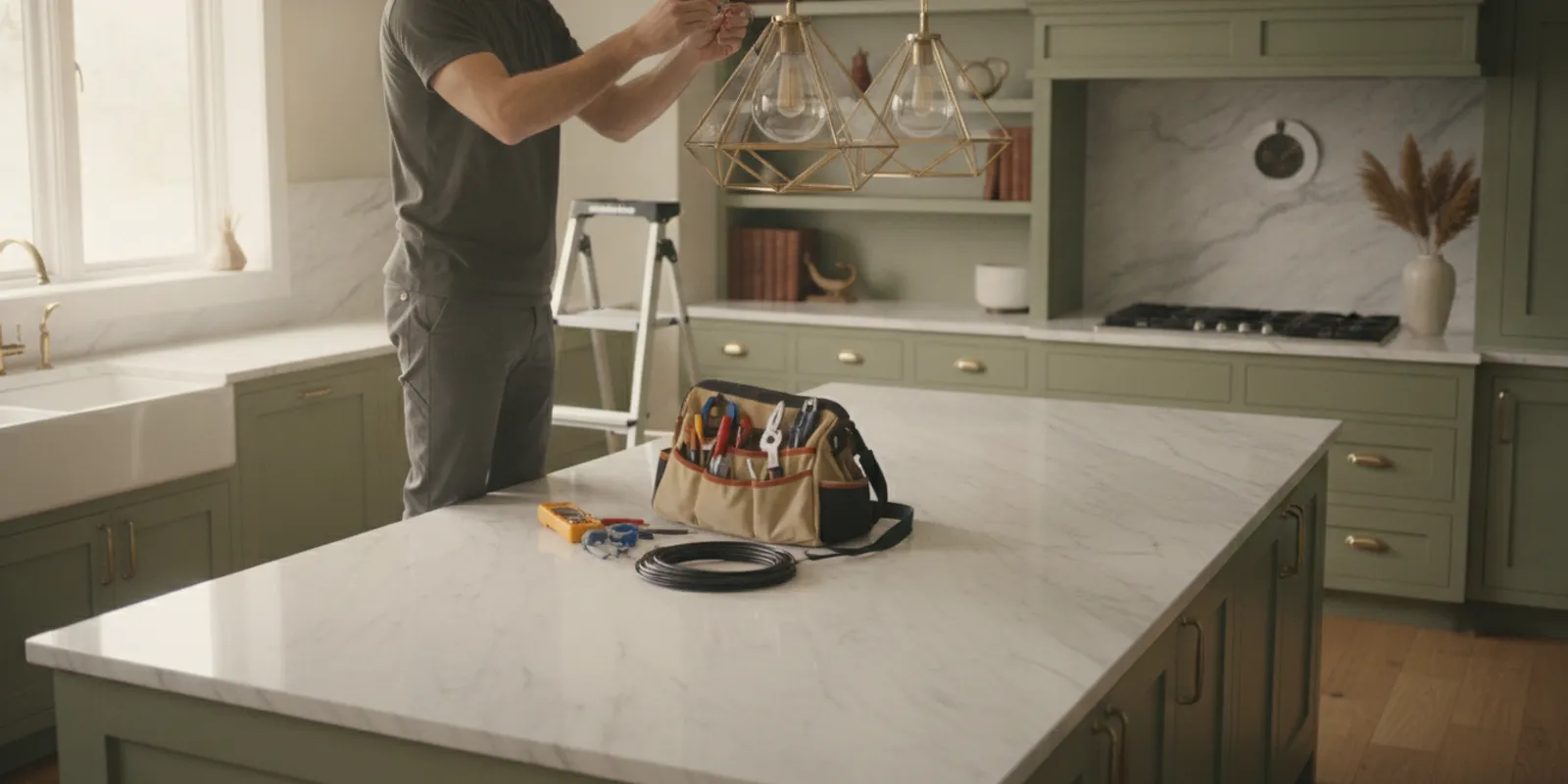
Planning light fixture installation in Barrington, IL? The right fixture can make a room easier to use and more comfortable, but the best choice depends on more than appearance. Existing wiring, ceiling height, fixture weight, switch locations, and the purpose of the room all affect the plan. This guide explains what to consider before you choose a chandelier, pendant, flush mount, or smart fixture, and when a licensed electrician should handle the work. For a broader look at coordinated home lighting and heating and cooling considerations, see our guide to HVAC and lighting services for northwest Chicagoland homeowners.
What Should You Plan Before Light Fixture Installation in Barrington, IL?
Start with the job the light needs to do. A fixture that looks right in a photo may not provide enough light for a work surface, may hang too low over a walkway, or may not suit the existing electrical setup. Think about how people use the room at different times of day. A kitchen may need clear task lighting as well as softer light for meals. A bedroom may benefit from a ceiling fixture combined with bedside lamps. An entryway may need a welcoming focal point without obstructing the path below it.
Before buying a fixture, note the following:
- Room and purpose: Identify whether the fixture is meant for general, task, or accent lighting. Consider whether it will be used alone or with lamps and other fixtures.
- Ceiling height and clearance: Measure the ceiling and the space below the proposed fixture. For a fixture over a table or island, account for the people seated or working beneath it. In a hall or other walking area, avoid a placement that creates an obstruction.
- Fixture dimensions and weight: Check the product specifications, including its width, height, and weight. A heavy chandelier may require suitable support rather than a standard fixture box.
- Existing controls: Note whether the light is controlled by a wall switch, dimmer, multiple switches, or a smart control. The fixture and controls need to work together.
- Current wiring and location: Look for an existing ceiling outlet or fixture. If the new location is different, the work may involve additional wiring and access to the ceiling or wall.
- Finish and surrounding surfaces: Consider the ceiling, nearby cabinetry, furniture, and other visible finishes. A fixture should complement the room without making its light uncomfortable or uneven.
Take photos of the room and the existing fixture or ceiling outlet before requesting an estimate. Include a picture of the proposed fixture label or product information if you have selected one. These details can help an electrician understand the scope, though an on-site review may still be needed to confirm the installation plan.
Do I Need an Electrician for Light Fixture Installation in Barrington, IL?
Replacing a simple fixture in the same location may appear straightforward, but electrical work can involve hazards that are not visible from the room. Wiring condition, grounding, box support, switch configuration, and the weight of the new fixture all matter. A mistake can create shock, fire, or equipment risks. If you are unsure about any part of the setup, leave the work to a licensed electrician instead of relying on appearance alone.
Professional help is especially important when the job involves any of these conditions:
- A new fixture location where there is no existing ceiling outlet.
- A chandelier or other fixture that is heavier than the existing one or requires a different support method.
- Old, damaged, unfamiliar, or poorly labeled wiring.
- A switch, dimmer, or multi-location control that does not work as expected.
- A smart fixture or control that requires a specific wiring arrangement or network setup.
- Repeated breaker trips, flickering, buzzing, a burning smell, or other signs that something may be wrong.
- A high or difficult-to-reach ceiling, stairwell, or other location where working from a ladder is not safe or practical.
Illinois and local requirements can depend on the exact work and the property. Do not assume that every project has the same permit or inspection requirements. Ask the electrician what the proposed scope involves and whether local approvals should be checked. A qualified professional can also determine whether the existing electrical box and wiring are appropriate for the fixture selected.
Brilliant Home Services provides electrical and lighting installation services, with licensed electricians. If your project also includes outlet, panel, or other electrical work, you can review the company's electrical services before scheduling. Avoid opening a fixture, moving conductors, or changing wiring unless you are qualified to do that work safely.
How Much Does Light Fixture Installation Cost in Barrington, IL?
There is no single price that fits every light fixture installation in Barrington. The fixture itself is only one part of the total. The condition of the existing wiring, installation location, fixture weight, ceiling access, controls, and finish work can all change the scope. A straightforward replacement at an existing outlet is a different project from adding a new ceiling location or supporting a large chandelier.
Use the following comparison to understand why estimates may differ. It is a planning guide, not a price list; the actual work should be assessed for the specific home and fixture.
| Project type | What may be involved | Why the scope can vary |
|---|---|---|
| Replace an existing fixture | Remove the old fixture and connect a compatible replacement at the same location | Fixture weight, mounting compatibility, wiring condition, ceiling height, and whether controls need changes |
| Install a chandelier or larger fixture | Confirm appropriate support, mounting, connections, and safe access | Fixture size and weight, ceiling construction, height, and any need to modify the existing support |
| Add a fixture where none exists | Plan a new location and route wiring from an appropriate source, with access and finish work as needed | Distance and route, wall or ceiling access, switch placement, and how much repair or patching is involved |
| Add or change a dimmer or smart control | Check compatibility among the fixture, bulbs, switch, and control system | Existing switch wiring, product requirements, number of control points, and setup needs |
When you request an estimate, describe the fixture and location clearly. Ask whether the estimate assumes use of existing wiring and a compatible mounting point. If the fixture has not yet been purchased, share its product specifications so the electrician can consider its dimensions, weight, and electrical requirements. If you have already bought it, keep all hardware and instructions available.
It is also useful to ask what the estimate includes. For example: removal of the old fixture, installation of the new one, changes to wiring or support if required, setup of controls, and any finish work. An estimate based on an assumed condition may change if the electrician finds an issue once the existing fixture is removed. Agree on how additional work will be discussed before proceeding.
Think about value as well as the initial quote. A fixture that is difficult to maintain or uses bulbs that are hard to find may be less convenient over time. A correctly selected fixture, compatible control, and secure installation can help you avoid rework. Do not choose a fixture solely because it is inexpensive if its weight, light output, or installation requirements do not suit the room.
Should You Choose a Chandelier, Pendant, or Flush-Mount Fixture?
These fixture styles solve different design and lighting needs. The room, ceiling, and planned use should guide the choice. Check the manufacturer’s specifications and installation instructions before purchasing; the dimensions and mounting requirements can differ widely between products in the same category.
When does a chandelier make sense?
A chandelier can create a focal point in a dining room, foyer, or room with enough open ceiling space. It may work well where you want the fixture itself to be a visible design feature. Before selecting one, consider its diameter, height, weight, and the people or furniture below it. A chandelier that is too large can dominate a small room, while one that is too small may feel out of proportion in a wide entry or dining area.
Also consider cleaning and bulb replacement. A tall fixture may be harder to maintain, especially in a stairwell or a high foyer. Ask how it will be safely accessed for installation and future maintenance. If the chandelier is substantially heavier than the fixture it replaces, do not assume the existing box provides adequate support; have the mounting conditions evaluated.
Where do pendants work well?
Pendant lights hang from the ceiling and can provide focused light over an island, table, reading spot, or other defined area. One pendant may suit a small area, while a row of fixtures can distribute light along a longer surface. The spacing and height should be planned together: fixtures that are too close can look crowded, while fixtures spaced too far apart may leave unevenly lit areas.
For a kitchen island, consider the full work surface and how the pendants will look from adjoining rooms. Check that the fixture will not interfere with sightlines or with people moving around the island. Multiple pendants may also require planning for the number and placement of ceiling outlets. A lighting plan can help determine whether the existing location is suitable or whether wiring work is needed.
When is a flush mount a practical choice?
A flush-mount fixture sits close to the ceiling, making it useful where headroom is limited or where a hanging fixture would be in the way. It can be a practical option for hallways, closets, bedrooms, and other rooms where a low-profile fixture is preferred. Some models provide broad general light; others direct light differently, so compare the fixture’s specifications and intended room use.
Semi-flush fixtures hang a short distance below the ceiling and can add more visual detail while keeping a relatively compact profile. As with any fixture, make sure its dimensions suit the room and that the ceiling outlet and mounting arrangement match the product. A compact fixture is not automatically the best option if the room needs more light or a different distribution.
How should you compare the options?
Think through a few practical questions before deciding:
- Is the fixture meant to be a focal point or blend into the ceiling?
- Will it provide general illumination, focused task lighting, or both?
- How much clearance is available below it?
- Does the fixture’s weight call for a different support arrangement?
- Will it use one bulb, several bulbs, or an integrated light source?
- Can the fixture work with the switch or dimmer you want to use?
- How will you clean the fixture and replace bulbs or components?
Bring these preferences to the planning conversation. An electrician can assess the electrical installation, while the fixture’s product information helps determine whether the selected model fits the location and planned controls.
What If There Is No Existing Wiring for a New Fixture?
If there is no ceiling outlet where you want a fixture, the job is more than attaching a light. The installation may require a suitable power source, a route for new wiring, a box or other mounting support, and a switch or control. The best route depends on the home’s construction and the exact location. An electrician needs to assess the conditions rather than assume that a wire can be pulled through any ceiling or wall.
Before discussing a new location, decide where you want the light and how you want to control it. Mark the preferred center point with removable tape or a note; do not drill or cut into the ceiling to explore. Consider whether a nearby wall switch is practical, whether the fixture should be controlled from more than one location, and whether a dimmer or smart control is part of the plan. Tell the electrician about attic access, finished ceilings, and any known renovations in that area.
Several factors can influence the approach:
- Ceiling and wall construction: Open framing may offer different access than a finished ceiling. A ceiling below another finished floor can require a more involved route.
- Distance from a suitable electrical source: The path to power and the circuit’s suitability need to be evaluated. Do not assume a nearby outlet can simply be used.
- Switch location: A new switch location can affect the amount of wiring and wall work. The controls should be convenient for how the room is entered and used.
- Fixture support: The mounting point must be appropriate for the product and its weight. This matters particularly for chandeliers and other heavier fixtures.
- Visible finish: Access for wiring can affect drywall or other finished surfaces. Ask what opening, patching, or repair work is included and who will handle it.
There may be alternatives if a hardwired installation is not practical, such as a plug-in lamp or a fixture designed for another kind of installation. Those choices have different appearance, placement, and control considerations. Compare them with a hardwired solution before deciding, and follow the product’s instructions. An electrician can help explain what is feasible for a proposed hardwired location.
When planning multiple new lights, group the work into one conversation. For example, a remodel may involve a dining light, task lighting over a counter, and a switch change. Describing all of the intended work together can make it easier to discuss wiring routes, control locations, fixture spacing, and the overall scope. It also helps avoid selecting fixtures before confirming that the locations can support them.
Are Smart Light Fixtures Compatible With Your Home?
Smart lighting can offer app, voice, schedule, or remote-control features, depending on the product and system. Compatibility is not universal. Before buying, verify the fixture’s requirements and its compatibility with the control method you intend to use. Some products use a smart fixture or bulb; others depend on a smart wall switch. Mixing components without checking their specifications can lead to controls that behave differently than expected.
Review these details on the product information:
- Control method: Determine whether the product is controlled by a dedicated app, a wall switch, a compatible hub, or another system. Confirm which parts are required.
- Dimmer compatibility: Not every light source works correctly with every dimmer. Check the fixture or bulb specifications before pairing it with a dimmer.
- Switch behavior: Some smart fixtures need power to remain available to their built-in controls. A wall switch that cuts power may affect app or voice operation.
- Network and setup: Confirm any network, hub, or account requirements and whether you are comfortable managing them.
- Future replacement: Consider whether the fixture uses replaceable bulbs or an integrated light source, and what replacement would involve.
If you want smart control, mention it before the installation. The electrician can review the physical wiring and switch arrangement, while you can confirm the product and system requirements. If existing switches control the light from multiple locations, describe that setup. Do not assume a smart switch can replace any existing switch without checking the wiring and product instructions.
Smart controls also affect how household members use the light. Decide whether you still want a conventional wall control and how the light should behave if a phone or network is unavailable. A simple control plan can prevent confusion after installation. For example, you may prefer a wall switch for everyday use and app control for schedules, or you may want the fixture to work with a larger home automation setup.
How Can You Prepare for the Installation Visit?
A little preparation makes it easier to review the project and protect the surrounding area. You do not need to take electrical components apart. Instead, gather information and clear access so the electrician can focus on assessment and installation.
- Choose the fixture or shortlist options. Save the product page, specification sheet, and installation instructions. Note the model and weight, if listed.
- Photograph the room and existing fixture. Take a wide view and a closer view of the current ceiling location and switch. Do not remove covers or expose wiring to take a picture.
- Write down what you want to change. Include desired location, switch operation, dimming, smart controls, and whether the work is part of a remodel.
- Clear the work area. Move furniture and fragile items from below and around the fixture. Keep children and pets away from the work zone.
- Share access details. Mention high ceilings, stairwells, limited parking or entry considerations, and any known ceiling or wiring concerns when arranging the visit.
- Ask about scope and finish work. Confirm what the estimate covers, how unexpected conditions will be handled, and whether wall or ceiling repair is included.
If the existing fixture flickers, buzzes, smells hot, or causes a breaker to trip, explain that when you contact a professional. If there is smoke, active sparking, or immediate danger, move away and contact emergency services as appropriate. Do not continue using a fixture that appears unsafe while waiting for an assessment.
For local service information, see the Barrington electrician service page. If your plans also involve heating, cooling, or a larger home project, Brilliant Home Services offers information about coordinating HVAC and lighting services for area homeowners.
How Do Lighting Needs Change From Room to Room?
A fixture should match what happens in the room, not just the ceiling shape. A useful plan considers the main activity, other light sources, and how the room connects to the rest of the home. You can make better choices by walking through the room at the times you use it and noticing where existing light feels too dim, too bright, or poorly placed.
What should you consider in a kitchen?
Kitchens often combine food preparation, dining, and conversation. A single decorative fixture may not serve every purpose. Think about whether the counters, sink, island, and eating area need separate lighting zones. Pendants can focus attention over an island, while a ceiling fixture may provide general illumination. If you are adding or moving fixtures during a renovation, plan their locations alongside cabinetry and appliance layouts so a light does not end up behind a tall cabinet or outside the useful work area.
Consider glare as well as brightness. Reflective counters and glossy surfaces can make a strong light uncomfortable when viewed from certain angles. Decide whether separate switches or dimming would be useful for changing from meal preparation to a more relaxed setting. Confirm that any selected fixtures and controls are compatible and appropriate for their location.
How should a dining room fixture be positioned?
A dining table is a natural place for a chandelier or pendant, but the table and fixture should be considered together. The fixture’s width, shape, and visual weight affect how balanced the room feels. If the table can expand or move, account for that when choosing the location. A centered fixture over a fixed table may not serve the space well if the furniture arrangement changes often.
Think about the mood you want as well as the light needed to see food and conversation partners comfortably. Dimmable lighting can be helpful when the products and controls support it. If you select a multi-light fixture, check the bulb type and replacement process so maintaining it will not become difficult.
What works in bedrooms and living areas?
Bedrooms and living rooms usually benefit from more than one way to light the space. A ceiling fixture can provide general light, while table or floor lamps provide localized light for reading or other tasks. If a ceiling fixture is the primary source, consider whether the room has dark corners or furniture that blocks the light. A low-profile flush mount may be practical for lower ceilings; a pendant or chandelier may suit a room with more height and adequate clearance.
Think through the controls from the point where you enter the room and from the places where you relax. If you want a dimmer or smart control, check compatibility before purchasing the fixture. A plan that is comfortable to use each day is more important than adding controls that are complicated or rarely used.
What should you keep in mind for halls and entryways?
In a hall, stairwell, or entry, clearance and safe access matter as much as appearance. A hanging fixture should not obstruct a walking route or conflict with a door. Stairwells and tall foyers may require specialized access for installation and future maintenance. A low-profile fixture can be appropriate in a narrow corridor, while a pendant may add a focal point where there is adequate open space.
If a fixture is high above a landing or staircase, consider how it will be cleaned or serviced later. Tell the electrician about the height and any access limitations when discussing the project. Do not assume a standard ladder is sufficient for a high or awkward location.
What Happens During a Professional Fixture Installation?
Every home and fixture is different, but understanding the general workflow helps you prepare and ask useful questions. First, the electrician confirms the project details: the existing location, the selected fixture, the controls, and any concerns you have noticed. If the job involves a new location or a heavier fixture, the assessment may include additional checks of the wiring route and mounting support.
Before work begins, clarify the scope and make sure the work area is accessible. The electrician will use appropriate safety procedures and determine how the existing electrical supply must be handled for the work. The old fixture may be removed when this is a replacement, and the wiring and mounting conditions can then be checked against the new fixture. If conditions differ from what was expected, pause to discuss the implications and any added work before proceeding.
Installation typically includes securing the fixture according to its requirements, making the needed electrical connections, and confirming that the fixture and controls operate as intended. The steps can vary for smart products, multi-location controls, new wiring, or fixtures that need special support. Follow the manufacturer's instructions for use and care, and ask about any control or maintenance details that are not clear.
Finish work is worth discussing in advance. A replacement at an existing outlet may leave the surrounding ceiling undisturbed, while a new wiring route could require access openings or surface repair. Do not assume that drywall patching, painting, or other cosmetic work is included in an electrical estimate. Confirm who is responsible for each part of the project so there is no uncertainty after installation.
When the work is complete, check the fixture from the normal positions where you will use it. Confirm that switches operate as expected and that dimming or smart functions behave correctly, if included. Ask how to replace bulbs or clean the fixture and whether any special care is recommended by the manufacturer. If you notice flickering, unusual noise, heat, or inconsistent operation after the visit, stop using the fixture if it appears unsafe and contact a qualified professional for guidance.
How Can You Compare Installation Estimates?
When comparing estimates, make sure they describe comparable work. A quote for a direct replacement may not include new wiring, support changes, control upgrades, or ceiling repair. An estimate should identify the assumed fixture location and whether the customer-supplied fixture is included or whether you are providing it. If two estimates describe different assumptions, ask for clarification rather than comparing only the total amount.
Useful questions to ask include:
- Does the estimate cover removing and disposing of the existing fixture?
- Is the new fixture assumed to use the current ceiling outlet and switch?
- Are changes to wiring, mounting support, or controls included, or would those be assessed separately?
- What happens if the existing wiring or mounting point is not suitable?
- Does the work include smart-control setup, if applicable?
- Are ceiling or wall patching and painting part of the scope?
- What product information or access should be ready before the appointment?
Be specific about your expectations. If you want the fixture centered over furniture, state that before work begins. If you prefer to keep a particular switch location or use an existing dimmer, mention it. If the room is undergoing a larger renovation, share the timeline and any other contractors' work that may affect access. Clear details can help the electrician assess the project and reduce misunderstandings.
Remember that an estimate is based on the information available at the time. Hidden conditions may not be clear until the fixture is removed or access is available. Ask how the professional will communicate if the scope needs to change. A careful discussion is preferable to proceeding with work that you did not expect.
When Should You Schedule Light Fixture Installation?
Consider scheduling once you know the fixture style, location, and control preferences, especially if you are adding wiring or working as part of a remodel. When you contact an electrician, share whether this is a replacement or a new location, the fixture specifications, ceiling height, and any symptoms from the existing light. These details help clarify what should be evaluated and what questions remain.
Brilliant Home Services handles lighting installation as part of its home electrical services. To discuss your project and request scheduling, use the contact page.
Frequently Asked Questions
Can I replace a light fixture without changing the wiring?
It may be possible when the existing location, wiring, box, and controls are suitable for the replacement fixture. Compatibility and condition should be checked rather than assumed, especially when the new fixture is heavier or uses a different control. If anything is damaged, unfamiliar, or not working properly, have a licensed electrician assess it.
Can I install a chandelier where a flush-mount light is now?
Possibly, but the existing mounting point must be appropriate for the chandelier’s weight and installation requirements. The ceiling height, available clearance, and fixture dimensions also matter. Have the support and wiring evaluated before installing a heavier fixture.
Can a new light be added without opening the ceiling?
That depends on the home's construction, the wiring route, and access to the proposed location. Some installations may need access through a ceiling or wall, while other options may be available. An on-site assessment is the right way to understand the likely route and finish work.
What should I buy before scheduling?
You can select a fixture first, but check its dimensions, weight, mounting requirements, and control compatibility. Keep the product information available. If you are uncertain about fixture size or electrical requirements, discuss the location and options before buying.
Should I choose a smart fixture or a smart switch?
Either may suit a project, but the right choice depends on the fixture, wiring, desired controls, and smart-home system. Check product compatibility and consider how the light should work from a wall switch. Share your preference with the electrician before the work begins.
Choosing a fixture with the room, wiring, support, and controls in mind makes installation easier to plan and helps the finished lighting work as intended. If you are ready to discuss a chandelier, pendant, flush mount, or new wired location in Barrington, contact Brilliant Home Services to schedule service.
Ready to Get Started?
Contact Brilliant Home Services for professional, reliable service in Chicagoland. We are available 24/7 for emergencies.