Landscape Lighting Installation in Barrington, IL
Outdoor lighting works best when it is planned around how your Barrington household actually uses the yard, not simply where a fixture can be mounted. Walkways, steps, planting beds, patios, and architectural features may each need a different level and direction of illumination. A thoughtful plan can improve evening visibility while limiting glare, wasted light, and spill into neighboring areas.
Schedule Service Now with Brilliant Home Services or call (847) 588-2533.
Landscape lighting installation should make key outdoor areas easier to navigate, support time spent outside, and highlight selected features with controlled, purposeful light rather than maximum brightness. The right approach depends on your yard layout, electrical conditions, desired controls, and the areas that need illumination.
The National Park Service recommends using light only where it is needed and selecting appropriate fixture height and distribution to reduce spill. That purpose-first mindset gives homeowners a practical starting point. For more context on HVAC and lighting services for northwest Chicagoland homeowners, consider how each lighting goal fits into the broader electrical plan before choosing fixtures or controls. In a Barrington yard, the first question is what the lighting should accomplish.
What Should Landscape Lighting Installation Accomplish in a Barrington Yard?
Landscape lighting installation should make outdoor areas easier to use, navigate, and enjoy after dark while controlling glare and unnecessary light spill. In a Barrington yard, that usually means planning each fixture around a specific purpose rather than placing lights wherever they are most visible. Paths, entries, steps, planting beds, patios, and other outdoor living areas may each need a different lighting approach.
Start with movement and safety
Walk the property at night and identify where people actually move. A path light may help define a walkway, while a carefully aimed fixture near steps or an entry can improve visibility without shining toward approaching eyes. Outdoor lighting should use the lowest output needed for the task. More brightness does not automatically create a safer environment and can reduce visibility through glare. The National Park Service guidance on responsible outdoor lighting recommends lighting only the area that needs illumination.
Plan placement around the yard
Purpose-first planning also helps separate functional lighting from accent lighting. Planting beds may need selective highlighting, while a patio or seating area may benefit from comfortable, even illumination. Fixture height, beam direction, and spacing should be considered together so light stays within the intended area. Fully shielded fixtures direct light downward instead of into the sky, and appropriate placement can reduce spill onto neighboring property or windows.
Controls can support that plan by limiting operation to the times lighting is needed. Timers, motion detectors, and dimmers are options to discuss during a professional assessment. For a broader look at coordinating electrical and lighting needs, review this HVAC and lighting guide for northwest Chicagoland homeowners. The goal is a lighting layout that fits the yard's actual circulation, gathering areas, and visibility needs, not a one-size-fits-all display.
How Much Does Landscape Lighting Installation Cost in Illinois?
There is no reliable one-size-fits-all answer to the cost of landscape lighting installation. A small project with a few fixtures and an accessible power source has different requirements from a larger design that follows several pathways. Highlights multiple areas, or needs new electrical work. A site-specific quote is the best way to understand the scope before work begins.
The main cost drivers usually include:
- Fixture quantity and type: Path lights, spotlights, wall washes, and uplights serve different purposes and may require different placement and wiring.
- Wiring distance and route: Longer runs, multiple lighting zones, and routes around hardscape or established plantings can affect installation work.
- Transformer and controls: The project may require a properly sized transformer, timers, dimmers, or other controls to operate lighting when it is needed.
- Access and existing conditions: Fences, patios, mature landscaping, soil conditions, and the location of existing electrical connections can influence how the work is planned.
- Overall scope: A basic walkway installation differs from a coordinated plan for entrances, steps, entertaining areas, trees, and architectural features.
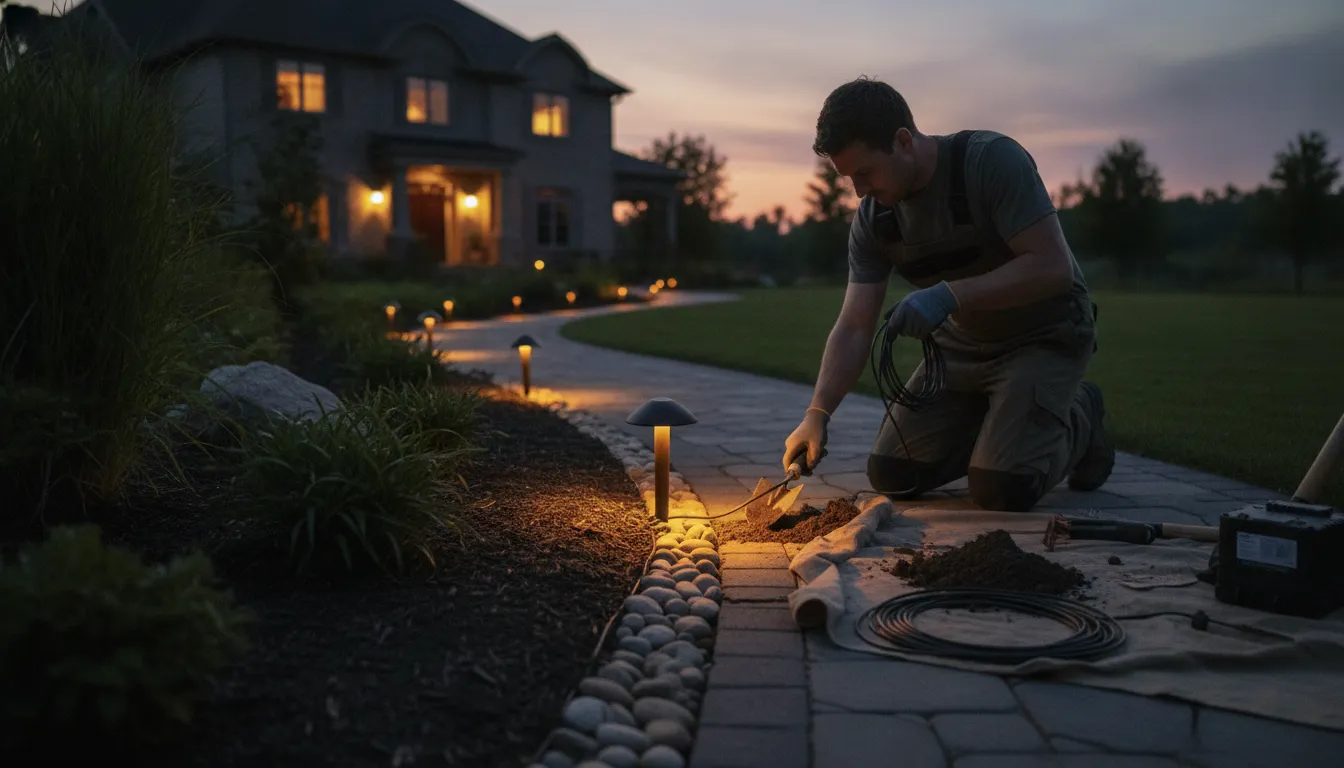
Design choices can also affect the long-term value of the installation. Lighting only the areas that need illumination, selecting appropriate output, and using shielding can help limit glare and unnecessary spill. The National Park Service recommends purposeful outdoor lighting and directing it toward the task area rather than into the sky. Learn more about responsible outdoor lighting principles.
For an Illinois home, a professional can review the property, discuss the areas you want illuminated, assess existing electrical conditions, and identify a practical installation approach. That assessment is why a site-specific quote is more useful than a generic online average.
Which Path Lights, Spotlights, and Uplights Fit Your Outdoor Design?
Fixture choice should follow the job each light needs to perform. Path lights can guide movement along a walkway, driveway, or garden edge when they are spaced and aimed to illuminate the walking surface without creating glare. Spotlights concentrate a narrower beam on a tree, architectural feature, address area, or other selected subject. Uplights are positioned below a surface and aimed upward, which can add depth to a tree canopy or wall. But they need careful aiming so light does not spill into windows or the sky.
These fixtures are not interchangeable, and one style is not automatically right for every Barrington yard. A professional planning an installation can evaluate viewing angles, mature landscaping, nearby homes, and the purpose of each zone. The National Park Service recommends lighting only where needed and selecting appropriate fixture height and distribution to limit spill beyond the task area. This broader HVAC and lighting guide for northwest Chicagoland homeowners provides additional context when outdoor lighting is part of a larger home-services plan.
Choose light quality as carefully as fixture style
Warm-white light is often a comfortable choice for outdoor living areas, planting beds, and walkways. The National Park Service identifies 2700 Kelvin as one warm option that can provide good color rendition while minimizing unintended impacts. LEDs can also offer different color temperatures and more control over distribution, but those options still require careful specification. Ask how the beam spreads, where the brightest point lands, and whether the fixture includes shielding or a glare-control feature.
Brighter is not always better. The lowest output that accomplishes the task can preserve visibility and reduce harsh contrast. Fully shielded or full cut-off fixtures direct light down toward the intended area rather than into the sky. Controls help refine the design after installation: timers can set operating periods. Dimmers can reduce output when full brightness is unnecessary, and motion controls can activate selected areas only when movement is detected. These approaches can limit wasted light while keeping the system useful.
Have questions about your lighting plan? Schedule service with Brilliant Home Services.
To see what a professional project can include, review our landscape lighting installation services, then bring the specific paths, features, and nighttime concerns you want to address to a professional lighting discussion.
Low-Voltage vs. Line-Voltage Outdoor Lighting: What Is the Difference?
Voltage is one part of a broader lighting plan. The right approach depends on the property, the intended use of each area, the available electrical conditions, and how the system will be controlled. A qualified professional should review those factors before you choose equipment or finalize a landscape lighting installation.
Low-voltage systems are often considered for residential paths, planting beds, steps, and other focused areas where the design can be planned around a transformer and distributed fixtures. Line-voltage lighting may be considered where a project calls for a different electrical arrangement or more substantial equipment. That distinction alone does not make one option universally better. The layout, wiring route, fixture specifications, and conditions at the property all matter.
| Planning consideration | Low-voltage approach | Line-voltage approach |
|---|---|---|
| Typical use | Often suited to residential paths, beds, steps, and other targeted areas. | May suit projects requiring a different electrical arrangement or larger equipment. |
| Installation complexity | Planning includes transformer capacity, fixture layout, cable routing, and connections. | Planning requires careful review of the electrical supply, routing, equipment, and property conditions. |
| Controls | May be designed around timers, motion detectors, dimmers, or other compatible controls. | Control selection depends on the fixtures, system design, and electrical arrangement. |
| Professional assessment | Confirm transformer sizing, distribution, connections, and the intended task for each light. | Confirm the existing electrical conditions, equipment requirements, and safe installation plan. |
LEDs can offer more choices in color quality and light distribution, but the U.S. Department of Energy notes that they require careful specification and selection. In practice, that means reviewing beam spread, output, color, shielding, and placement rather than choosing by brightness alone. Automatic controls can also turn lights off in unoccupied areas more reliably than people can. See the Department of Energy guidance on responsible outdoor lighting and exterior lighting controls for additional planning context.
Before work begins, have a qualified professional assess the property and electrical conditions. That review can help connect the voltage choice to the actual lighting goals, control preferences, and installation plan.
How Weather-Resistant Should Outdoor Lighting Be in Chicagoland?
For a Chicagoland property, weather exposure should be part of the planning conversation, not an afterthought. Ask how moisture, freezing conditions, shifting soil, and seasonal debris could affect the selected fixtures, wiring routes, connectors, and control equipment.
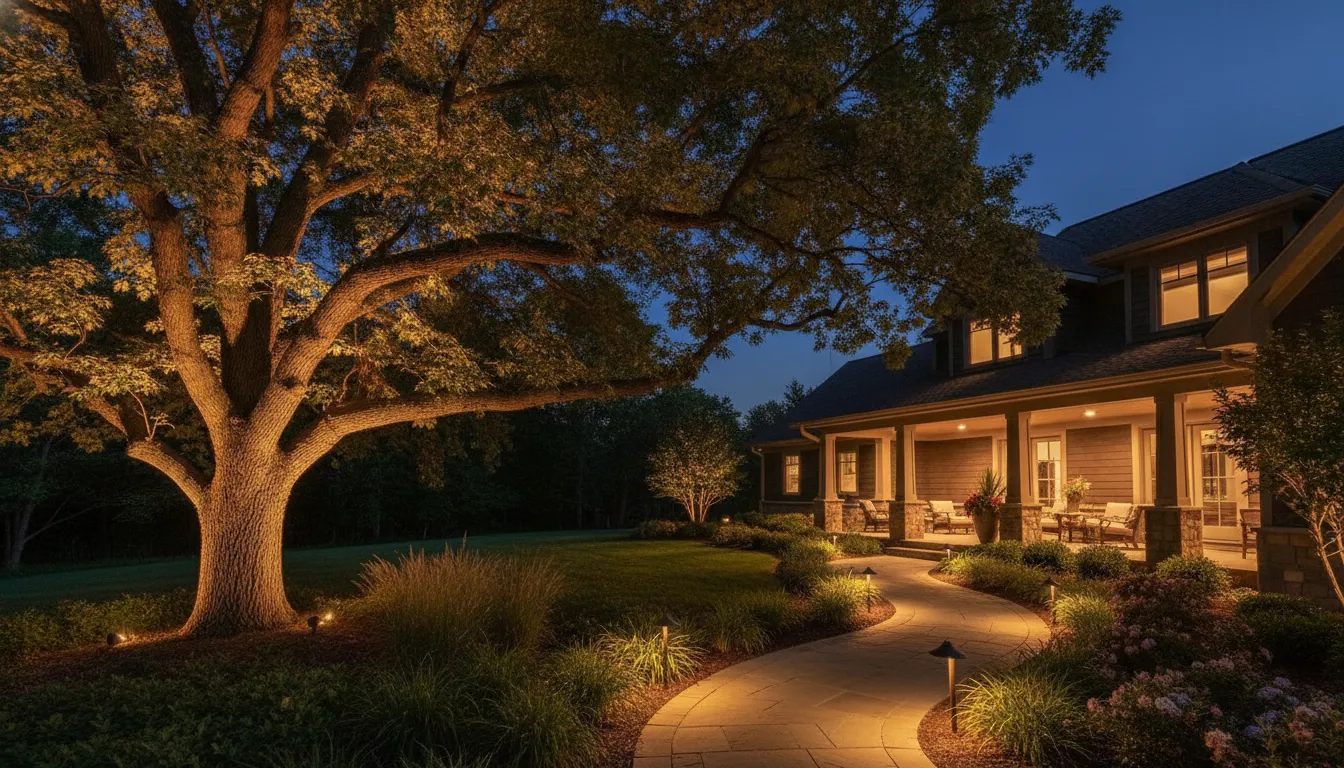
During a landscape lighting installation, a professional can review whether each fixture is intended for its location and whether its materials and outdoor ratings fit the exposure. That review should include areas where water may collect, pathways affected by frost or soil movement, and connections that need to remain accessible for inspection. An outdoor-rated label is useful, but it is still important to confirm that the complete fixture. Connector, cable route, and control setup suit the property rather than assuming one rating answers every question.
Plan for inspection and maintenance
Seasonal inspection can reveal tilted fixtures, blocked lenses, damaged connections, exposed wiring, or vegetation that changes the light pattern. Leave enough maintenance access to make adjustments without disturbing plantings or other hardscape. If an existing system stops working, this outdoor lighting guide may help identify the next question for a professional.
Use light responsibly
Weather resistance is only part of responsible outdoor lighting. The National Park Service recommends directing light only where it is needed, using appropriate fixture height and distribution. And considering fully shielded fixtures to reduce spill into the sky and neighboring spaces. Timers, dimmers, or motion controls can limit operation to useful periods. The Department of Energy also notes that nighttime light can affect ecosystems and increase sky brightness. Review glare, controls, and the lowest useful light level alongside durability, so the finished plan supports your home without adding unnecessary light.
How Do You Prepare for a Landscape Lighting Design Quote in Barrington?
A useful quote begins with a clear picture of how you want to use the property after dark. Before scheduling, walk the yard during daylight and note the areas that need safer navigation, more definition, or better support for outdoor gatherings. A professional can then assess which ideas fit the property and the electrical conditions.
- Define your goals and zones. List the areas you want to address, such as an entry walk, patio, driveway edge, steps, planting beds, or prominent trees. Separate essential areas from features that would be nice to add later.
- Mark paths, steps, and landscape features. Take daytime photos from several angles. Note mature trees, retaining walls, gates, changes in elevation, and locations where glare or light spill could affect neighbors or indoor rooms.
- Document existing electrical conditions. Record any outdoor outlets, existing landscape lights, transformers, damaged wiring, or locations where power is unavailable. Do not assume an existing setup can support an expanded installation. A qualified professional can evaluate it.
- Consider controls and maintenance access. Decide whether you prefer scheduled operation, manual control, dimming, or another approach. Mention areas that may be difficult to reach for cleaning, trimming, seasonal adjustments, or troubleshooting.
- Set the project scope. Share your priorities, preferred light character, and whether you are planning one installation phase or a broader project. You can provide a budget range for planning without expecting a price before the site and scope are reviewed.
- Schedule a property discussion. Bring your photos and notes to the appointment, and ask what the proposed work includes. For local homeowners seeking electrical and lighting guidance, schedule service to discuss the next step.
Brilliant Home Services serves the Barrington area, but every property has different access, layout, and electrical considerations. A site-specific conversation is the best way to turn your priorities into a practical landscape lighting plan.
Schedule Service Now or call (847) 588-2533 to discuss your landscape lighting installation goals.
Frequently Asked Questions About Landscape Lighting Installation
How much do landscape lights cost to install?
There is no reliable one-size-fits-all price because a project may include different fixture quantities, wiring routes, controls, access conditions, and site work. A smaller design with a few fixtures can involve different planning than a larger property with several lighting zones. A professional site review is the appropriate way to develop a scope and site-specific quote.
Is landscape lighting easy to install?
The visible fixtures may look simple, but a successful installation also involves planning placement, routing wiring, selecting compatible components, managing connections, and aiming light responsibly. Soil, existing electrical conditions, drainage, and property layout can affect the work. Homeowners can discuss their goals and preferred areas, while a qualified professional can assess the installation details.
Do electricians install landscape lighting?
Electricians commonly handle the electrical planning and installation involved in outdoor lighting, including connections, controls, and evaluation of existing electrical conditions. The right scope depends on the property and the design. Ask the contractor what lighting services are included, who handles fixture placement, and how the proposed system will be operated and maintained.
How do I connect landscape lights to the electrical system?
Do not assume an outdoor lighting system can simply be connected to any nearby outlet or circuit. The connection approach depends on the equipment, controls, existing electrical conditions, and the planned lighting zones. A qualified professional can evaluate the property, select compatible components, route wiring appropriately, and explain how the system will be controlled.
Schedule Your Landscape Lighting Consultation
A thoughtful lighting plan can help you prioritize the areas that matter most, from walkways and entries to patios and planting beds. Brilliant Home Services can help you review your goals and determine the next practical step for your Barrington property. Schedule service to discuss your landscape lighting installation needs.
Ready to Get Started?
Contact Brilliant Home Services for professional, reliable service in Chicagoland. We are available 24/7 for emergencies.