Heat Pump Repair in Chicagoland: Signs Service Is Needed
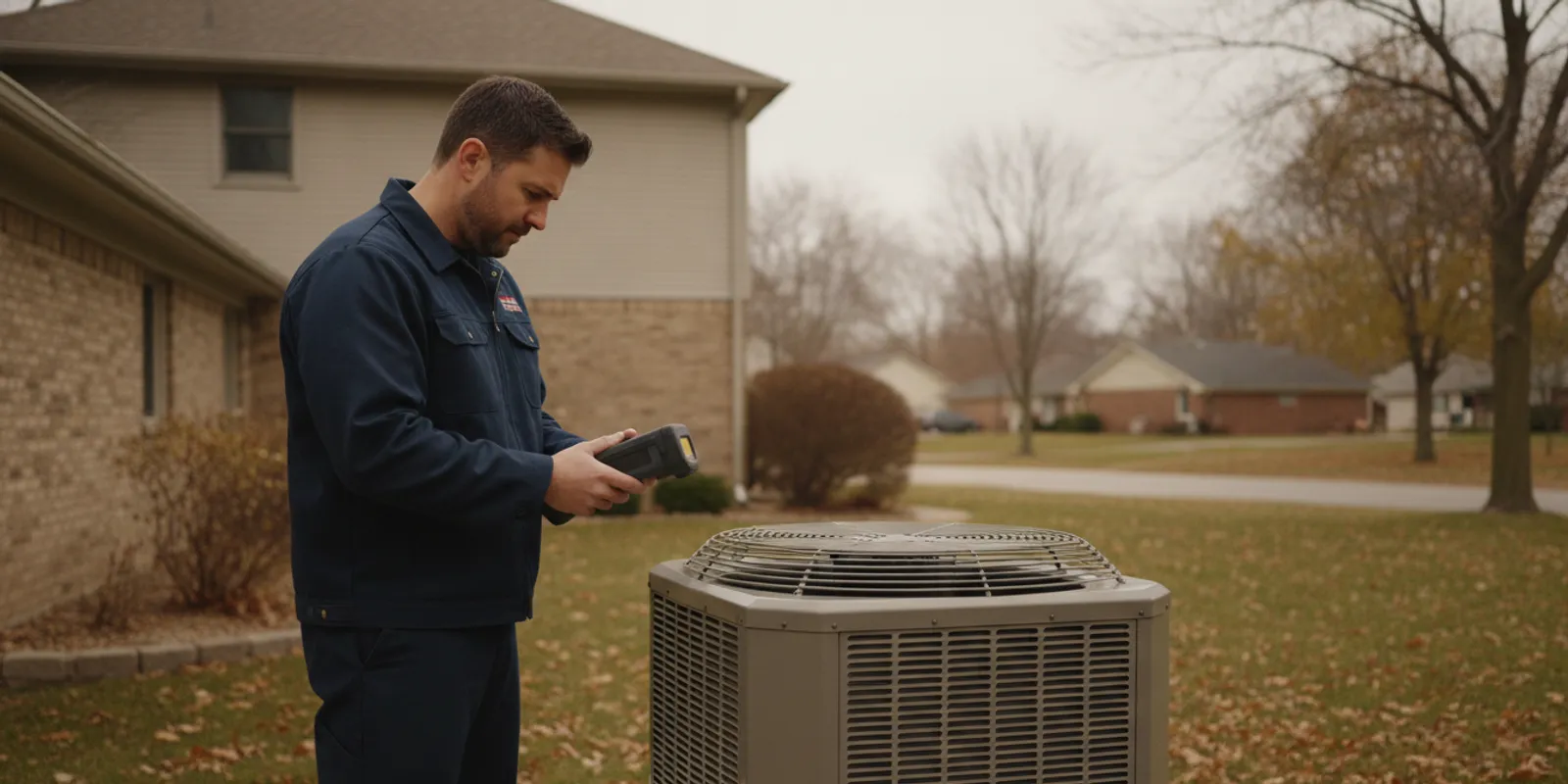
When a heat pump stops keeping your home comfortable, the cause may be a basic setting or a component that needs attention. Knowing when to request heat pump repair can help you avoid guesswork and give a technician a clearer picture of the problem. This guide covers the symptoms to watch, safe checks to try, and information to gather before arranging service.
What does a heat pump do?
A heat pump moves heat rather than creating it in the same way as a combustion furnace. In cooling mode, it transfers heat out of the home; in heating mode, it moves heat indoors. The outdoor unit and indoor air handler or furnace work together, so a problem at one part of the system can affect comfort throughout the house.
Heat pumps can run for longer cycles than some homeowners expect, especially when outdoor temperatures are low. A longer cycle by itself does not prove the equipment is broken. Look for a pattern: a sudden change from normal operation, uneven temperatures, unusual sounds, or a system that cannot approach the thermostat setting. The basic operating cycle helps explain why a heat pump may run differently in heating and cooling modes, but it cannot diagnose a particular unit remotely.
When should you call for heat pump repair in Chicagoland?
Pay attention to changes in performance, sound, airflow, and operation. Note when the issue started and whether it happens in heating, cooling, or both modes. A useful observation describes what happened, how often it happens, and what changed around the same time. You do not need to guess which part failed.
The system runs but the home does not reach the set temperature
If the heat pump runs for extended periods without bringing rooms near the thermostat setting, it may be struggling to transfer heat or move enough air. A dirty filter, blocked return, thermostat setting, or outdoor obstruction can contribute. Compare the current behavior with what is typical for your home and consider the weather. A long run during a cold spell is different from a new pattern of nearly continuous operation with little improvement in comfort.
Start by checking whether the thermostat is in the intended mode and whether a schedule changed. Then look at the filter and make sure supply registers and return grilles are not blocked. If the system still cannot keep up, or the same symptom returns after a short improvement, request an evaluation. Explain how far the indoor temperature falls short and whether the problem affects the whole home or just certain rooms.
Airflow feels weak or uneven
Weak airflow from several supply registers can point to an airflow problem. If only one room is affected, a closed or obstructed register may be involved. Check that furniture, rugs, and curtains are not covering vents, and inspect the filter. Avoid closing many registers in other rooms to force more air toward one space; changing the airflow throughout the system may make the problem worse.
Persistent weak airflow across multiple rooms, a filter that becomes dirty unusually quickly, or airflow that changes from day to day deserves professional attention. Notice whether the indoor fan seems to run normally and whether the issue is limited to one floor, one zone, or the entire home. Those distinctions help a technician investigate without requiring you to identify a duct, motor, or control fault yourself.
You hear a new or persistent sound
A sudden grinding, rattling, buzzing, or repeated clicking sound is worth noting. A loose panel or debris near the outdoor unit may cause some noise, but do not open equipment or reach inside to investigate. Turn the system off if you hear severe grinding or see visible damage, then request service. If the sound is not severe, observe from a safe distance and note whether it begins at startup, continues throughout a cycle, or comes and goes.
A brief sound during a transition is different information from a loud noise that continues while the unit runs. Record whether the sound seems to come from the indoor equipment, outdoor unit, or a nearby vent, but treat that as a location clue, not a diagnosis. Do not remove a cover to get a closer look or place a tool against operating equipment.
The system repeatedly starts and stops
Frequent short cycles can leave the home uncomfortable and may relate to thermostat settings, airflow, electrical controls, or equipment operation. First confirm that the thermostat is not set to an unusual schedule or mode. If cycling continues, avoid repeatedly switching the system off and on as a test. Instead, note approximately how often it starts, how long each run lasts, and whether the indoor temperature changes.
For example, “the outdoor unit starts, runs briefly, stops, then starts again several times in an hour” describes a pattern more clearly than “the heat pump is short cycling.” If the pattern is new or is accompanied by weak heating or cooling, arrange service. A technician can check the controls and operating conditions rather than relying on a label for the symptom.
Ice remains on the outdoor unit
Some frost can form during cold weather, and a heat pump may periodically enter a defrost cycle. A thick layer of ice that remains, returns quickly, or covers the coil can signal a problem. Do not chip ice away, scrape the coil, or pour hot water on the unit. Keep the area around it clear and request service if the buildup does not clear through normal operation or the system is not heating as expected.
During defrost, a temporary change in sound or a brief cloud of water vapor may occur. A momentary change is not the same as persistent ice or a unit that stops heating normally. Observe from indoors or a safe distance and note how long the frost remains, whether it covers a small area or most of the coil, and whether the thermostat setting is being met.
Energy use changes without an obvious reason
A noticeable increase in energy use can have many causes, including weather, thermostat settings, or a change in household routines. It is not a diagnosis by itself. Compare similar billing periods and take account of outdoor conditions, occupancy, and thermostat schedules. Then ask whether comfort or system behavior changed at the same time.
If the bill changed but the system seems to operate as usual, review the household changes before concluding that a repair is needed. If higher use coincides with longer run times, repeated cycling, or rooms that no longer stay comfortable, include those details when requesting an evaluation. A technician can examine the equipment, while your notes help put the operating change in context.
What can you safely check before calling?
Simple observations can help, but safety comes first. Do not remove access panels, handle wiring, or attempt refrigerant work. For electrical concerns such as a burning odor, visible damage, or repeated breaker trips, stop using the system and contact a qualified professional. Do not keep resetting a breaker that trips again. If there is smoke or an immediate fire risk, leave the area and contact emergency services.
- Confirm the thermostat mode and setting. Check that the system is set to the intended heating or cooling mode and that the set temperature is reasonable. Review schedules and batteries if the thermostat uses them. If someone changed a schedule recently, restore the intended setting and observe the system without making repeated changes.
- Check the air filter. If the filter is visibly loaded, replace it with the correct size and type for the system, following the equipment instructions. A filter that does not fit properly can cause its own airflow issue. If you are unsure which filter is correct, do not force one into the slot.
- Look for blocked vents. Make sure supply registers and return grilles are open and unobstructed. Check for furniture, curtains, rugs, or stored items that may have been moved in front of them. Do not close many registers in an attempt to redirect air.
- Look around the outdoor unit. From the outside, check for leaves, snow, or objects blocking airflow. Keep the area clear, but do not remove panels or put your hands through the grille. Do not scrape or wash the coil while equipment is running.
- Observe the system from a safe distance. Note whether the indoor fan runs, whether the outdoor unit starts, and what sounds or odors you notice. Avoid touching equipment while it is operating. Do not repeatedly turn the system off and on to see whether the symptom returns.
After these checks, give the system a reasonable opportunity to respond rather than making repeated adjustments. If the symptom is severe, there is an electrical warning sign, or comfort does not improve, arrange professional service. Keep the observations factual: “the upstairs rooms remain warm,” “the outdoor unit is covered in persistent ice,” or “the breaker tripped twice” is more useful than a guessed diagnosis.
How do you keep a useful symptom log?
A short log can turn an intermittent problem into a clear timeline. For each occurrence, write the date and approximate time, whether the system was heating or cooling, the thermostat setting, what you noticed, and how long it lasted. Record the indoor temperature if it is displayed, but do not spend time measuring or testing if doing so feels unsafe. Add whether the symptom stopped on its own or continued until you changed a setting.
Suppose the unit runs normally in the morning but the upstairs is uncomfortable in late afternoon. Write down the weather conditions as you experienced them, whether the doors or windows were open, which rooms felt different, and whether airflow at the registers seemed normal. This helps separate a repeated system pattern from a single event tied to a particular room or household routine.
For a noise that happens only at startup, a brief recording from a safe distance may help communicate what you heard. Do not move closer, touch the unit, or delay turning it off if there is a severe sound or safety concern. If the display shows an error message, photograph it without removing a panel, and note the wording before it disappears.
How do you decide whether to monitor or request service?
One unusual moment does not always call for the same response as a repeated or worsening symptom. A practical decision starts with severity, persistence, and whether the equipment appears to operate safely. A mild symptom that clears after correcting a thermostat setting may be monitored. A symptom that returns, affects several rooms, or leaves the home unable to maintain comfort is a reason to seek an evaluation.
Use the comparison below to organize your next step, not as a substitute for a diagnosis. The same symptom can have different causes, and a table cannot tell you which component needs repair. When deciding, consider the full pattern: a minor change that has resolved is different from the same change recurring over multiple cycles.
| What you notice | Reasonable homeowner check | When to request service |
|---|---|---|
| Temperature does not reach the setting | Confirm mode, schedule, and filter condition; note outdoor conditions | If it persists after basic checks or returns across cycles |
| Weak airflow from several vents | Clear vents and check the filter fit and condition | If airflow remains weak or several rooms continue to differ |
| One room is much less comfortable | Check that its register is open and not blocked; compare other rooms | If the room stays uncomfortable despite clear vents or the issue spreads |
| New loud or grinding noise | Observe from a safe distance; do not open the unit | Promptly, especially if severe or paired with poor operation |
| Heavy or persistent outdoor ice | Keep the area clear; do not chip or melt ice | If it does not clear in normal operation or quickly returns |
| Breaker trips or burning odor | Stop using the system; do not keep resetting the breaker | Contact a qualified professional |
| Unexpected energy-use change | Compare similar periods and note schedule or occupancy changes | If it coincides with persistent performance or comfort changes |
What details should you have ready?
A concise description saves time during scheduling and helps the technician prepare. You do not need to identify the failed part. Collect what you can safely observe before you call:
- The make and model, if visible without opening equipment.
- Whether the issue occurs in heating, cooling, or both modes.
- When it began and whether it is constant, intermittent, or tied to certain times of day.
- The thermostat setting and the temperature difference you notice, including which rooms are affected.
- Any sounds, odors, ice, water, or visible error messages, and when they occur.
- Recent filter changes or changes to the home, such as a renovation, a new thermostat, or blocked registers.
- What safe checks you already tried and whether they changed the symptom.
If you have service records or equipment paperwork, keep them nearby. Photos of an error display or visible ice can be useful, but do not remove covers to take them. If a symptom comes and goes, the log can help explain why the system seems normal during a service visit. Share what changed, what stayed the same, and whether a recent service visit or home project may be relevant.
It may also help to describe the home's layout in practical terms: whether the problem is on one floor, near a particular thermostat, or limited to rooms far from the indoor unit. Do not assume that the room nearest the equipment should always be the most comfortable. Simply report the difference you experience and how it changes over the day.
For service information, review the company's heating services page or air conditioning service page. The contact page provides a way to start a service conversation. These pages help you find the relevant service path; the equipment evaluation addresses the specific symptoms at your home.
What happens during a heat pump service visit?
The exact process depends on the symptoms and equipment. A technician will typically ask what you observed, inspect relevant components, and test operation to narrow down the cause. A careful diagnosis matters because a comfort complaint can have more than one possible explanation. A report that says “the fan stopped twice after about ten minutes” is more actionable than a conclusion that a particular component is defective without testing.
Be ready to describe whether the problem occurs in both modes, whether it affects one zone or the whole home, and whether it began after a change to the thermostat, filter, or home. Show any error message or symptom log. If the issue is intermittent, explain when it usually appears and how long it lasts. These details can help direct attention to the right conditions during testing.
You can ask what the evaluation includes, what the technician found, and which repair options address the reported issue. Ask whether the proposed work is needed now and whether follow-up testing is planned. Request an explanation of any estimate before authorizing work. Scope and price depend on the issue and equipment, so a general online figure should not be treated as a quote for your home.
What questions can help you understand a diagnosis?
Ask the technician to connect the finding to the symptom in plain language. Which test or observation supports the diagnosis? What part of the system is affected? What work is included in the recommendation? How will the technician check operation afterward? These questions help you understand both the reason for the repair and what the completed work is intended to change.
If the recommendation includes more than one item, ask which parts are necessary to address the current problem and which are preventive or optional. Ask whether the system should remain off, or whether there is a safe way to operate it while deciding. Follow professional safety advice, particularly when the problem involves electrical signs, heavy ice, or a severe mechanical noise.
Keep the written findings and estimate with any earlier service records. If the same symptom returns, these records let you describe what was previously tested and repaired without assuming the new issue has the same cause. A useful service history is a sequence of observations and work performed, not just a list of replaced parts.
How should you compare repair recommendations?
Once a problem has been diagnosed, compare options by looking beyond the name of a part or the initial estimate. First, ask the technician to connect the finding to the symptom: what test or observation supports the diagnosis, and how does the proposed work address it? You can also ask what will be checked after the repair to confirm that the system is operating as intended.
- Clarify the scope. Ask what is included in the proposed work and whether any additional parts or a follow-up visit may be needed.
- Understand urgency. Ask what could happen if the repair is delayed and whether the system can be operated safely in the meantime. If there is a safety concern, follow the technician's direction.
- Compare like with like. If you seek another opinion, share the same symptom history and ask each provider to explain the diagnosis and scope. Estimates describing different work are not directly comparable.
- Ask about testing. Find out how operation will be verified after the repair and what observations should prompt you to call again.
- Keep the record. Save the estimate, service notes, and equipment documentation. These can help explain future symptoms without assuming that a later problem has the same cause.
There is no single online price that applies to every heat pump repair. Equipment type, the location of the fault, parts, and testing needs can change the work involved. A clear written explanation of the diagnosis and proposed scope is more useful than comparing a specific price with a vague estimate that may include different work.
For a second opinion, try to compare the same facts rather than asking different providers to respond to different descriptions. Share the same symptom log, note which checks have already been completed, and request a written explanation of the proposed work. If the second recommendation differs, ask each provider to explain what evidence led to that conclusion. This is a practical way to understand the difference without choosing a repair based solely on the shortest description or lowest initial figure.
How can you reduce avoidable heat pump problems?
Regular attention to airflow and the outdoor area can help you notice changes early. Replace filters according to equipment guidance and household conditions. Keep registers open and the outdoor unit clear of leaves, snow, and stored items. Make sure the thermostat schedule matches how you use the home, especially when seasons change. These simple habits are not a promise that every failure can be prevented.
When the season changes, review the thermostat mode and schedule, check that returns and supply vents are not blocked by seasonal furnishings, and look at the outdoor unit from a safe distance. If you have a second heating source or a system with multiple zones, learn how the controls are meant to operate by consulting the equipment instructions. Avoid guessing at advanced settings you do not recognize.
Use routine observations to catch a change, not to take the equipment apart. For instance, you can look for debris around the outdoor unit after yard work, check that a recently moved sofa is not covering a return grille, and note whether the filter is due for replacement. If the system's instructions set a particular filter type or maintenance interval, follow those instructions rather than substituting a generic schedule.
Periodic professional maintenance can provide an opportunity to identify wear or operating concerns. Ask what tasks are included and how often they are appropriate for your system. The company's home services overview and company information can help you understand the available service path. A professional evaluation addresses the specific equipment and symptoms at your property.
How are heat pump symptoms different from furnace problems?
Both heat pumps and furnaces can leave a home uncomfortable, but the equipment and operating patterns differ. A furnace generates heat and distributes it indoors. A heat pump moves heat between the home and outdoors and may operate for longer periods, especially when outdoor conditions increase the heating demand. That means a homeowner should not assume that every long cycle is a fault or that a symptom has the same cause as a furnace problem.
Use the system you have and the mode in which the symptom appears as context. If a heat pump cools normally but struggles to heat, tell the technician exactly that. If heating works but cooling does not, share that distinction instead of describing the issue simply as “it is broken.” For general information about a different heating system, see the company's heating services information; do not use furnace troubleshooting steps as a substitute for a heat pump evaluation.
Frequently asked questions
Can I run a heat pump if the outdoor unit has frost?
A light layer of frost may occur in cold conditions and may clear during a defrost cycle. A thick or persistent ice buildup is different; do not chip it away. Arrange service if it remains or the system is not heating normally.
Should I keep resetting a breaker that trips?
No. A breaker that trips repeatedly may indicate an electrical or equipment issue. Leave it off and contact a qualified professional rather than continuing to reset it.
Does a long heating cycle always mean the heat pump is broken?
No. Outdoor conditions and the home's heat demand affect run time. A long cycle is more concerning when it is a new pattern and the home still cannot reach the thermostat setting.
What if my heat pump works in cooling but not heating?
Note the mode-specific behavior and thermostat settings, then request an evaluation if the issue persists. The difference between modes is useful information, but it does not identify the cause on its own.
Should I try to remove ice or clean the outdoor coil?
Do not chip or scrape ice from the unit, pour hot water on it, or reach through the grille. Keep nearby leaves or objects clear only when you can do so safely from the outside. Persistent buildup or poor operation is a reason to request service.
A heat pump that behaves differently than usual or cannot maintain comfort deserves a careful assessment. Make safe observations, avoid opening the equipment, and share what you noticed when you schedule service.
Ready to Get Started?
Contact Brilliant Home Services for professional, reliable service in Chicagoland. We are available 24/7 for emergencies.