Guide to Electrical Panel Repair or Replacement in Barrington, IL
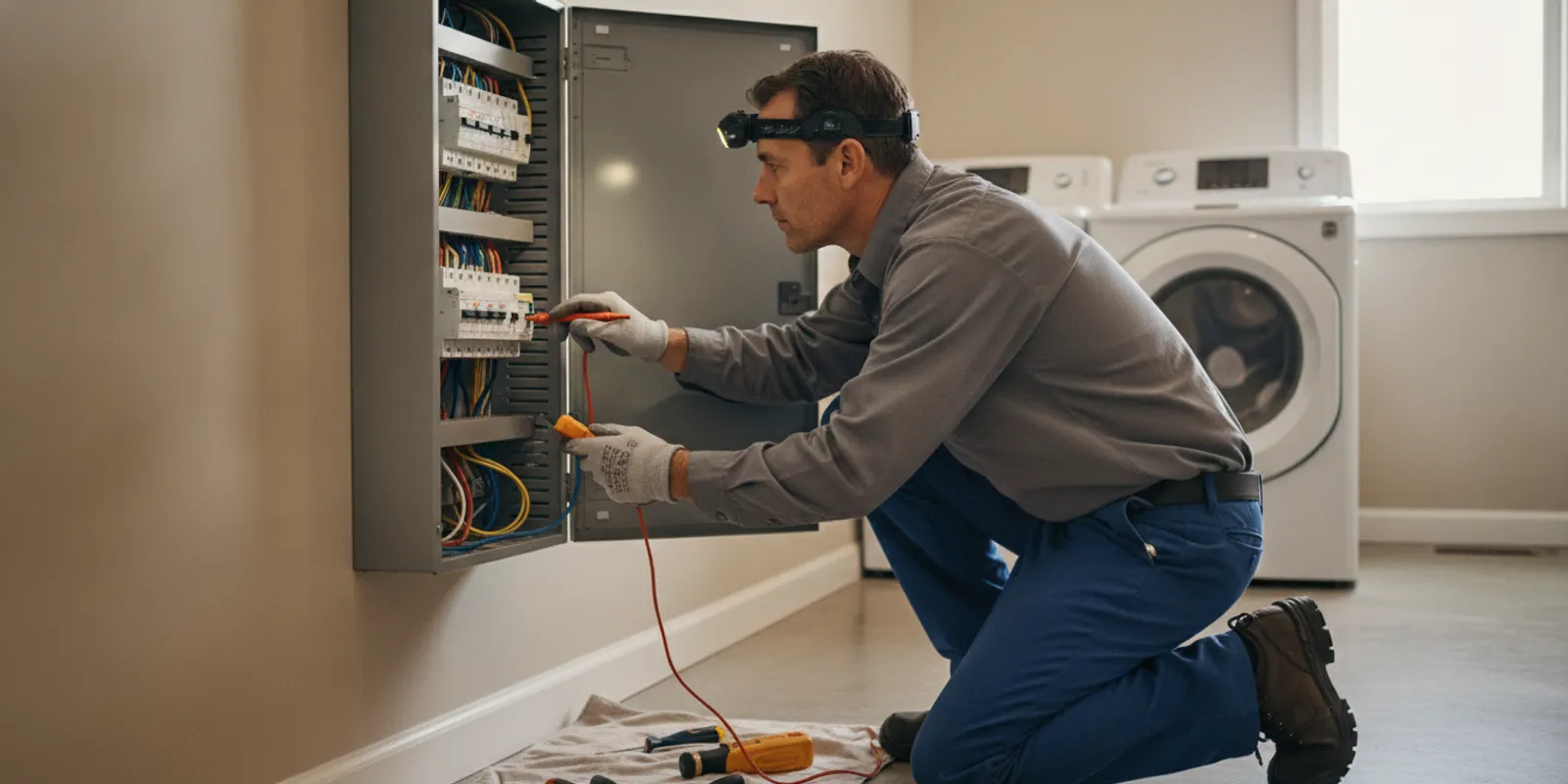
If you are weighing electrical panel repair or replacement in Barrington IL, start by identifying what the panel is doing and whether there are signs of immediate danger. A breaker that trips once after an unusual load may need a different response from repeated tripping, burning odors, heat, or visible damage. This guide explains what to notice, what not to attempt, and how to prepare for a professional evaluation.
Why does an electrical panel need attention?
The electrical panel distributes power to circuits throughout a building and provides overcurrent protection through breakers or fuses. A problem can affect one circuit, several areas, or the whole property. Some issues are limited and repairable; others point to equipment condition, capacity, or safety concerns that require a broader plan.
Do not assume every inconvenience means the panel must be replaced. A breaker may trip because a circuit is carrying more load than intended, because an appliance has a fault, or because there is a problem in the circuit. Conversely, a panel that still supplies power is not automatically safe or suitable. A qualified electrician should inspect the actual equipment and symptoms before recommending work.
Brilliant Home Services provides electrical service in the Barrington area. You can review its electrical services or learn about its Barrington electrical service calls when deciding what information to share.
What signs can indicate panel repair or replacement?
Pay attention to changes in how the electrical system behaves. Note when the symptom began, which rooms or equipment are affected, and whether anything changed shortly beforehand. These observations can help an electrician narrow down the cause, but they are not a substitute for an inspection.
- Repeated breaker trips: A breaker that trips again after it is reset, or trips during ordinary use, deserves investigation. Repeatedly resetting it can conceal a persistent fault or overload.
- Burning or hot-plastic odor: An unusual odor near the panel or an outlet can signal overheating. Treat it seriously, especially if it is new or persistent.
- Heat, buzzing, or crackling: Warmth at the panel, unusual sounds, or visible arcing are not normal operating conditions.
- Visible damage: Rust, moisture, discoloration, melted parts, loose-looking components, or damaged covers call for professional attention. Do not remove the cover to investigate.
- Lights dimming or flickering: A change affecting multiple areas or coinciding with equipment use may warrant an electrical assessment. Flickering can have several causes, not just a panel problem.
- Limited room for planned electrical work: A renovation, new appliance, heating or cooling equipment, or other added load may require a review of circuits and available capacity.
- Uncertainty about panel condition: If the panel is damaged, altered, or poorly documented, an electrician can assess its condition and suitability rather than guessing from appearance alone.
A single symptom does not establish that replacement is necessary. A proper diagnosis considers the panel, the affected circuit, connected equipment, and the intended use of the building.
What should you do if the panel seems unsafe?
Safety comes before troubleshooting. If you see smoke, flames, sparks, or active arcing, move away and contact emergency services. Do not touch the panel or attempt to put out an electrical fire with water. If you smell burning or feel unusual heat but see no active fire, keep people away and seek qualified help promptly.
Do not open the panel cover, insert tools, tighten connections, replace internal parts, or repeatedly reset a breaker. Even when a main switch is turned off, parts of an electrical panel may remain energized. Avoid touching exposed wiring or damaged equipment. If the situation appears dangerous, leave the area and call for appropriate emergency assistance.
For a less urgent symptom, such as a breaker that has tripped once, reduce the load on the affected circuit and note what was operating. If you know which breaker serves the area, you can report its position to the electrician, but do not force a switch that will not reset. The U.S. Consumer Product Safety Commission provides general consumer safety information at its official website; specific conditions at your property should be assessed by a qualified professional.
How can you tell whether repair or replacement may be appropriate?
Repair and replacement solve different problems. A repair may address a specific, localized fault when the panel and the rest of the system are in suitable condition. Replacement may be considered when the equipment is damaged, unsuitable for the planned electrical demands, or when an appropriate repair cannot resolve the underlying concern. The decision requires an on-site evaluation.
| Consideration | Repair may be considered when | Replacement may be considered when |
|---|---|---|
| Problem scope | The fault is identified as isolated and the panel remains suitable. | The inspection finds broader damage or concerns affecting the panel as a whole. |
| Breaker behavior | A specific breaker or circuit issue can be safely diagnosed and corrected. | Repeated problems reveal equipment or capacity concerns that a limited repair will not address. |
| Condition | The panel and its components are in sound condition for continued use. | There is significant deterioration, heat damage, moisture damage, or another condition that makes continued use unsuitable. |
| Future plans | Existing equipment can safely support current needs and the proposed work. | A planned change prompts an assessment showing that a different panel or broader upgrade is needed. |
| Next step | Have the electrician explain the identified fault and the scope of the repair. | Ask for the proposed replacement scope, required coordination, and any related work. |
This comparison is a discussion aid, not a remote diagnosis. Age by itself does not establish that a panel is unsafe, and a new panel is not automatically the right solution to every tripping breaker. The recommendation should explain the observed condition and why the proposed work addresses it.
What does an electrician assess before recommending work?
An assessment should begin with your reported symptoms and the condition of the equipment. The electrician may ask when the problem occurs, how often it happens, what loads were operating, and whether renovations or new equipment are planned. Be specific: “the breaker trips when the microwave and kettle run together” is more useful than “the power is bad.”
The review may include the panel’s visible condition, the affected circuit, breaker operation, labeling, and how the system relates to the work you have in mind. The exact inspection and testing depend on the symptoms and site conditions. Do not remove a panel cover or perform tests yourself to gather information.
For planned work, describe both the immediate project and likely near-term additions. A kitchen remodel, workshop equipment, or a new heating or cooling system can change the electrical plan. Brilliant also handles construction and renovation services; coordinating project details early can help clarify what electrical questions should be evaluated.
Ask the electrician to distinguish between a confirmed defect and a possible future limitation. If a breaker trips, ask what evidence points to the breaker, the connected load, the wiring, or the panel. If replacement is proposed, ask why a repair would not adequately resolve the issue. Clear reasoning helps you compare options without making assumptions.
What information should you gather before the visit?
You do not need to diagnose the issue before calling. A short, accurate description is enough to start. If it is safe to do so, collect these details without touching exposed components or removing covers:
- Which rooms, outlets, lights, or appliances are affected?
- When did the issue first appear, and how often has it occurred?
- What was running when a breaker tripped or lights changed?
- Did you notice odor, sound, unusual warmth, moisture, or visible damage?
- Have there been recent renovations, new equipment, or changes in use?
- Are you planning electrical work soon, and what equipment or areas will it involve?
- Is power fully out, limited to one circuit, or fluctuating across the property?
Photographs can help communicate the surrounding area or visible exterior condition if they can be taken from a safe distance. Do not approach smoke, sparks, hot surfaces, or exposed wiring to take a picture. A written note about when symptoms occur is often more useful than an unsafe close-up.
For general service information across the area, see the company’s service areas. If you are in Barrington, the local electrical service page is a relevant starting point for the next step.
How should you compare repair and replacement proposals?
Compare the reasoning and scope, not just the label “repair” or “replacement.” A useful proposal should identify the problem found, explain the work recommended, and make clear what is included. If the cause has not yet been confirmed, ask what inspection or diagnostic work is needed before a final recommendation can be made.
- Ask what was observed. Request a plain-language explanation of the condition or test result that supports the recommendation.
- Clarify the scope. Find out which panel or circuit work is included and whether related electrical work is proposed.
- Discuss the project context. Make sure planned appliances, renovation work, or changes in building use have been mentioned.
- Ask what is not included. Clarify whether additional work could be identified after inspection or during the project.
- Confirm the next steps. Ask about scheduling, access, preparation, and any coordination required before work begins.
- Request options where appropriate. If more than one safe approach is available, ask how the options differ and what each addresses.
There is no reliable universal price or timeline for panel work without details about the property, equipment, and scope. Avoid relying on a generic figure as a quote. For an evaluation and project-specific discussion, use the contact page rather than assuming that an online estimate describes your home.
How can a renovation affect the panel decision?
Electrical work is easier to plan when it is considered alongside the broader project. Adding circuits or equipment can raise questions about existing capacity, routing, access, and how work will be coordinated with other trades. That does not mean a panel replacement is inevitable. It means the panel and the proposed electrical loads should be reviewed together.
Before a project begins, share the equipment specifications available to you and explain the intended use. For example, a homeowner planning a kitchen update can identify the appliances under consideration and ask whether the existing electrical setup should be assessed before finishes are selected. A business owner planning equipment changes can describe expected operation and any constraints on downtime.
Ask who will confirm the electrical scope and at what point decisions must be made. A discussion before walls are closed or materials are finalized may help surface access or routing questions earlier. The electrician can explain what can be determined from the current information and what requires an on-site review.
How does the electrical system affect diagnosis?
A panel is one part of a connected system. The symptom may originate at a breaker, in a branch circuit, at a connection, or in the equipment using power. An electrician may need to consider more than the panel face to determine why a breaker trips or lights fluctuate. This is one reason a recommendation based only on a brief description should be treated as preliminary.
Consider a breaker that trips when several devices run at once. That pattern gives useful context, but it does not prove which component is at fault. A circuit may be carrying a combination of loads that exceeds its intended use, or an appliance may have developed a problem. If the breaker trips with one particular device, mention that detail rather than repeatedly testing it. If the trip is unpredictable, record the time and what was operating.
Likewise, a flickering light can be limited to one fixture or affect multiple rooms. A single lamp or fixture issue is different from a change throughout the building. Tell the electrician the extent and pattern of the symptom. Avoid changing wiring or opening devices to try to isolate it yourself.
Clear labeling can also help during service. If circuit labels are missing or seem inaccurate, point that out. Do not remove the panel cover or experiment with breakers to map circuits when there are warning signs. An electrician can determine an appropriate and safe way to assess the system.
What should commercial property owners consider?
For a small business or other local commercial property, electrical symptoms can affect staff, customers, equipment, and operating plans. Describe which areas are affected, whether essential equipment is involved, and whether the problem occurs during a particular activity or time of day. If an outage or circuit issue interrupts operations, explain what must remain available and what hours may be suitable for an assessment.
Commercial spaces can have different equipment and use patterns from a residence, so do not apply a homeowner’s assumptions to a business panel. Changes in tenant use, equipment, or renovations may make it useful to review the electrical plan before work proceeds. Ask the electrician what information, equipment details, or access arrangements are needed to assess the situation.
Keep employees away from a panel that is hot, damaged, making unusual sounds, or associated with a burning odor. Do not ask staff to reset a breaker repeatedly or open electrical equipment. If there is smoke, fire, or active sparking, follow emergency procedures and contact emergency services. Once conditions are safe, document the affected areas and the events leading up to the issue.
When coordinating a commercial project, clarify how the electrical work relates to any construction or equipment installation. Identify who is responsible for access, shutdown coordination, and communicating changes to people using the space. The specific plan depends on the property and work scope.
How can you prepare for the appointment?
Make access to the panel area clear without moving or touching electrical equipment. Keep children and pets away from the work area, and let the electrician know if access is restricted or if there are building rules that affect entry. If the panel is in a storage area, clear ordinary items from around it only when it is safe to do so; never handle damaged wiring or debris that may be hazardous.
Gather any available records that may help explain the system, such as information about a recent renovation, appliance installation, or prior electrical work. Records are helpful but not essential. Do not delay reporting urgent warning signs while searching for paperwork. Mention any prior attempts to reset a breaker or any changes made before the symptom started.
At the start of the visit, summarize the issue and point out affected locations. Ask what the electrician plans to inspect and whether the initial assessment is expected to determine the cause or identify further work. Before authorizing a proposed repair or replacement, make sure you understand the purpose of the work and any limitations of the assessment.
After the evaluation, keep any written scope or relevant documentation with your home or property records. If the work is tied to a renovation, share the agreed electrical details with the people coordinating that project. This simple step can help prevent later confusion about what was assessed or included.
What common assumptions should homeowners avoid?
- “A tripped breaker always means the breaker is bad.” The cause may be the load, an appliance, wiring, or another condition. Diagnosis matters.
- “If the lights still work, the panel is safe.” Continued operation does not prove that equipment is in good condition.
- “Every older panel needs immediate replacement.” Age alone does not reveal the present condition or suitability. Have it assessed.
- “I can keep resetting it until the problem stops.” Repeated resets can leave an unresolved hazard or fault unaddressed.
- “A larger panel automatically solves every electrical issue.” A panel change does not necessarily resolve a fault elsewhere in the system.
- “A photo is enough to approve a replacement.” A picture may show visible concerns, but it cannot establish every relevant condition.
When a recommendation is unclear, ask for the reason in everyday language. You should understand whether the work is addressing an immediate defect, a safety concern, a project requirement, or future capacity planning.
Frequently Asked Questions
Does one tripped breaker mean I need a new panel?
No. One trip can have several causes, including a temporary load or a problem with equipment on that circuit. If it happens repeatedly, will not reset, or is accompanied by heat, odor, buzzing, or visible damage, stop troubleshooting and arrange qualified help.
Can I open the panel to check for a loose wire?
No. Do not remove the cover or touch internal parts. Electrical equipment may remain energized, and inspecting it is a job for a qualified electrician with appropriate procedures and tools.
Should I replace a panel before adding an appliance?
Not automatically. Share the planned appliance and its specifications with an electrician and ask for an assessment of the existing system. The recommendation depends on the panel, circuits, load, and site conditions.
What should I do if there is a burning smell near the panel?
Keep people away and do not open or touch the panel. If you see smoke, flames, or sparks, leave the area and contact emergency services. Even without visible fire, a new burning odor merits prompt professional attention.
What is the next step if you are considering panel work?
Write down the symptoms, note when they happen, and identify any upcoming electrical project. Do not attempt internal repairs or repeatedly reset a breaker that continues to trip. A qualified electrician can inspect the condition, explain whether repair or replacement is appropriate, and discuss a scope suited to the property. For electrical panel repair or replacement Barrington IL homeowners can contact Brilliant Home Services to schedule service.
Ready to Get Started?
Contact Brilliant Home Services for professional, reliable service in Chicagoland. We are available 24/7 for emergencies.