Commercial EV Charger Installation: Schaumburg & Palatine
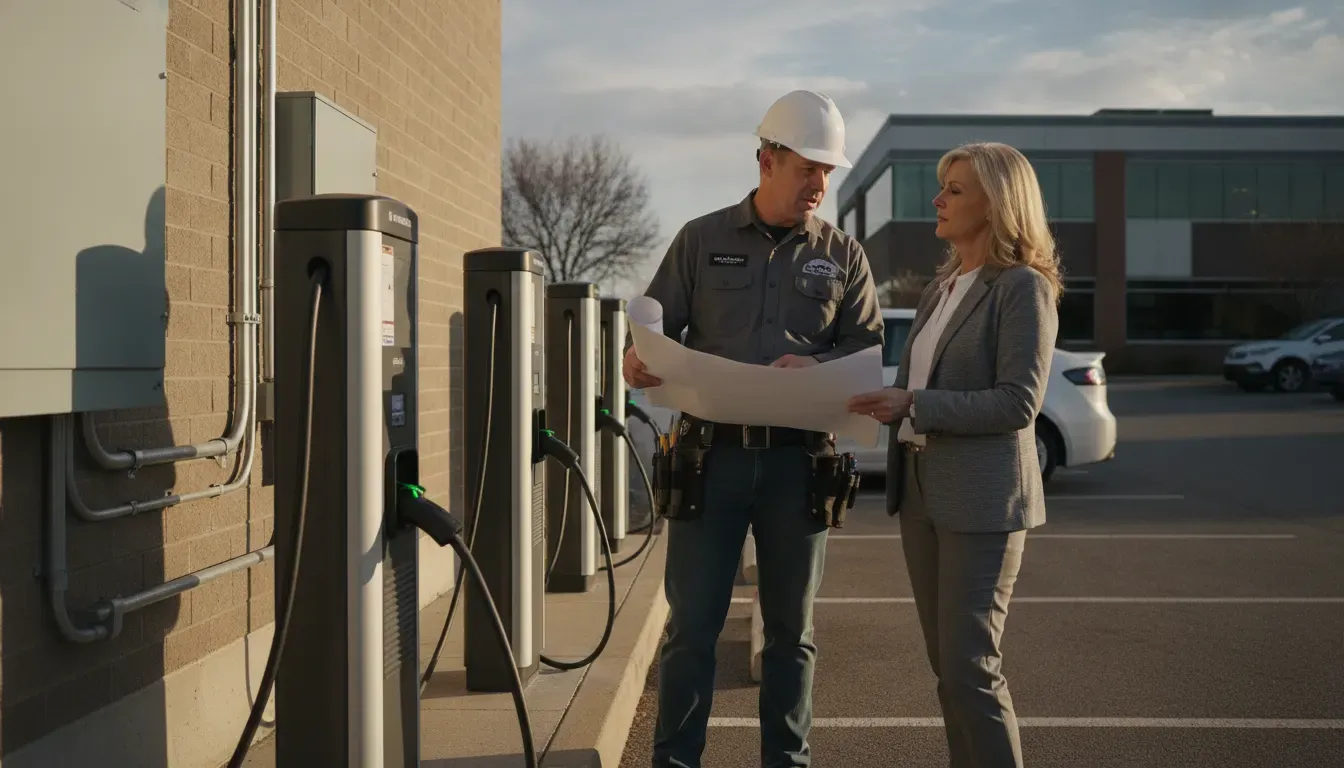
For a business owner or property manager, commercial EV charger installation is an electrical infrastructure project, not simply a hardware purchase. The right plan accounts for vehicle dwell time, parking layout, available service capacity, permits, accessibility, and future demand. Brilliant Home Services helps businesses in Schaumburg, Palatine, and nearby communities evaluate the electrical and installation requirements before work begins.
Schedule Service Now to discuss a commercial EV charging project for your Schaumburg or Palatine property.
This guide explains how to compare charger types, estimate the number of ports a site may need, and prepare for local permitting. It also outlines cost factors that belong in a site-specific quote. This is a planning resource, not a substitute for current requirements from the applicable authority having jurisdiction.
Why are Schaumburg and Palatine businesses installing EV charging stations?
Businesses add EV charging to support employees, attract tenants, serve customers, improve the experience at multifamily or office properties, and prepare parking areas for changing transportation needs. The best project starts with the site's actual use: who will charge, how long vehicles remain parked, whether charging is complimentary or paid, and how the equipment will be maintained.
- Workplaces: Employees may need several hours of charging during a normal shift, which often makes Level 2 a practical starting point.
- Retail and restaurants: Customer dwell time, visibility, and convenient cable routing can influence station placement.
- Multifamily properties: Property managers must plan for shared access, resident allocation, parking rules, and future expansion.
- Fleet and service locations: Vehicles may need predictable overnight charging or faster turnaround between routes.
- Commercial development: New construction or a parking-lot renovation can make trenching, conduit, and service planning easier to coordinate.
The U.S. Department of Energy's Alternative Fuels Data Center workplace charging guidance emphasizes that a host should plan for equipment, electrical service, operations, and user needs together. That whole-site approach helps a Schaumburg or Palatine property avoid installing too few ports. It also helps prevent poor placement or late electrical service surprises.
Which commercial EV charger installation approach fits your site?
Level 2 and DC fast charging serve different commercial use cases. Level 2 equipment generally fits locations where vehicles remain parked for a work shift, shopping visit, appointment, or overnight stay. DC fast charging is designed for much faster replenishment, but it can require substantially more electrical capacity, different site planning, and a stronger business case.
| Planning question | Level 2 charging | DC fast charging |
|---|---|---|
| Typical fit. | Workplaces, offices, multifamily, retail, and overnight parking. | High-turnover sites, fleets, travel-oriented, or service locations. |
| Primary design focus. | Parking duration, port count, load management, and convenient placement. | Available service capacity, utility coordination, equipment footprint, and demand. |
| Project questions. | Can the current service support the load? Should charging be managed across ports? | Can the property support the larger load? Will utilization justify the infrastructure? |
Do not select equipment by advertised charging speed alone. The electrical service, feeder route, transformer capacity, panel space, protection, trenching distance, and local requirements may be more important to the project than the charger label. The Department of Energy's infrastructure development guidance is a useful neutral reference for evaluating procurement, installation, and ongoing operations.
Schedule Service Now for an electrical assessment before selecting commercial EV charging equipment.
How many EV chargers does a small business need?
A small business should choose a starting port count based on parking demand, employee and customer behavior, operating hours, and expansion plans rather than a universal formula. A site assessment can compare current electrical capacity with the desired number of ports and identify whether load management or a phased installation will make the project more practical.
- Count the users: Separate employee, tenant, customer, and fleet demand instead of treating every parking space as an equal charging opportunity.
- Measure dwell time: A vehicle parked for eight hours has a different charging need from one parked for 30 minutes.
- Map the parking area: Note accessible spaces, traffic flow, wheel stops, pedestrian paths, lighting, snow removal, and cable reach.
- Review the electrical service: Check the main service, distribution equipment, spare breaker capacity, and distance to the proposed stations.
- Plan for expansion: Conduit pathways, equipment locations, and a phased load strategy can reduce the cost and disruption of a later addition.
For example, an office with long employee dwell times may start with a smaller number of Level 2 ports and use managed charging to serve more drivers over the workday. A retail site with short visits may need a different layout and operating model. The goal is useful access, not simply the largest possible equipment count.
What permits and code requirements apply in Schaumburg and Palatine?
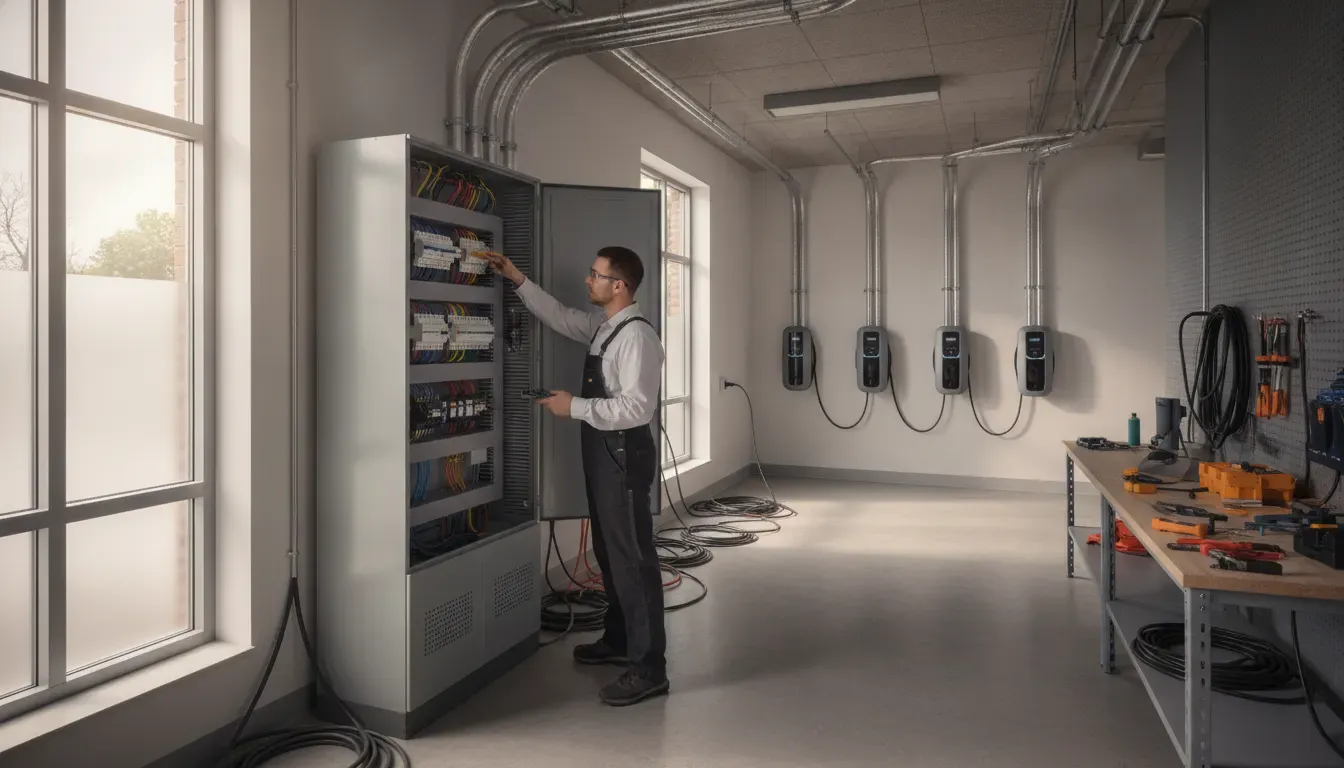
Commercial EV charging projects require coordination with the local permitting office, the electrical contractor, the utility when applicable, and the property owner. Requirements vary by municipality and by the scope of work. Permit drawings may need to show equipment, site layout, electrical details, pavement work, and other construction impacts.
Schaumburg commercial EV charging permits
The Village of Schaumburg EV Charging Station Resource Guide states that plan review and approval are required before a permit can be issued. Its commercial submittal list includes a commercial permit application, site plan, plat of survey, charger cut sheets, and an electrical plan identifying wire and conduit details. The guide also describes rough-in and final electrical inspections and advance notice for scheduling.
Schaumburg's guide includes additional requirements for some sites, such as pavement-related work and an EV charging station vending license. Because fees, forms, and local procedures can change, a property owner should confirm the current checklist with Schaumburg's Community Development Department before submitting an application.
Palatine commercial EV charging permits
Palatine's Commercial and Multi-Family Building Permit Submittal Requirements directs applicants to the Village's online Citizen Self Service Portal. It calls for complete applications, a current plat of survey, working drawings, and other approvals when applicable. The document also identifies the National Electrical Code with amendments, Illinois accessibility requirements, fire code, and Village ordinances among the review considerations.
Palatine and Schaumburg are separate authorities, so do not assume a permit package or inspection process from one village applies in the other. A qualified contractor can help organize the electrical plan and identify questions for the local reviewer, but the municipality's current requirements remain the controlling source.
Illinois EV installer certification
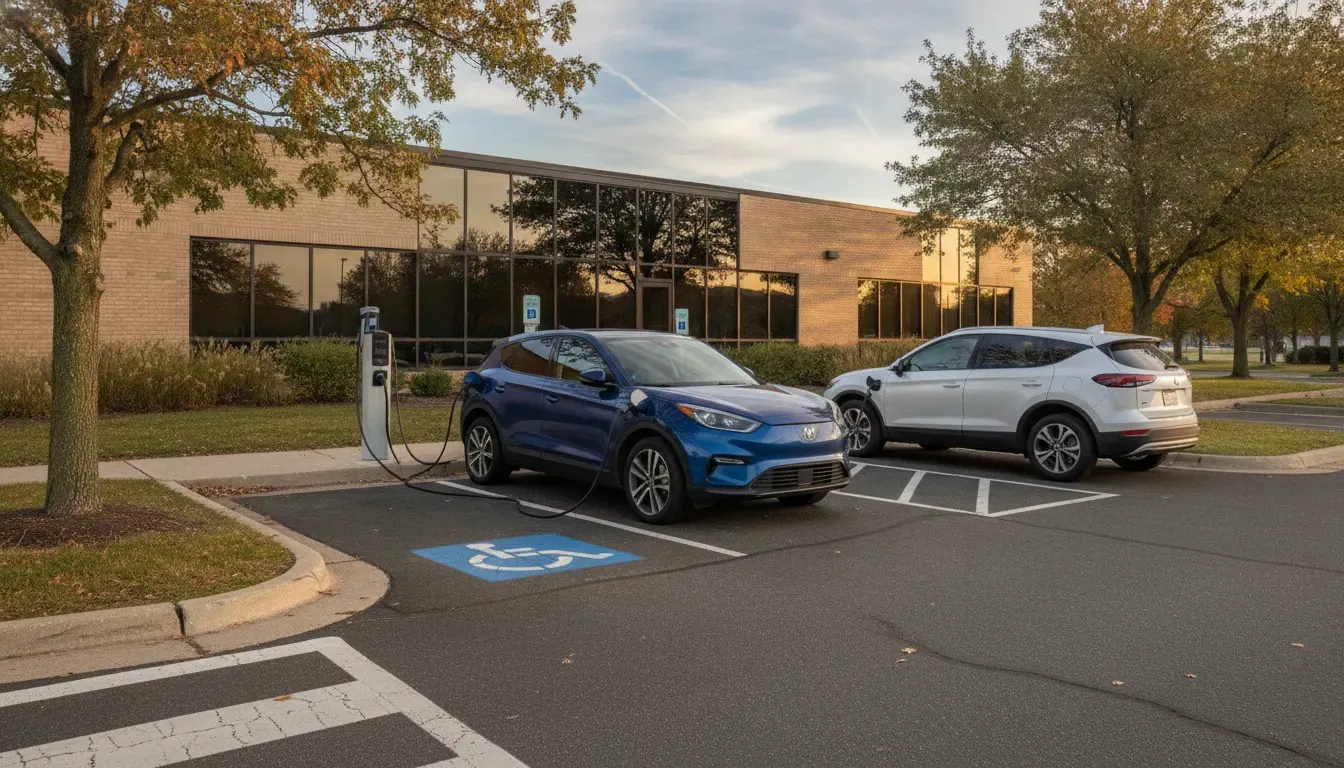
Illinois also has a statewide certification framework. The Illinois Commerce Commission EV Charging Station Installer page explains the certification program. The Commission's rules state that, except for a self-installer, entities installing, maintaining, or repairing EV charging stations in Illinois must be certified under the applicable program before performing that work. Ask any contractor handling the project about the certifications, licenses, bonding, insurance, and local registrations that apply.
What affects the cost of commercial EV charger installation?
There is no responsible one-size-fits-all price for a commercial EV charging project. The final quote depends on the property, equipment, electrical design, civil work, and operating plan. A professional proposal should show what is included so a business can compare projects on scope rather than a headline number.
- Number of charging ports and the selected Level 2 or DC fast charging equipment.
- Existing service capacity, panel space, breakers, disconnects, and protection equipment.
- Length and method of the conduit or trench route from the electrical source to the stations.
- Concrete, asphalt, curb, bollard, enclosure, drainage, or restoration work.
- Site design, engineering, permit applications, inspections, and utility coordination.
- Network, payment, access-control, signage, lighting, monitoring, and future maintenance needs.
Some projects can use the existing service with a carefully designed load strategy. Others may require a service change, panel work, transformer coordination, or a phased build. The only reliable way to separate those scenarios is an on-site evaluation followed by a scope-specific quote.
How does a commercial EV charging project move from idea to operation?
A predictable installation process reduces surprises for the property owner and gives the electrical contractor the information needed to design a safe, serviceable system. Brilliant Home Services approaches commercial EV charging as a coordinated electrical project rather than a last-minute equipment add-on.
- Discovery: Identify the business goal, users, vehicle dwell time, parking constraints, ownership responsibilities, and preferred operating model.
- Site assessment: Review the service, panels, routes, parking layout, accessibility, equipment location, and expansion options.
- System design: Match the port count and charger type to the electrical capacity and expected use. Define load management when it is appropriate.
- Permitting and coordination: Prepare the required plans, submit to the applicable village, and coordinate utility or other approvals that the scope requires.
- Installation: Complete electrical work, conduit, equipment mounting, protection, controls, and any site restoration included in the approved scope.
- Inspection and turnover: Schedule required inspections, correct any findings, test the system, and explain operation and maintenance responsibilities.
Brilliant Home Services provides EV charger installation and broader electrical services for Chicagoland properties. The team can help a business determine whether its initial project should prioritize workplace charging, tenant convenience, customer experience, or fleet operations.
What should a business ask before requesting a quote?
Good project questions make the first consultation more productive and reveal scope items that can otherwise appear late in the process. Bring the following information to the contractor or property manager meeting:
- Property address, owner contact, and the municipality reviewing the work.
- Number of parking spaces, proposed charging spaces, and accessible-space considerations.
- Who will use the chargers and how long vehicles normally remain on site.
- Electrical service drawings, panel schedules, site plans, or previous permit documents.
- Whether charging will be free, managed, reimbursed, or connected to a payment network.
- Desired installation timing, future expansion, and planned paving or remodeling work.
Schedule Service Now to request a commercial EV charging consultation for your Schaumburg or Palatine property.
Frequently asked questions about commercial EV charger installation
Does a business need a permit to install EV chargers in Schaumburg?
Yes, the Village of Schaumburg's commercial EV charging resource guide says plan review and approval are required before a permit can be issued. The application may require a site plan, charger cut sheets, an electrical plan, and inspections. Confirm the current checklist and fees with the Village before applying.
Is Level 2 or DC fast charging better for a small business?
It depends on vehicle dwell time, desired turnover, electrical capacity, and the business model. Level 2 often fits workplaces, offices, multifamily properties, and retail locations where vehicles remain parked for longer periods. DC fast charging may fit high-turnover or fleet use, but it can require a larger electrical project.
How many EV charging stations should a business install?
Start with the number of employees, tenants, customers, or fleet vehicles likely to charge, then compare that demand with parking duration and available electrical capacity. A phased installation or managed charging can serve more users without installing the maximum number of ports on day one.
What is included in a commercial EV charger quote?
A complete quote should identify equipment, electrical work, conduit or trenching, site restoration, permits, inspections, controls or networking, testing, and any utility coordination. Because property conditions differ, a site assessment is necessary before a contractor can responsibly define the full project scope.
Can Brilliant Home Services install commercial EV chargers in Palatine and Schaumburg?
Brilliant Home Services provides EV charger installation and electrical services for Chicagoland customers. Contact the team to discuss the property, intended use, charger type, parking layout, and local permitting questions before planning the work.
Ready to Get Started?
Contact Brilliant Home Services for professional, reliable service in Chicagoland. We are available 24/7 for emergencies.